Best YouTube Sponsorship Platforms and Agencies in 2026 (Honest Review)
The best YouTube sponsorship platform depends on your channel size and niche. Below 10K subs, no platform reliably places creators. Direct outbound wins. Between 10K and 250K, platforms are useful as one channel of several. Above 250K, agencies start to outperform.
Before you sign up anywhere, check which brands already pay channels like yours. The list of 60 YouTube sponsors shows the minimum channel size each one takes, and the sponsor frequency data across 8 niches shows who buys most often. Below, each marketplace and agency gets a verdict on when it makes sense and when it doesn't.
Which sponsorship platform fits your channel size?
| Your Situation | Recommended Path |
|---|---|
| Under 10K subs | Direct Outbound (Sponsor Intelligence) + Channel Pages |
| 10K-50K subs, lifestyle or DTC niche | Direct Outbound + Creator.co + Grapevine briefs |
| 10K-50K subs, tech or finance niche | Direct Outbound (primary). Agencies and marketplaces don't serve this tier well |
| 50K-250K subs | BrandConnect (if eligible) + Grapevine + Direct Outbound |
| 250K+ subs | Talent agency or vertical agency + BrandConnect + selective direct outbound |
How does each platform and agency compare?
YouTube BrandConnect
Native marketplaceBest for: Established creators with monetization eligibility looking for hands-off deal flow
Pros
- ✓Built into YouTube Studio, no separate dashboard
- ✓Contracts, payments, and FTC disclosure handled automatically
- ✓Brands tend to be larger and pre-vetted
Cons
- ✕Eligibility is restrictive, with many regions excluded
- ✕Rates often below what creators can negotiate directly
- ✕Limited control over which brands appear in your queue
Grapevine
Two-sided marketplaceBest for: Mid-tier creators (50K-500K) looking for retainer-style deals with mid-market brands
Pros
- ✓Strong vertical depth in lifestyle, family, and DTC categories
- ✓Self-serve briefs from brands you can apply to
- ✓Track record with established CPG and software brands
Cons
- ✕Reply rates inside the platform are inconsistent
- ✕Smaller selection in B2B SaaS and developer-tool categories
- ✕Brand briefs often come with fixed (low) flat fees
Channel Pages
Creator-brand directory and outreach platformBest for: Creators across niches who want a directory listing plus tooling to organize outbound
Pros
- ✓Lower entry bar than BrandConnect
- ✓Self-serve brand directory you can pitch into
- ✓Useful for lower-tier creators building first roster
Cons
- ✕Brand directory quality varies
- ✕Outbound still requires creator effort. The platform doesn't close deals for you
- ✕Smaller deal flow than BrandConnect or Grapevine
Creator.co
Influencer marketing marketplaceBest for: Lifestyle, beauty, and DTC creators who want application-based deal flow
Pros
- ✓Multi-platform (YouTube, Instagram, TikTok in one profile)
- ✓Self-serve campaign applications
- ✓Strong DTC and beauty brand coverage
Cons
- ✕Many briefs are product-only, no cash component
- ✕Heavy competition for popular briefs
- ✕Smaller B2B SaaS or finance footprint
FameBit / GameInfluencer / Niche Agencies
Vertical-specific agenciesBest for: Creators in a specific vertical (gaming, mobile UA, beauty, finance) seeking managed representation
Pros
- ✓Negotiation handled by experienced reps
- ✓Higher ceiling on deal sizes
- ✓Useful in categories with complex compliance (finance, crypto, pharma)
Cons
- ✕Long sales cycles
- ✕Roster competition for agency attention
- ✕Commission cuts into your take-home
Direct Outbound (via Sponsor Intelligence)
Creator-led, no marketplaceBest for: Any creator size, especially under 100K subs where inbound is rare
Pros
- ✓Highest reply rate of any path: 15-25% vs. 1-3% on cold lists
- ✓No commission, so you keep 100% of the deal
- ✓You pick the brands; you control the rate; you keep the relationship
- ✓Works at any channel size, including under 1K subs
Cons
- ✕Requires setup time and consistent outbound effort
- ✕You handle contracts, payments, and FTC disclosure yourself
Why does direct outbound beat most platforms?
Marketplaces are a queue. You list your channel, brands list their briefs, and a matching engine surfaces opportunities. The problem sits at the creator's end of the queue. Every other creator in your niche is also visible to the brand. The brief is usually written for whoever applies first with the lowest rate.
Direct outbound flips the model. Instead of waiting for a brief, you identify the brands that have already paid creators in your niche, using OutlierKit Competitor Studio's Sponsor Intelligence. Then you pitch them with proof: their existing creator partner, your comparable audience, your concrete integration idea.
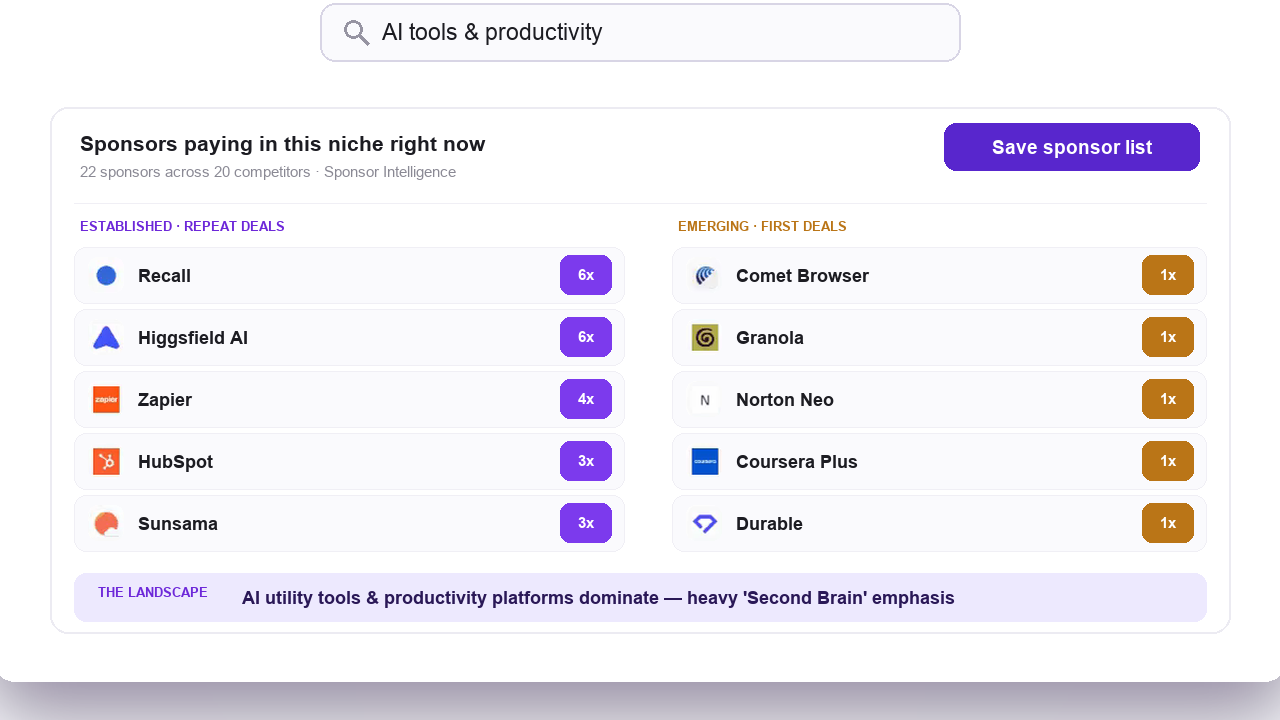
Sponsor Intelligence replaces the marketplace queue with a ranked list of brands actively buying your audience.
The structural advantage: there is no queue. You pitch the brand one-to-one, and the brand evaluates your specific channel against their specific budget. Reply rates of 15-25% are routine. Marketplaces typically deliver 1-3% reply rates on equivalent volume. See the full outbound playbook in How to Get YouTube Sponsorships in 2026.
Frequently Asked Questions
What are the best YouTube sponsorship platforms in 2026?
The best YouTube sponsorship platforms in 2026 are YouTube BrandConnect, Grapevine, Channel Pages, and Creator.co. BrandConnect is the native marketplace for eligible 10K+ creators. Grapevine is a mid-market two-sided marketplace. Channel Pages is a creator directory and outreach tool. Creator.co is a multi-platform DTC and beauty marketplace. For creators under 100K subs, direct outbound via Sponsor Intelligence consistently produces a higher reply rate (15-25%) than any platform, with no commission.
What is YouTube BrandConnect and how do I qualify?
YouTube BrandConnect is YouTube's native sponsorship marketplace, integrated directly into YouTube Studio. To qualify in 2026 you need 10,000+ subscribers and monetization eligibility. You also need to live in the US, Canada, UK, Australia, or Japan. Your YouTube Partner Program account must be active and in good standing. BrandConnect handles brand matchmaking, contracts, payments, and FTC disclosure automatically.
Is Grapevine a good YouTube sponsorship platform?
Grapevine is a useful platform for mid-tier YouTube creators (50K-500K) in lifestyle, family, and DTC niches. It works less well for B2B SaaS, finance, and developer-tool creators because the brand mix skews consumer. Grapevine's self-serve brand briefs are a good source of inbound deal flow, but reply rates inside the platform are inconsistent. Treat it as one of several deal-flow channels, not a primary roster.
Do YouTube sponsorship websites take a commission?
Most YouTube sponsorship websites are free for creators. The brand pays a platform fee or subscription. Talent agencies and influencer agencies do take commission: 10-25% of deal value is the standard range, with celebrity-tier representation reaching 30%. Direct outbound (creator-led pitching) takes no commission since there's no intermediary. That is why it produces the highest take-home revenue per deal.
What is the difference between a YouTube sponsorship platform and an agency?
A YouTube sponsorship platform is a self-serve marketplace where creators and brands match themselves. Examples include BrandConnect, Grapevine, Channel Pages, and Creator.co. A YouTube sponsorship agency is a managed-service company where reps actively negotiate deals on the creator's behalf in exchange for commission (10-25%). Platforms scale better; agencies handle complexity better. Platforms suit creators 5K-250K subs; agencies suit creators 100K+ in regulated or high-deal-value verticals.
Can I get sponsorships without a platform or agency?
Yes. Direct outbound is the most effective path for most creators in 2026, especially under 100K subs. Direct outbound means identifying brands that already sponsor competitor channels in your niche (using OutlierKit's Sponsor Intelligence) and pitching them yourself. Reply rates run 15-25% versus 1-3% on cold lists, and you keep 100% of the deal because there's no commission.
Are YouTube sponsorship platforms safe?
Established YouTube sponsorship platforms (BrandConnect, Grapevine, Channel Pages, Creator.co) are safe. They handle payments through escrow or platform-managed transfers, vet brands, and enforce minimum disclosure standards. Risk concentrates outside platforms: fake outreach in DMs, gift-card-only deals, and unverified brand impersonators are the most common scam patterns in 2026.
How this review was made
Eligibility, fees and category strengths come from each platform's public site and help pages. The verdicts weigh those documented terms, not a paid test campaign. Check each site before you apply, because minimums and fees change.
Sources
- YouTube Creator Partnerships (BrandConnect)
- Grapevine
- Creator.co
- Channel Pages
- Most common YouTube sponsors by niche: the Sponsor Intelligence data behind the outbound path

Skip the queue and find sponsors directly
OutlierKit Competitor Studio identifies the brands already sponsoring channels in your niche so you can pitch them directly with proof, not wait in a marketplace queue.
Try OutlierKit FreeRelated Guides
Most Common YouTube Sponsors by Niche
Pull a real Sponsor Intelligence list for your niche.
How to Get YouTube Sponsorships
The 7-step outbound playbook.
Spot Fake YouTube Sponsorship Offers
10 red flags that mark a scam outreach.
Best YouTube Marketing Tools for Agencies
The full agency stack for scaling client channels.
OutlierKit for Agencies
Competitive intelligence for multi-client agencies.