How to Get YouTube Sponsorships in 2026 (Including for Small Channels)
Cold-pitching random brands has a 1-3% reply rate. Pitching brands that already sponsor your niche has a 15-25% reply rate. That single difference is what separates creators who land sponsorships from creators who keep getting ignored.
Start with who already pays. The sponsor frequency data across 8 niches names the brands that appear most often, and the list of 60 YouTube sponsors shows which ones take channels under 10K. The seven steps below turn that list into signed deals, with a shortcut for small channels that uses OutlierKit Competitor Studio.
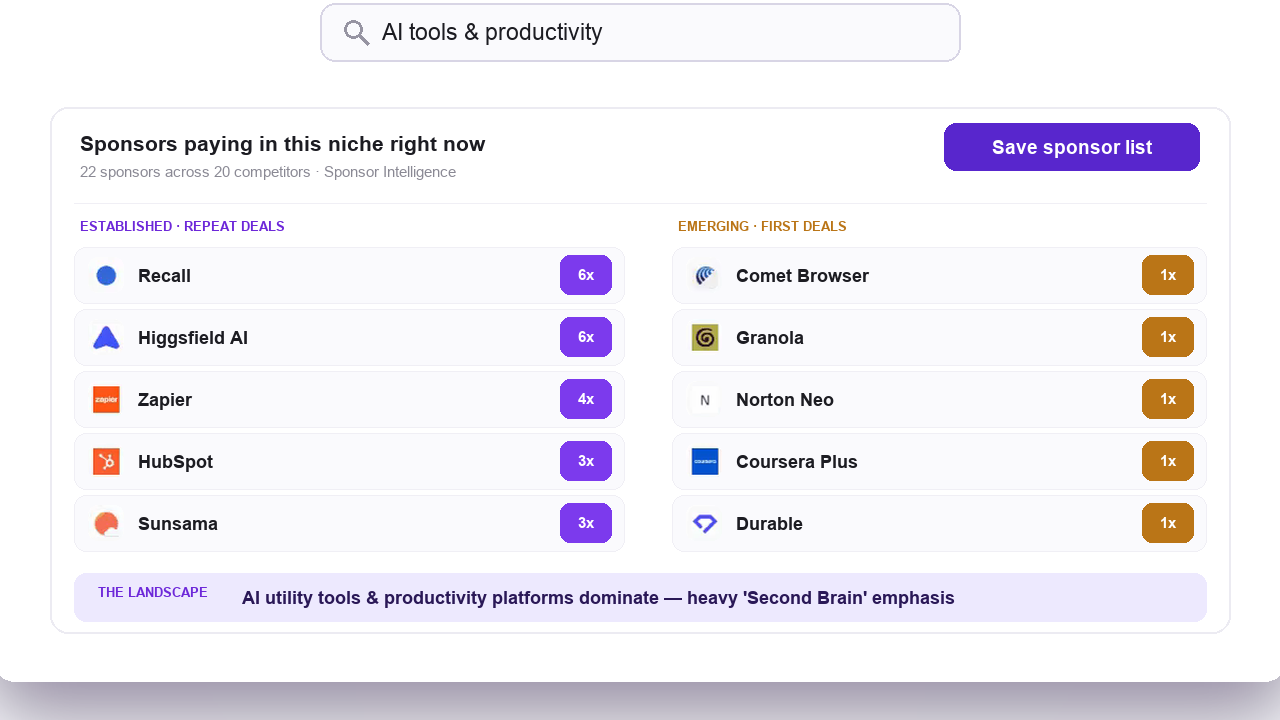
The starting point for every outbound pitch. Sponsor Intelligence shows established (high frequency) and emerging (1x frequency) sponsors in your niche.
TL;DR: the 7-step playbook
- 1. Reverse-engineer who already sponsors your niche
- 2. Pick three target tiers (dream / realistic / guaranteed)
- 3. Build a 2-page media kit
- 4. Find the right contact via LinkedIn
- 5. Send a 5-line proof-led pitch
- 6. Negotiate with a rate card, not your gut
- 7. Deliver early and pitch the renewal
Why does outbound beat waiting for inbound offers?
The old way to get YouTube sponsorships was to wait. Channels grew past 100K, brands found them via inbound, and a small percentage of those creators turned that inbound into a roster. Every other creator did one of three things: cold-pitched random brands they liked, signed up to a marketplace and waited in queue, or simply never got sponsored.
The outbound way starts from data. Instead of pitching brands based on personal preference, you pitch the brands that have already proved they buy your audience type by sponsoring your direct competitors. Reply rates jump from 1-3% to 15-25% because:
- ✓The brand already has budget for this audience
- ✓You can reference a competitor they already paid (concrete proof)
- ✓You bypass cold-discovery objections, because the brand already understands the niche
- ✓You can position as a cheaper or higher-engagement alternative
How do you run each of the 7 steps?
Reverse-engineer who already sponsors your niche
Skip the cold-pitch lottery. Run a Sponsor Intelligence report on 10-20 channels just above your size. Every sponsor that appears 2+ times has an open budget for your audience type. The emerging list (1x mentions) is where new entrants are actively shopping for creators.
- ✓Open OutlierKit Competitor Studio and enter a seed channel or keyword
- ✓Pick 10-20 competitor channels in your niche, slightly bigger than yours
- ✓Run the Sponsor Intelligence report. It returns established and emerging sponsors with frequency counts
- ✓Export the list. Established sponsors = predictable budget; emerging sponsors = highest reply rate
- ✓Cross-reference with the channel coverage panel to see exactly which competitors landed which sponsor
Pick your three target tiers
Don't pitch every brand on the list. Sort sponsors into three tiers: dream (3 brands), realistic (10 brands), guaranteed (5 brands). Realistic tier is where 80% of your first wins will come from.
- ✓Dream tier (3): the highest-frequency sponsors in your niche; long shots, but worth a swing
- ✓Realistic tier (10): mid-frequency sponsors that already work with channels close to your size
- ✓Guaranteed tier (5): evergreen cross-niche sponsors with public creator programs (Audible, Skillshare, Squarespace, BetterHelp, NordVPN)
- ✓Aim for 1 sign per tier in the first 30 days
Build your media kit
Brands need a single document to make a yes/no decision. One PDF, two pages max. Lead with proof, not promises.
- ✓Page 1: Channel name, niche positioning, top 3 videos with view counts, audience demographics, growth rate
- ✓Page 2: Past sponsors (or 'open to first partnerships'), rate card by format, contact info
- ✓Include a 30-second video reel of past brand mentions if you have them
- ✓Use real screenshots from YouTube Studio for the demographics. Never use round numbers
Find the right person to pitch
info@ and hello@ inboxes are death. The right contact is the brand's influencer, partnerships, or creator-marketing manager. Their email is usually findable on LinkedIn.
- ✓Search LinkedIn: '[brand name] influencer marketing' or '[brand] creator partnerships'
- ✓For small brands, target the head of marketing or growth directly
- ✓Use a finder tool (Apollo, Hunter, Clearbit) to verify their work email
- ✓Avoid pitching the founder unless the company is under 10 people
Send a 5-line pitch with proof
Cold pitches that work in 2026 are short and proof-led. Reference a specific competitor they already sponsor and show why your audience is similar or better. Less than 120 words.
- ✓Line 1: One sentence on who you are and what you cover
- ✓Line 2: 'You sponsored [Competitor X] last month. I cover the same audience with [stat that beats them]'
- ✓Line 3: One concrete idea for the integration (format, hook, CTA)
- ✓Line 4: Rate range (give a band, not a single number)
- ✓Line 5: Single clear next step ('Reply if interested and I'll send the media kit')
Negotiate using the rate card, not your gut
First-time sponsorship offers almost always come in low. Counter with a rate card grounded in CPM math, not negotiation theatrics.
- ✓Calculate your average views in the last 90 days (not all-time, since recent matters)
- ✓Apply niche CPM: $15-$25 for lifestyle, $25-$40 for finance/tech, $40+ for B2B SaaS
- ✓Add a 25-40% premium for dedicated videos, discount integrations 30-50%
- ✓Always quote a range, not a single number. It gives both sides room to land
- ✓See full benchmarks in YouTube Sponsorship Rates 2026
Deliver in a way that earns the renewal
First sponsorship is a sample, not a paycheck. The way you deliver determines whether you get the second deal. That second deal is where compounding revenue starts.
- ✓Deliver one day early. Brands remember it; calendars rarely accommodate 'just on time'
- ✓Send a post-publication report 7 days after upload: views, click-through, top comments
- ✓Pitch a renewal at day 30 with a concrete improvement (better hook, different CTA placement)
- ✓Ask for a referral to a sister brand if the integration performed well
How can a channel under 10K subscribers land a sponsor?
Below 10K subs, the standard outbound pitch needs five tweaks. Each one offsets the “you're too small” objection with a concrete advantage.
Lead with engagement, not subs
A 5K-subscriber channel with 8% engagement converts at the same rate as a 50K channel with 1.5%. Quote engagement first in your pitch.
Target emerging sponsors
Sponsors with 1x frequency on Sponsor Intelligence are the brands most willing to gamble on small channels. Established sponsors usually have minimum-sub thresholds.
Offer a hybrid model
Small flat fee ($100-$300) plus aggressive affiliate (20-30%). Lower brand risk, higher upside for both sides.
Bundle three videos
A single video from a 5K channel feels low-leverage to a brand. A 3-video package over 30 days feels like a campaign.
Pre-cleared in 24 hours
Promise the brand a script for review within 24 hours. Speed is a competitive edge a small channel can deliver but a 500K creator usually can't.
What should a cold sponsorship pitch say?
Subject: [Their Brand] x [My Channel]: concept inside
Hey [Name],
I run [Channel], a [niche] channel hitting [recent average view count] views per video at [engagement rate]% engagement.
I noticed you sponsored [Competitor Channel] last month. I cover the same audience but with [one comparable or better stat].
Pitch: a [format] segment in next month's [video topic], hooked on [angle].
Rate range: $[low] - $[high] for the integration.
Reply if interesting and I'll send the media kit.
[Name]
Under 120 words. The third line is the competitor reference. It is what separates this template from the standard cold pitch. It is the line that drives reply-rate uplift.
How do sponsorships fit into a wider revenue funnel?
Sponsorships compound when they sit inside a wider monetization stack. That stack includes courses, lead magnets, affiliate links, and community memberships. OutlierKit's Funnels & Monetization view shows how creators in your niche balance sponsorship revenue against their own products.
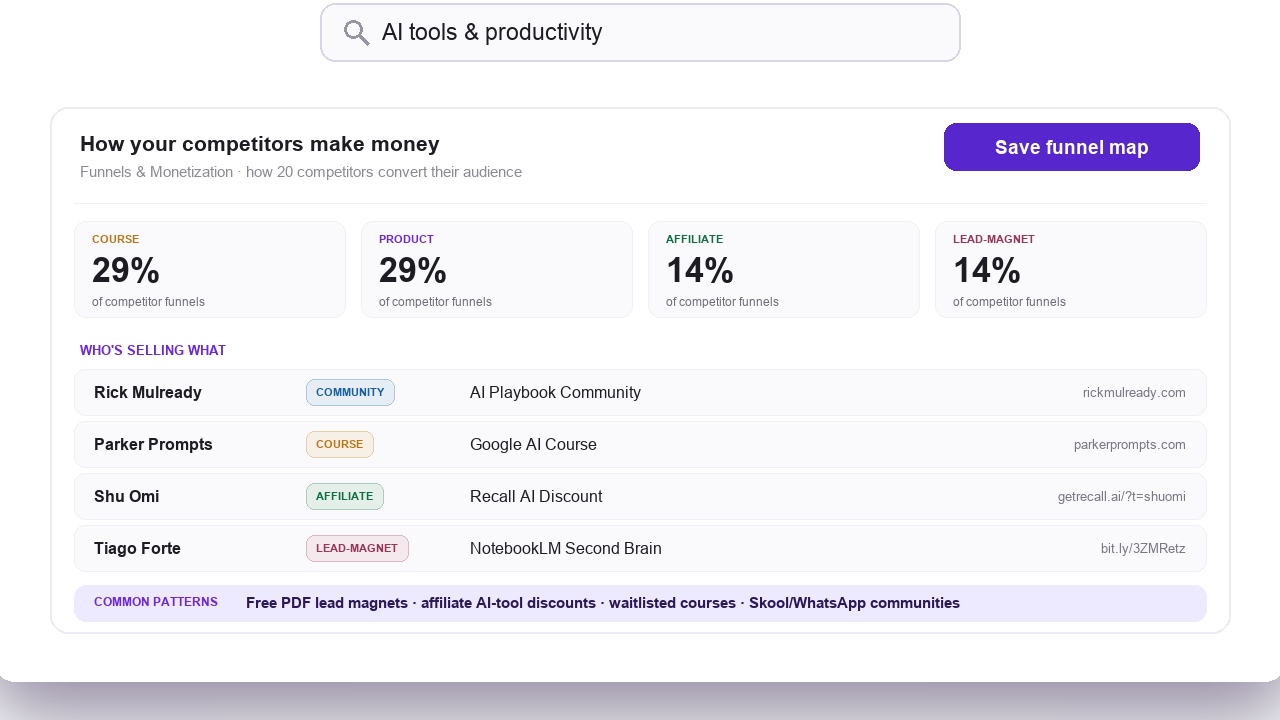
A sponsorship that drives traffic to your own lead magnet beats a sponsorship that drives traffic to the brand only. Look at how competitors structure the handoff.
Frequently Asked Questions
How do I get a sponsorship for my YouTube channel?
Get a YouTube sponsorship in 2026 in seven steps: (1) reverse-engineer who already sponsors your niche using OutlierKit's Sponsor Intelligence, (2) pick 18 target brands across three tiers (dream / realistic / guaranteed), (3) build a 2-page media kit, (4) find the right contact via LinkedIn, (5) send a 5-line proof-led pitch under 120 words, (6) negotiate using a rate card grounded in CPM math, and (7) deliver early and pitch a renewal at day 30. The fastest path for channels under 100K subs is outbound to emerging sponsors. These are the brands actively spending on competitors but without a locked roster.
How do I get a sponsorship for a small YouTube channel?
Small YouTube channels (under 10K subs) get sponsorships in four ways. They lead with engagement rate, not subscriber count. They target emerging sponsors that appear 1x in Competitor Studio Sponsor Intelligence reports. They offer a hybrid payment model (small flat fee plus 20-30% affiliate commission). And they bundle 2-3 videos into a single package. Most successful small-channel sponsorships in 2026 come from creator-led outbound. The best targets are brands that already sponsor 50K-250K channels in the same niche but want lower-cost test placements with niche audiences.
Can a YouTube channel with 100 subs get sponsored?
Yes, a YouTube channel with 100 subscribers can get sponsored, but only with very small brands or via product-for-content deals. Below 1,000 subs the realistic options are: (1) free product in exchange for an honest review, (2) affiliate partnerships (no upfront fee, commission per sale), (3) micro-grant or seed deals from emerging brands looking for early creator validation. Cash-only sponsorships at 100 subs are rare and usually limited to hyper-niche B2B brands serving the same audience the creator covers.
Is there a YouTube sponsorship application?
Yes, several brands run YouTube sponsorship application programs in 2026. These include the Audible Creator Program, Skillshare Affiliate, Amazon Associates, NordVPN Affiliate, and YouTube's own BrandConnect marketplace. These applications take channels as small as 1K-10K subs and pay on a CPA (cost per action) basis. Beyond application-based programs, the highest-paying sponsorships are negotiated directly via outbound pitching, not application forms.
How do I write a YouTube sponsorship script or pitch?
A 2026 YouTube sponsorship pitch should be five lines under 120 words: (1) one sentence on who you are and what you cover, (2) reference a specific competitor the brand already sponsors and show why your audience is comparable or better with one stat, (3) one concrete idea for the integration format and hook, (4) a rate range (not a single number), (5) one clear next step. The integration script itself should preserve the creator's voice. Brands now reject scripted-sounding integrations because they convert poorly.
How long does it take to land a YouTube sponsorship?
With a focused outbound process, most creators land their first YouTube sponsorship within 30-60 days. Channels under 10K subs typically need to send 30-50 pitches to land 1-3 first deals. Channels above 50K subs see reply rates of 15-25% and typically close 1 deal per 10 pitches. The longest part of the cycle is contract and approval. Once a brand says yes, expect 2-4 weeks before the video goes live.
Are there free sponsorships for YouTube channels?
'Free sponsorships' on YouTube usually refers to product-for-content (or product seeding) deals. The brand sends free product, the creator chooses whether to feature it, and no money changes hands. These deals are common at every channel size but are most useful below 25K subs, because larger creators can typically command a cash component. The ‘cost’ to the brand is purely the product value. This is why early-stage DTC brands and emerging AI tools rely heavily on this model.
Sources and method
The reply-rate ranges compare cold pitches to random brands with pitches to brands that already sponsor the niche. They are estimates, not the result of a controlled test. Sponsor names come from OutlierKit's Sponsor Intelligence reports.
Sources
- Most common YouTube sponsors by niche: OutlierKit Sponsor Intelligence reports across 8 niches
- YouTube sponsorship rates: the rate card step 6 uses
- FTC, Disclosures 101 for Social Media Influencers

Find brands that already sponsor your niche
OutlierKit Competitor Studio runs Sponsor Intelligence on the channels just above your size and gives you a ranked list of established and emerging sponsors. OutlierKit is built for experts, consultants and coaches who run a YouTube channel, and for their agencies.
Try OutlierKit FreeRelated Guides
Most Common YouTube Sponsors by Niche
Real Sponsor Intelligence data across 8 niches.
The Full List of YouTube Sponsors
60+ brands you can filter by category and channel size.
YouTube Sponsorship Rates 2026
Know what to charge before you negotiate.
Best YouTube Sponsorship Platforms
When to use a marketplace vs. pitch directly.
Netflix vs YouTube: The Creator Bidding War
The top rung of the same ladder: what Netflix and Amazon actually pay creators for.