What YouTube Influencer Analytics Should Actually Tell You Before a Sponsorship Deal
In the Influencer Marketing Hub Benchmark Report, roughly three out of four marketers say measuring the ROI of influencer campaigns is the hardest part of the job. That stat hides a more uncomfortable truth. Most of them aren't struggling to measure ROI after the campaign. They're struggling because the analytics they used before they signed the deal couldn't predict it.
Subscriber count, audience demographics, and engagement rate are the standard inputs. They're necessary. They're also not enough. They tell you the audience is real and roughly who they are. They don't tell you whether the audience will buy your product. They don't tell you whether your creative will land. And they don't flag whether three direct competitors already saturated the niche last quarter.
The brand and agency teams who consistently hit their YouTube sponsorship targets operate a layer above demographics. This page gives you their analytics maturity model, the seven signals that actually predict campaign ROI, and a decision tree for building the right stack for your deal volume.
The analytics gap brands keep paying for
Most influencer analytics platforms were built for one job: prove the audience is real. That job matters. Bot inflation and follower fraud are still real risks, and verification tools solved them at scale. But the category froze at verification, and underperforming sponsorships kept happening anyway.
The reason is simple. A real audience can still be the wrong audience. A 60% male, 25-34, US-skewed audience can be working professionals interested in dividend investing, or it can be hobbyist day-traders watching to roast bad takes. Same demographics. Different products. Different conversion outcomes.
Most brand teams operate at what we'll call Level 2 of the maturity model: they verify the audience is real, but they don't go deeper. That's where the money leaks.
Three levels of YouTube influencer analytics. Most misfit sponsorships happen at the gap between Level 2 and Level 3.
The 7 analytics signals that actually predict campaign ROI
These are the seven layers brand and agency teams use to operate at Level 3 of the maturity model. Each one answers a specific question that demographics alone can't. No single tool surfaces all seven. The right stack combines a verification platform with an audience intelligence platform.
Audience psychographics
Audience psychographics is the analytics layer that explains why viewers watch a creator. It captures the motivations, identities, and pain points that drive them to subscribe. It is not the demographic boxes they tick.
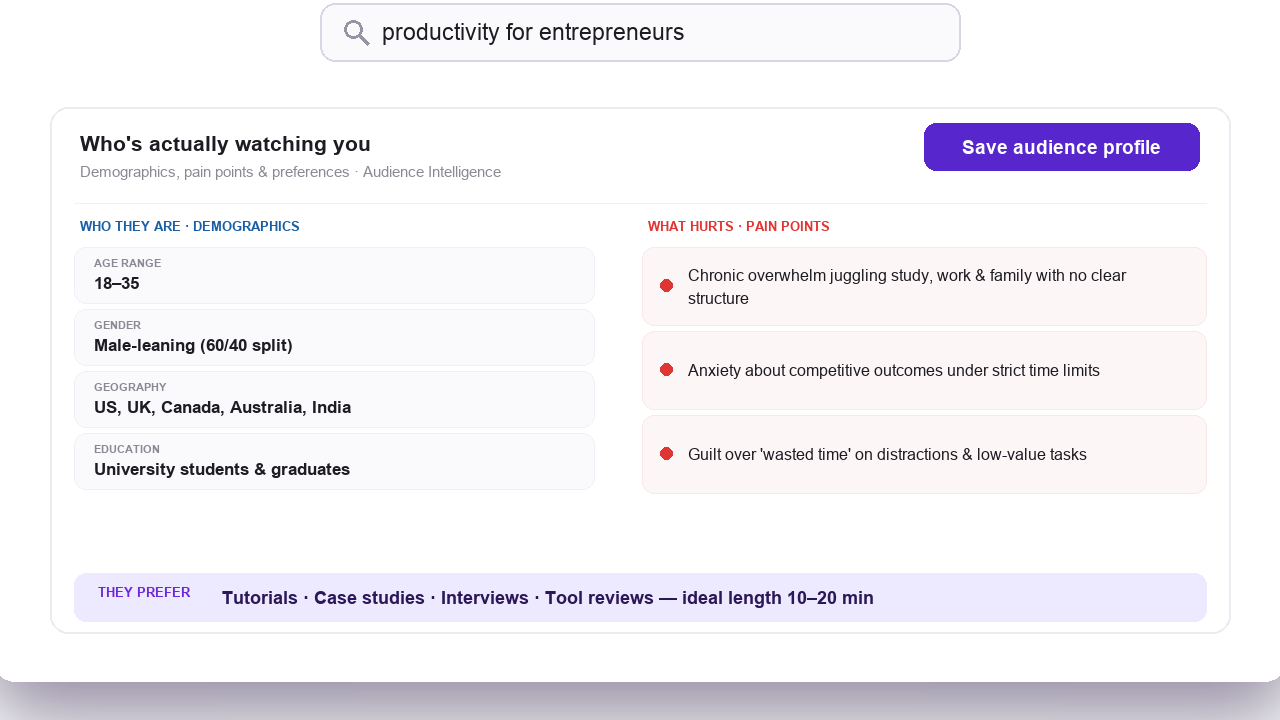
OutlierKit Competitor Studio: deep audience psychographic analysis showing viewer motivations and pain points
Best surfaced by: Audience intelligence platforms like OutlierKit Competitor Studio. Most discovery and verification tools stop at age, gender, and country.
Why demographics miss it: Demographics tell you a creator's audience is 60% male, 25-34, US-based. That describes half the working-age internet. It doesn't say whether they watch to learn dividend investing, plan early retirement, or roast bad financial advice. Those are three different audiences that would respond to three different sponsors.
How brands use it: Before a fintech brand signs a deal, they pull the creator's psychographic profile. They confirm the audience is actually motivated by the product's job-to-be-done. Being adjacent to the category is not enough.
Outlier video patterns
Outlier video patterns are the specific videos on a channel performing 3-10x above its own baseline. They show the content shape the audience actively rewards versus the content it tolerates.
OutlierKit Outlier Finder identifying videos performing 3-10x above channel baseline
Best surfaced by: Outlier detection tools like OutlierKit, 1of10, and Spotter Studio. Most influencer analytics platforms report channel-level averages, not per-video deviations from baseline.
Why demographics miss it: A creator's average views per video tell you what their audience watches by default. Their outlier views tell you what their audience actively chooses. A sponsored video briefed against outlier patterns performs closer to an outlier. A generic ad read regresses to baseline.
How brands use it: Agencies pull a creator's last 12 months of outliers. They identify the format and hook archetypes that consistently break baseline. Then they brief the sponsored video to mirror that structure, instead of imposing a brand-template script.
Sponsor history at niche level
Sponsor history at niche level maps which brands already sponsor creators across the category. It shows how saturated each sub-niche is, and where the competitive whitespace sits.
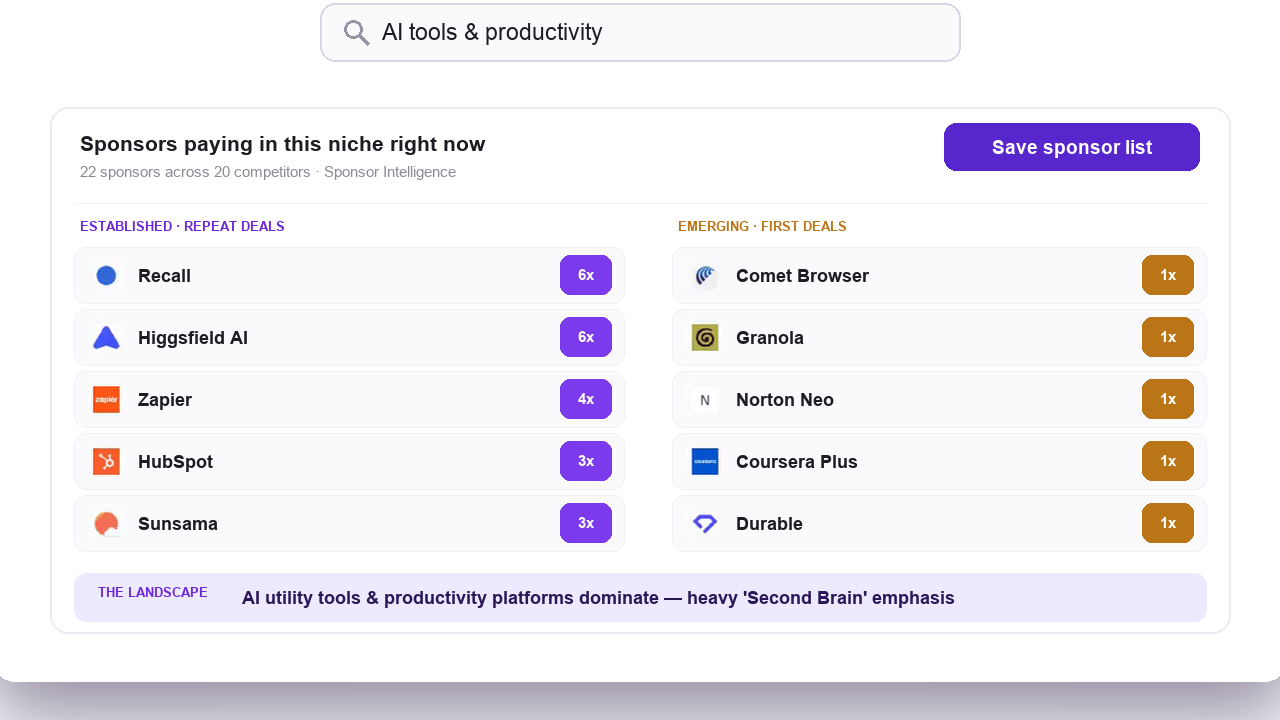
OutlierKit Competitor Studio sponsor intelligence: which brands already sponsor creators in a niche
Best surfaced by: Niche-wide sponsor intelligence tools like OutlierKit Competitor Studio and some enterprise tiers of Captiv8 or CreatorIQ. Channel-by-channel sponsor lists won't show the saturation picture.
Why demographics miss it: Looking at one creator's sponsor list shows you what they accept. Looking at the whole niche shows you what categories are oversaturated, where audiences are sponsor-fatigued, and which adjacent verticals haven't been touched.
How brands use it: Before a personal finance brand commits a $20K deal, they scan the niche first. The goal is to confirm three direct competitors aren't already running ads on the same creator cohort that quarter.
Monetization model fit
Monetization model fit is the analytics view of how creators in a given niche actually earn. That means full sponsorship slots, short integrations, affiliate splits, product partnerships, or their own product funnels.
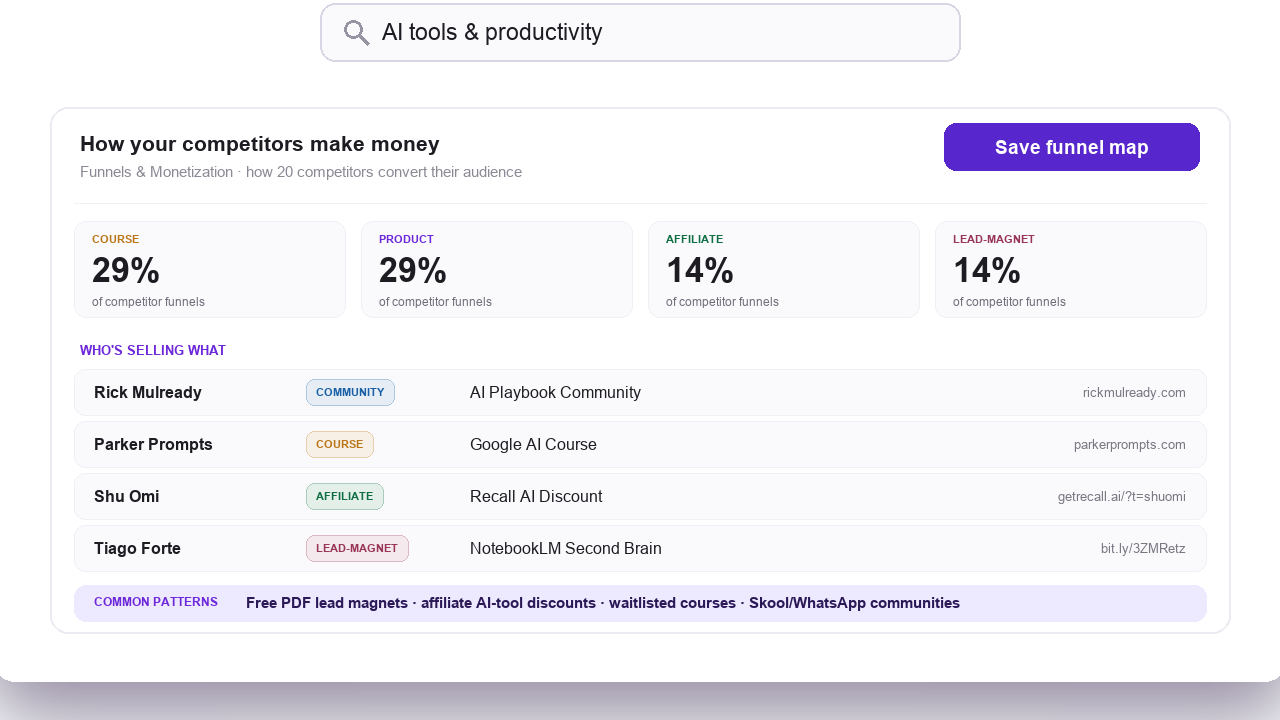
OutlierKit Funnels and Monetisation view: how creators in a niche actually earn
Best surfaced by: Monetization-mapping features like OutlierKit's Funnels view. Standard demographics platforms don't surface revenue model data.
Why demographics miss it: If creators in a niche primarily monetize through their own course funnels, a flat-fee sponsorship competes with their own revenue and gets deprioritized. If they monetize through affiliate splits, a CPM-style deal undervalues their inventory.
How brands use it: Agencies match deal structure to the niche's dominant revenue model. Affiliate-heavy creators get rev-share offers, course-heavy creators get integration-only deals that don't compete with their funnel.
Comment sentiment and audience requests
Comment sentiment and audience requests is the analytics layer that reads what viewers ask for, complain about, and react to. It works across a creator's videos, and ideally across the whole niche.
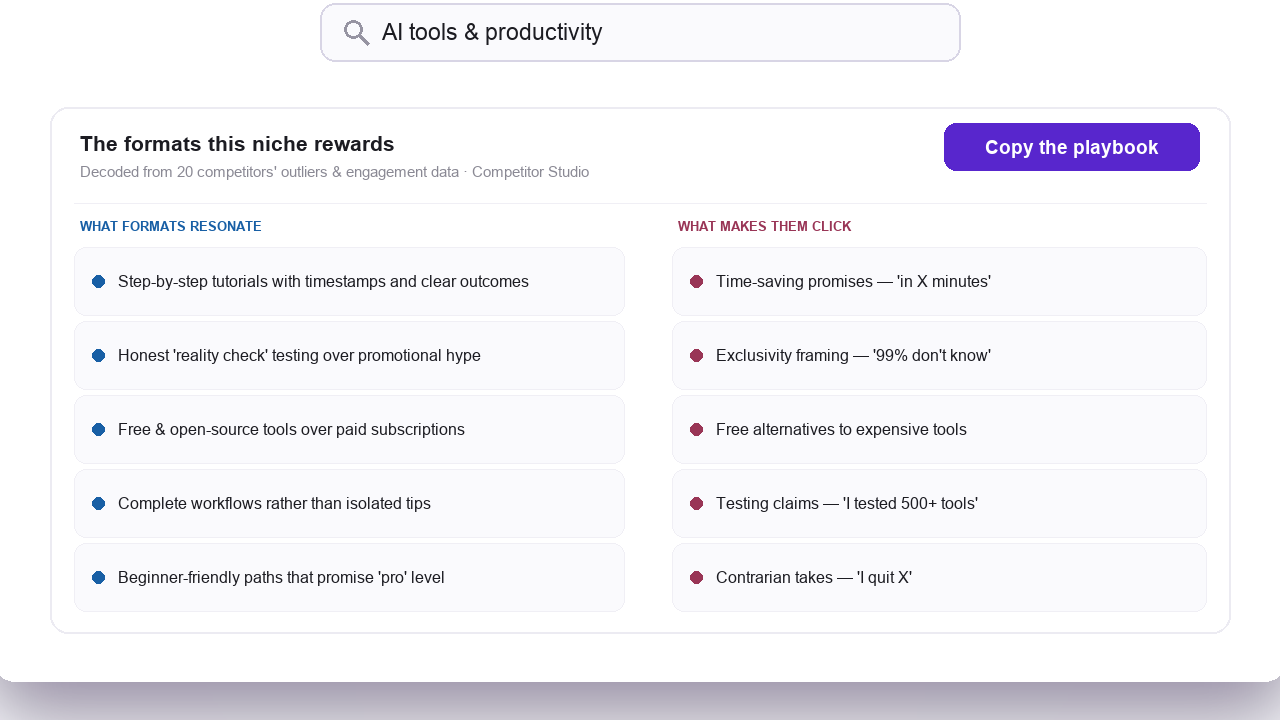
OutlierKit Competitor Studio comment intelligence: what viewers ask for across a niche
Best surfaced by: Comment intelligence features like OutlierKit's niche-wide comment analysis. Channel-only comment tools miss the cross-niche pattern.
Why demographics miss it: One channel's comments tell you what that audience reacts to. Niche-wide comment analysis surfaces the recurring questions, frustrations, and product requests that show up across every creator in the space. That is the unfilled demand a sponsor can speak to directly.
How brands use it: Brands pull the top 50 comment themes across the niche and use them as creative brief input. The sponsored video then answers a question viewers are already asking. It does not pitch a feature no one asked about.
Growth trajectory and view rate health
Growth trajectory and view rate health is the analytics view of whether a creator is on an upward curve, plateauing, or quietly declining. It is measured by view rate relative to subscriber base, rather than subscriber count alone.
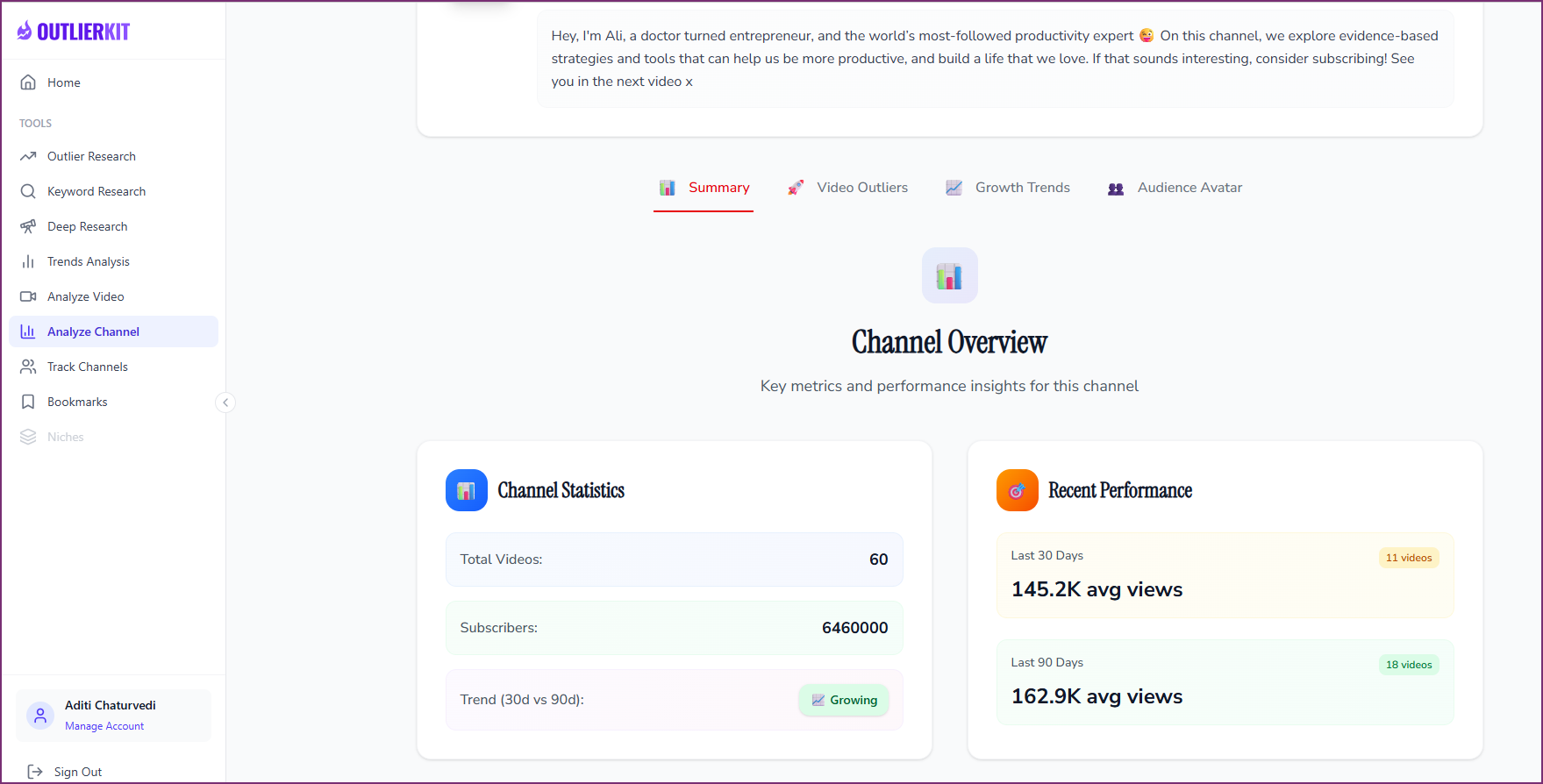
OutlierKit channel growth trend chart showing view-rate trajectory over time
Best surfaced by: Channel analysis tools like OutlierKit, Viewstats, and Social Blade. Static subscriber counts hide trajectory; even verified follower counts can mask plateauing reach.
Why demographics miss it: Subscriber count is a stock metric. View rate is a flow metric. A 500K creator getting 30K views per video is not the same investment as a 500K creator getting 250K views per video. Pricing the deal on subscribers misprices it by an order of magnitude.
How brands use it: Brands price the sponsorship on view rate over the trailing 30 days, not on subscriber count, and verify the trend is flat or upward before signing.
Niche positioning
Niche positioning is where a creator sits inside the competitive map: "finance: dividend strategies, 100K-500K subscriber band, US-skewing audience," rather than the broad "finance" tag.
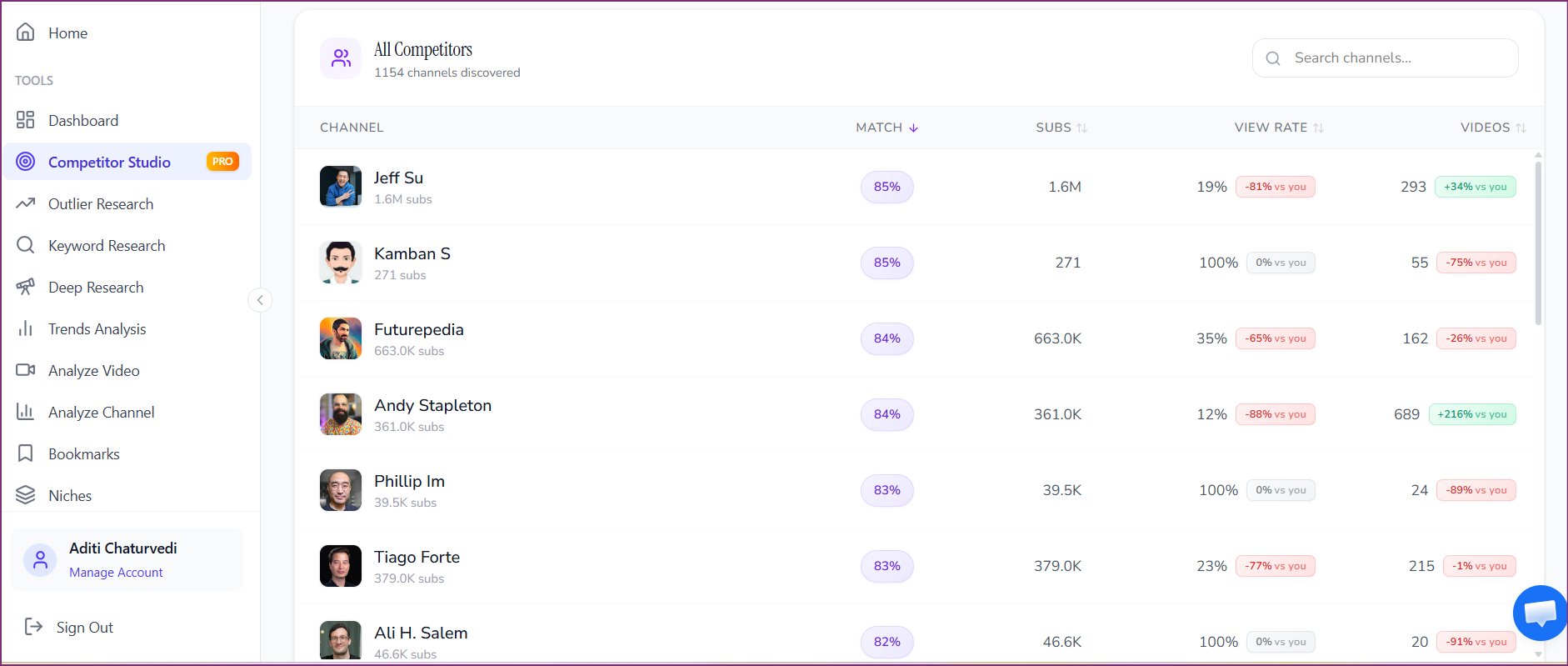
OutlierKit Competitor Studio niche map: thousands of competitors identified inside a sub-niche
Best surfaced by: Niche-mapping features in tools like OutlierKit Competitor Studio. Broad-category labels ("Finance", "Tech") don't surface the sub-niche position.
Why demographics miss it: Two creators tagged "Finance" can be a dividend-investing channel for retirees and a crypto-trading channel for 22-year-olds. They share a category label and almost nothing else.
How brands use it: Brands map their target sub-niche and shortlist only creators inside that exact box. They skip the broader category. That keeps audience-fit and ROI tight.
See Level 3 analytics in action
One niche scan brings psychographics, sponsor history, outlier patterns, and comment signals together. The clip below shows a live Competitor Studio run on a finance creator.
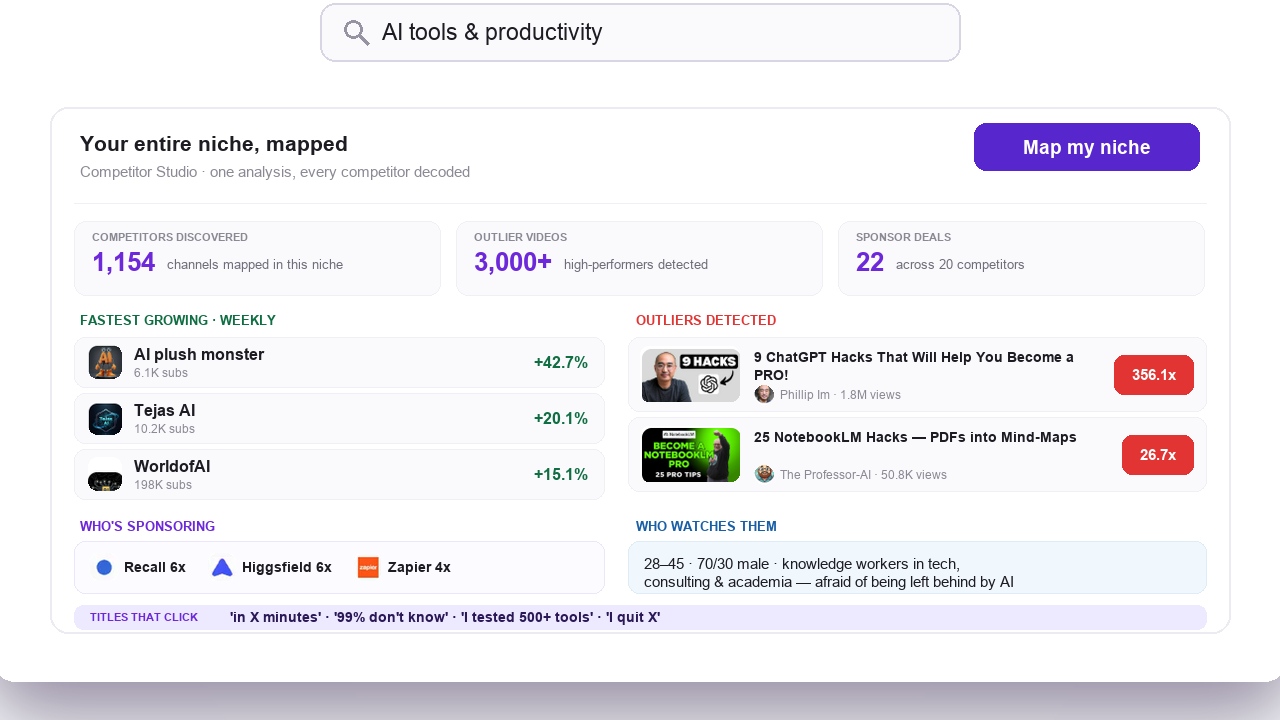
Competitor Studio niche scan, recorded September 13, 2026.
How to build your analytics stack
The right stack depends on deal volume, not company size or budget. A 5-person agency running 40 deals/year needs a heavier stack than a 200-person consumer brand running 2 deals/year. Pick the tier that matches your sponsorship volume.
Solo brand or DTC team
1-2 sponsorship deals per year- ✓Free verification: HypeAuditor free profile lookup, SocialBlade trend check
- ✓OutlierKit Hobby ($29/mo) for psychographic + outlier checks before signing
- ✓Manual comment review of the creator's last 20 videos
Why: At low deal volume, the cost of one misfit sponsorship dwarfs tool spend. A single $5K deal that misses costs more than a year of analytics. Skip the enterprise tools; go deep on each creator manually.
Agency or in-house brand team
10-50 sponsorship deals per year- ✓HypeAuditor or Modash for cross-platform discovery and fraud screening
- ✓OutlierKit Pro ($49/mo; annual billing saves 50%) for psychographic, sponsor history, and outlier-pattern analysis on shortlists
- ✓Internal CRM tagged with niche, monetization model, and sponsor saturation per creator
Why: Two-tool stack is the standard. HypeAuditor screens out fake-follower risk on a 200-creator shortlist. OutlierKit goes deep on the 10-15 creators you actually pitch to clients. Cost is rounding-error against one campaign.
Influencer marketing platform
Building analytics into your own product- ✓Your own discovery and verification stack
- ✓OutlierKit API (live on Pro and Max) for psychographic, outlier, sponsor, and comment intelligence as a data layer
- ✓Pipeline into your own dashboards and client-facing reports
Why: If you're building a platform, you don't license another dashboard. You license the underlying data. The API exposes niche-scan, audience profiles, sponsor maps, and outlier signals as endpoints your engineers can wire into your own UI.
For Influencer Marketing Platforms & Tools
Building your own influencer marketing platform, agency tool, or creator research product? The OutlierKit API is live on Pro and Max plans. Outlier video search, semantic channel similarity, AI-enhanced channel and video lookups, recent uploads, transcripts, live comments, and keyword research. Plug it directly into your product.
Each call costs 2 to 10 credits, JSON in / JSON out, bearer-token auth, with credits shared between the OutlierKit web app and API. Endpoints are stable in v1; we're still tuning rate limits and expanding coverage based on early-user feedback.
What each analytics layer tells you
Cross-reference of analytics layers, the tool categories that surface each one, and the brand-side question each one answers.
| Analytics layer | Best surfaced by | Answers |
|---|---|---|
| Demographics (age, gender, geo) | Verification tools (HypeAuditor, Modash) | Who is the audience demographically? |
| Fraud detection (bot %, fake followers) | Verification tools (HypeAuditor) | Is the audience real? |
| Audience psychographics | Audience intelligence (OutlierKit Competitor Studio) | Why do viewers actually watch? |
| Outlier video patterns | Outlier detection (OutlierKit, 1of10, Spotter Studio) | What content does the audience reward? |
| Sponsor history at niche level | Niche-wide sponsor intelligence (OutlierKit Competitor Studio) | Who already owns this niche? |
| Monetization model fit | Monetization mapping (OutlierKit Funnels) | How do creators here earn? |
| Comment intelligence | Niche-wide comment analysis (OutlierKit) | What does the audience ask for? |
| Growth trajectory | Channel analysis (OutlierKit, Viewstats, Social Blade) | Is reach climbing or plateauing? |
| Niche positioning | Niche mapping (OutlierKit Competitor Studio) | Where does this creator sit in the competitive map? |
| Cross-platform breadth | Multi-platform tools (HypeAuditor, Modash, CreatorIQ) | Does the creator also reach IG, TikTok, X? |
What OutlierKit users say
These are real, attributed OutlierKit users from the creator side of the market. The signals in this page run the same way for brand and agency teams: swap “my next upload” for “my next sponsored video” and the analytics carry over.
“Great addition to my stack and simple to use. Hit an issue and the team worked hard to fix it. Great product, hardworking team.”
“Been creating for years, running multiple YouTube channels. OutlierKit is the first tool that actually improved our view counts almost instantly. The competition analysis revealed gaps we never knew existed.”
“OutlierKit has drastically reduced my time to plan content for my SaaS YouTube channel. The deep research feature revealed insights I'd overlooked earlier. A must-have if you're serious about YouTube as an acquisition channel.”
Frequently asked questions
Basics
What is YouTube influencer analytics?
YouTube influencer analytics is the set of data signals brand and agency teams use to vet a creator before paying for a sponsorship. It goes beyond subscriber count. It covers audience authenticity, psychographic fit, content patterns, sponsor saturation, monetization models, and growth trajectory. Most underperforming sponsorships failed at the analytics step, not the negotiation step.
Is subscriber count a reliable analytics signal?
No. Subscriber count is a stock metric that doesn't reflect current reach. A 500K-subscriber creator getting 30K views per video is a different investment from a 500K-subscriber creator getting 250K. Price deals on trailing-30-day view rate, not on subscribers, and verify the trend is flat or upward before signing.
What's the difference between audience demographics and audience psychographics?
Demographics describe who the audience is (age, gender, country). Psychographics describe why they watch (motivations, pain points, identities, jobs-to-be-done). Two creators can share identical demographics and have psychographically opposite audiences. Demographics are necessary; psychographics are predictive.
Comparisons
Is HypeAuditor enough for vetting YouTube creators?
It depends on the job. HypeAuditor is the category leader for fraud detection and cross-platform discovery. If the question is "are these followers real," it's the right tool. If the question is "will this audience actually buy our product," you need a layer above demographics. Psychographic and content-pattern analytics aren't where HypeAuditor focuses, based on its public product positioning as of May 2026. Most brand teams running serious YouTube budgets use both. See our full [OutlierKit vs HypeAuditor](/resources/outlierkit-vs-hypeauditor/) comparison, or the wider list of [HypeAuditor alternatives](/resources/hypeauditor-alternatives/) with verified pricing and ratings.
How is OutlierKit different from a traditional influencer analytics platform?
Traditional influencer analytics platforms are built around discovery and verification: search millions of creators, score audience authenticity, surface demographics. OutlierKit is built around audience intelligence: psychographics, sponsor saturation, outlier video patterns, monetization models, and niche-wide comment signals. It's a complementary layer, not a replacement.
Best tools to analyze influencer audience demographics in 2026?
For demographic and fraud-detection layers: HypeAuditor and Modash lead the category. For psychographic and content-fit layers: OutlierKit. For growth-trajectory checks: Viewstats, Social Blade. Most professional teams use a stack: one tool for verification, one for intelligence, not a single platform.
Methodology
How do you measure outlier video patterns?
Outliers are videos performing 3-10x above a channel's own baseline view-rate, normalized for channel size and time since publish. The spike matters less than the recurring structural pattern across multiple outliers: hook style, format archetype, topic adjacency. That pattern is what a brand briefs against.
Can comment intelligence be used as a creative brief input?
Yes, and it's one of the most direct uses. Niche-wide comment analysis surfaces the recurring questions, frustrations, and product requests across every creator in the space. Briefing a sponsored video to answer the top three comment themes consistently outperforms generic feature-led scripts.
What does "sponsor saturation" mean at niche level?
Sponsor saturation is the share of recent sponsored videos in a niche taken by a small set of repeat sponsors. High saturation means viewer fatigue is likely, so your creative needs to differ sharply. Low saturation means whitespace. The niche is under-monetized, and a thoughtful sponsor can dominate share-of-voice cheaply.
Pricing
How much should I budget for influencer analytics?
Budget against deal volume, not headcount. Solo brand (1-2 deals/year): roughly $350/year for an OutlierKit Hobby seat plus free verification tools. Agency (10-50 deals/year): $500-2,000/month across a verification tool plus an intelligence tool. Platform builder: API-tier licensing, usually quoted per call volume. The breakeven is one prevented misfit sponsorship.
Is OutlierKit's API publicly available?
Yes. The API is live on Pro and Max plans as of May 2026. It exposes channel search, audience profiles, sponsor data, outlier videos, and comment signals as endpoints. Each call costs 2 to 10 credits, JSON in and JSON out, with credits shared between the OutlierKit web app and the API. Full endpoint documentation is at outlierkit.com/app/api-docs.
What's the cheapest credible analytics setup for a small brand?
Free HypeAuditor profile lookup for surface-level verification, plus OutlierKit Hobby at $29/month for psychographic and outlier-pattern checks. Hobby's 100 monthly credits cover a steady run of channel and niche checks, enough for a brand running 1-2 sponsorships per year to make informed decisions.
Dig deeper
- → Find YouTube micro-influencers. The workflow for shortlisting creators inside a niche.
- → The YouTube reach ratio. Benchmarks across 7 niches and 166 channels, and why the biggest channel is never the best buy per subscriber.
- → Find YouTube influencers. The discovery workflow these signals get applied to.
- → OutlierKit vs HypeAuditor. Full head-to-head on the verification vs intelligence stack.
- → YouTube sponsorship rates. Benchmark data for sizing deals.
- → Competitor Studio. The niche-scan tool used in the walkthrough above.
- → Influencer strategy for AI search. How creator selection changes when discovery routes through AI answers.
Disclaimer: Tool descriptions and category positioning are based on publicly available information as of September 13, 2026. Pricing for third-party tools (HypeAuditor, Modash, CreatorIQ) is based on public listings and third-party reports. Verify directly with each vendor.

Run a Level 3 analytics scan before your next sponsorship deal
Verify audience psychographic fit, audit sponsor saturation, decode the outlier patterns the audience actually rewards. Start with a free trial. No credit card required.
Start Free Trial