Reverse-Engineer Competitor Growth Build Your Winning Strategy
Stop guessing why competitors are growing faster. Use OutlierKit (4.9/5 on Product Hunt)'s Competitor Analysis and Outlier Finder alongside Social Blade (free tool, widely referenced) and YouTube Studio to dissect what's actually driving their growth — then build a strategy that exploits the gaps they leave behind.
TL;DR
Use OutlierKit to reverse-engineer competitor channels — track their growth patterns, find their outlier videos, and turn their winning strategies into your content roadmap.
Deep Insights
Into competitor strategies
Content Gaps
Identified and prioritized
Growth Patterns
Decoded from real data
Strategic Edge
Built on competitor weaknesses
The Problem
You see competitors growing faster than you, but you don't know why. You watch their videos, scroll through their channels, and try to figure out their strategy — but surface-level observation only tells you what they published, not what actually drove their results.
- No way to identify which specific videos drove competitor growth spurts
- Hours spent manually scrolling competitor channels with no system
- Copying competitor content instead of finding strategic gaps
- No data on which competitor strategies are working right now vs. years ago
- Reactive approach — always chasing competitors instead of outmaneuvering them
The creators who overtake competitors don't just watch them — they systematically analyze their data, find the gaps, and build strategies that exploit what competitors miss.
The Solution
OutlierKit identifies your real competitors and reveals their outlier videos — the content that actually drove disproportionate growth.Social Blade adds historical growth context. AI tools synthesize everything into a strategic opportunity map. And YouTube Studio turns those insights into an actionable content plan.
Data-driven competitive intelligence beats guesswork every time.
Before vs. After: The Impact
Manual Competitor Watching
- Scrolling competitor channels with no system
- Guessing which videos drove their growth
- Copying content instead of finding gaps
- No historical data to see strategy evolution
- Always reacting, never getting ahead
Always one step behind the competition
OutlierKit Competitive Intelligence
- Data-driven competitor identification
- Exact outlier videos that drove growth revealed
- Strategic gaps and opportunities identified
- Historical growth patterns decoded
- Proactive strategy built on competitor weaknesses
Strategic advantage built on real intelligence
5
Competitors analyzed
20-30
Outlier videos mapped
10+
Content gaps found
1
Clear strategy built
The 6-Step Workflow at a Glance
Step-by-Step: The Full Competitive Analysis Workflow
Follow these 6 steps to reverse-engineer competitor growth and build a data-driven strategy for your channel. Each step builds on the previous one.
Identify Your Top 5 Competitors
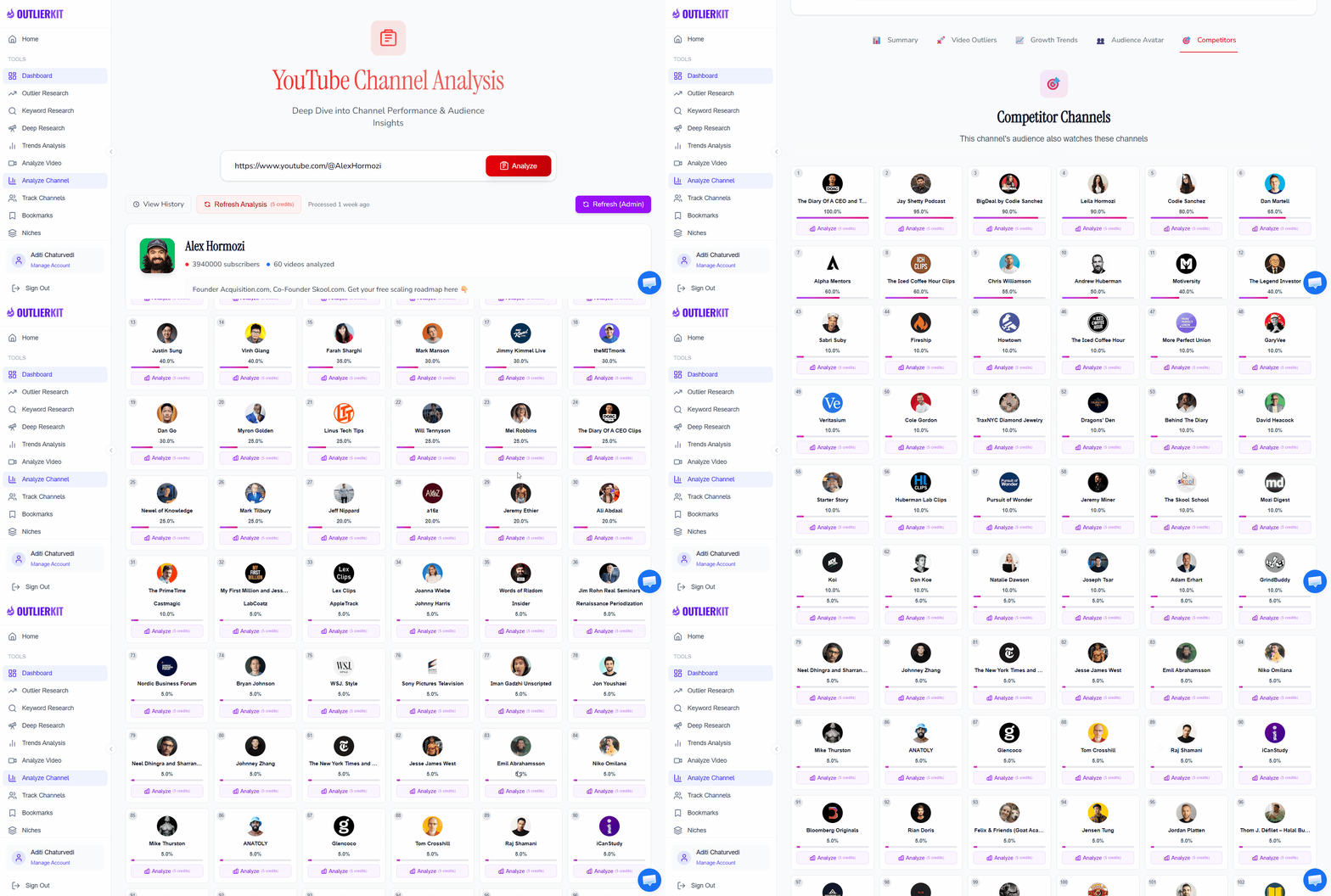
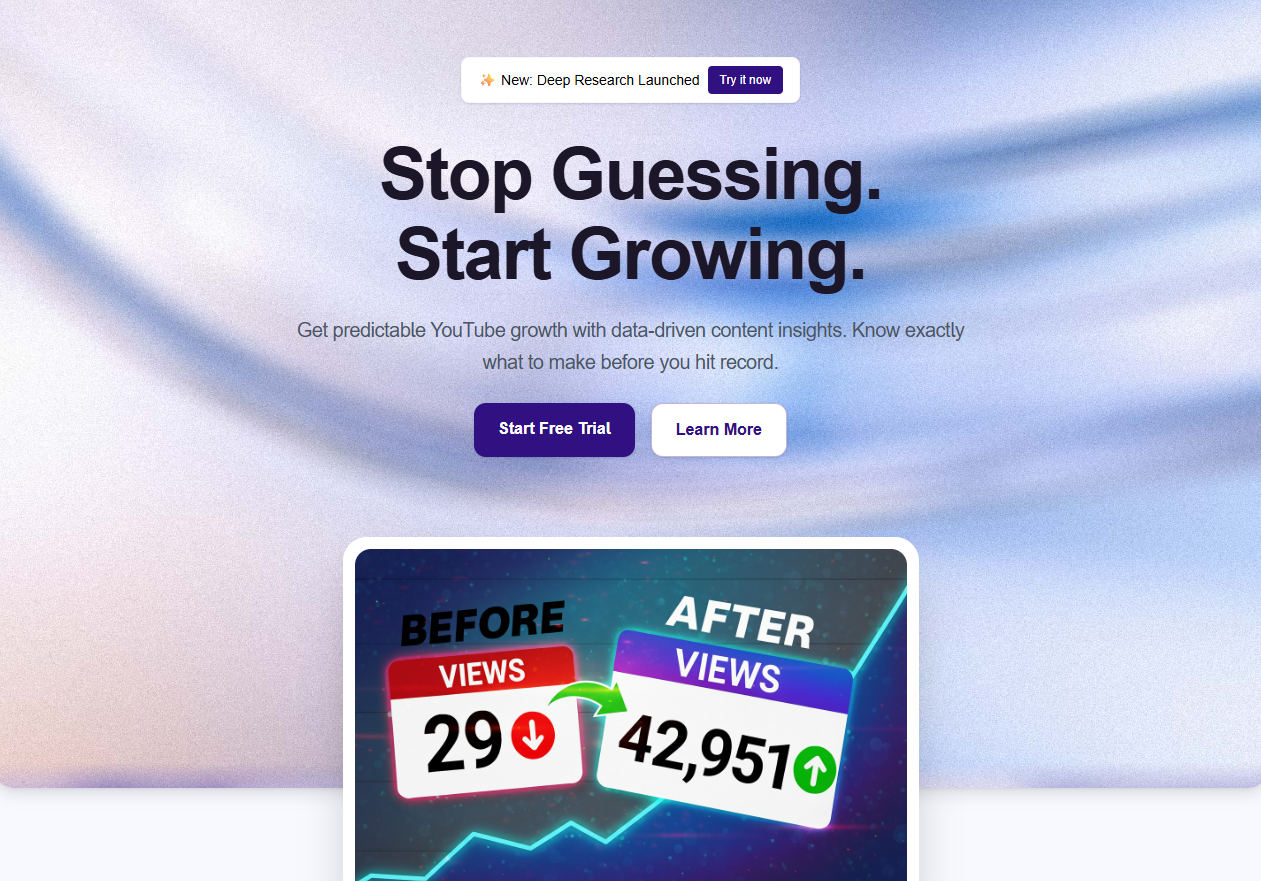 OutlierKit Competitor Analysis
Use OutlierKit's Competitor Analysis tool to find the channels that are actually competing for your audience. Don't guess — let data tell you who's winning in your niche. Competitor Analysis surfaces channels by topic relevance, growth velocity, and audience overlap, so you're studying the right players instead of the obvious big names.
- Enter your niche or primary topic into Competitor Analysis
- Sort results by growth rate to find the fastest-rising channels
- Filter by subscriber range to find competitors at or above your level
- Select your top 5 competitors based on relevance and growth signals
- Save each competitor profile for deeper analysis in the next steps
Pro Tip: Don't just pick the biggest channels in your niche. Focus on channels that grew rapidly in the last 6-12 months — they reveal what's working right now, not what worked three years ago. A channel that went from 10K to 100K subscribers this year is more instructive than one that's been at 1M for years.
Find Their Outlier Videos
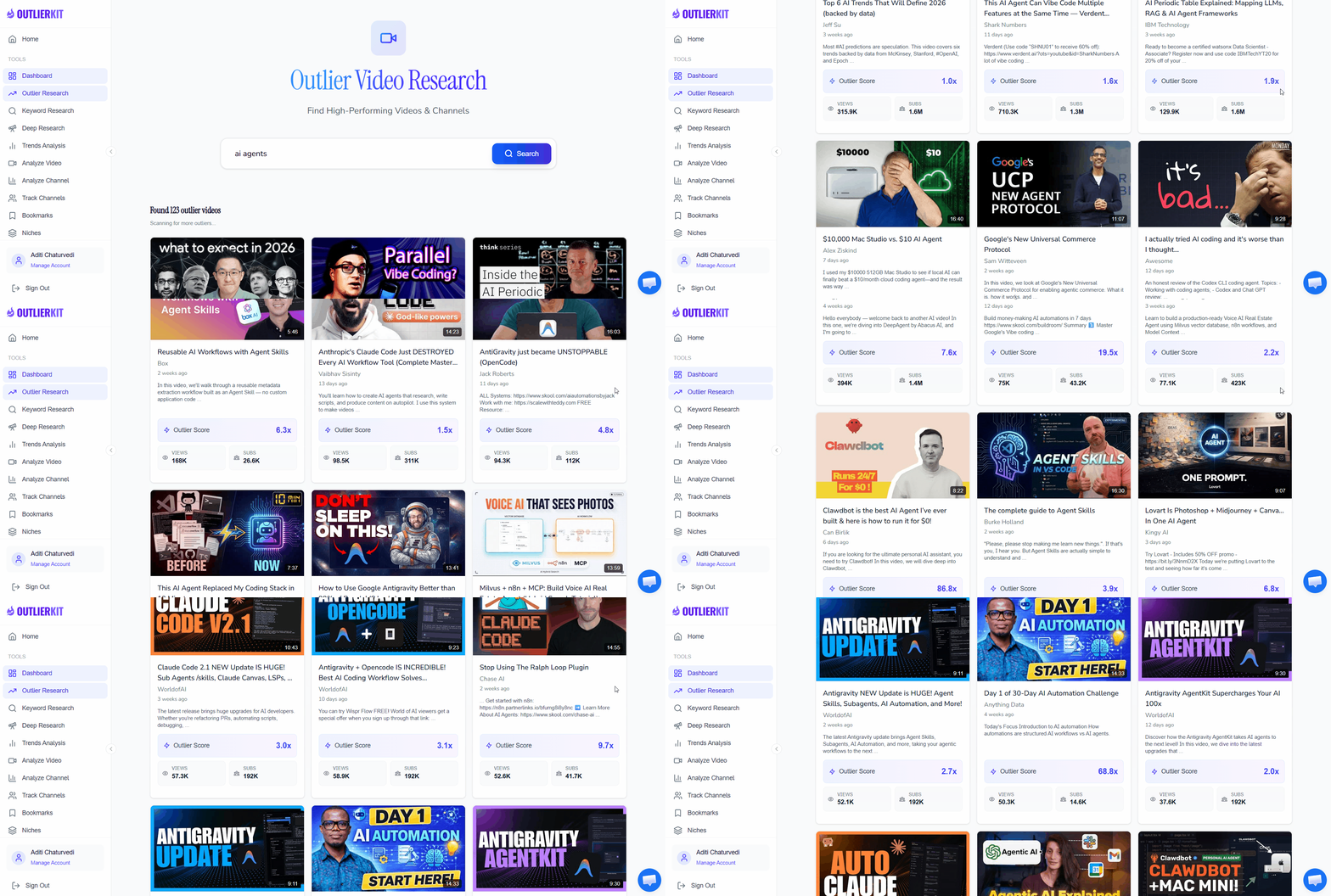
OutlierKit Outlier FinderFor each of your 5 competitors, use OutlierKit's Outlier Finder to discover which specific videos massively outperformed their channel average. These outlier videos are the key — they reveal the exact topics, formats, and angles that drove disproportionate growth for your competitors.
- Run Outlier Finder for each of your 5 competitor channels
- Sort by outlier score to find videos with 5x-50x expected performance
- Note the topic, title structure, and thumbnail style of each outlier
- Look for patterns: do certain topics appear across multiple competitors?
- Export or save 20-30 outlier videos across all 5 competitors
Pro Tip: Pay attention to outlier videos that appear across multiple competitors — if three out of five competitors had breakout success with similar topics, that's an extremely strong signal of audience demand. Cross-competitor outliers are your highest-confidence opportunities.
Analyze Growth Patterns with AI
 ChatGPT
 Gemini
 Claude
Feed your competitor outlier data into an AI tool to uncover the deeper growth patterns. The AI will identify recurring strategies across your competitors — upload cadence, content pillars, audience engagement tactics, and the specific moves that correlated with their biggest growth spurts.
Choose your AI tool — exact prompt for each:
ChatGPT— Best for narrative pattern recognition and strategic storytellingI've researched my top 5 YouTube competitors using OutlierKit. Here's their outlier video data — videos that got 5-50x more views than the channel's average: [Paste competitor outlier data: channel names, video titles, view counts, subscriber counts, outlier scores] Analyze these competitors and identify: 1. The top 5 content strategies driving their growth 2. Common topics and angles across multiple competitors' outlier videos 3. Upload patterns: frequency, timing, and content mix 4. Title and thumbnail patterns that appear in their best-performing videos 5. Growth inflection points — what type of content preceded their biggest subscriber surges? For each pattern, explain the strategic reasoning behind WHY it likely worked.
Gemini— Best for data-driven competitive benchmarkingAnalyze this competitive landscape data from my YouTube niche. I've identified 5 key competitors and their outlier videos using OutlierKit: [Paste your OutlierKit competitor and outlier data] Provide a structured competitive analysis: 1. Growth velocity comparison: rank competitors by growth rate and identify what the fastest-growing ones do differently 2. Content strategy matrix: map each competitor's content pillars and posting frequency 3. Outlier topic overlap: which topics produced outliers for multiple competitors? 4. Format analysis: tutorials vs. listicles vs. comparisons vs. commentary — which formats drive the most outliers? 5. Gap identification: what topics have strong outlier performance but low competition (few channels covering them well)? Present findings as actionable competitive intelligence.
Claude— Best for structured strategic analysis and gap identificationI've used OutlierKit to map my competitive landscape on YouTube. Here's outlier data for my top 5 competitors — videos that massively outperformed their channel averages: [Paste outlier data + competitor channel details] Perform a comprehensive competitive strategy analysis: 1. STRATEGY MAPPING: What are each competitor's core content pillars? Where do they overlap and diverge? 2. GROWTH DRIVERS: Which specific content decisions correlate with their fastest growth periods? 3. OUTLIER PATTERNS: What do the highest-performing outlier videos across all competitors have in common? 4. VULNERABILITY ANALYSIS: Where are competitors weak? What topics do they ignore or handle poorly? 5. OPPORTUNITY MATRIX: Rank opportunities by (a) proven demand from outlier data and (b) competitive gap — topics where demand is high but no competitor owns the space. 6. STRATEGIC RECOMMENDATIONS: Based on this analysis, what should my channel focus on to differentiate and grow?
Pro Tip: Include specific numbers from OutlierKit — exact view counts, subscriber counts, and outlier scores. The more concrete data you provide, the more actionable the AI's analysis will be. Generic descriptions like 'this channel is popular' give you generic advice.
Map Their Content Strategy
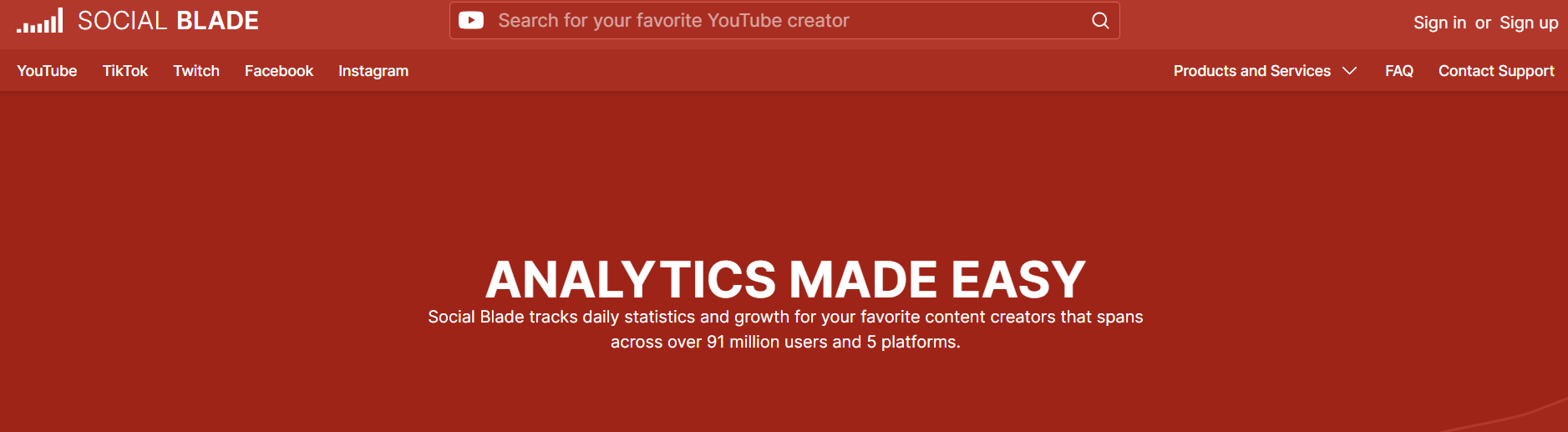 Social Blade
Use Social Blade to add historical context to your AI analysis. Social Blade's historical data shows subscriber growth curves, upload frequency changes, and long-term trends that reveal the timeline of each competitor's strategic decisions. Cross-reference this with your outlier data to understand not just what worked, but when and how competitors deployed their winning strategies.
- Look up each competitor on Social Blade to view their growth history
- Identify growth inflection points — sudden subscriber jumps or view spikes
- Cross-reference inflection points with their outlier videos from Step 2
- Map their upload frequency over time — did they increase cadence before a growth spurt?
- Note any seasonal patterns or timing strategies in their growth curves
- Document the content strategy timeline for each competitor
Pro Tip: The most valuable insight from Social Blade isn't the raw numbers — it's the inflection points. When you see a competitor's growth suddenly accelerate, go back to their uploads from that exact period. The videos they published right before and during that growth spike reveal the strategic moves that actually drove results.
Identify Gaps & Opportunities
ChatGPTGeminiClaudeCombine everything you've gathered — outlier videos, growth patterns, content strategies, and historical data — and use AI to synthesize it into a clear opportunity map. The goal is to find the spaces where audience demand is proven but no competitor has a strong foothold.
Choose your AI tool — exact prompt for each:
ChatGPT— Best for creative opportunity framingBased on my complete competitive analysis of 5 YouTube competitors in [your niche]: Competitor outlier data: [paste from Step 2] Growth pattern analysis: [paste from Step 3] Content strategy timeline: [paste from Step 4] Identify the top 10 content opportunities for my channel. For each opportunity: - Describe the topic/angle and why it's an opportunity - Show which competitor outlier data proves the demand exists - Explain why no competitor currently owns this space - Suggest a specific video title and format I could use - Rate the opportunity: High/Medium/Low confidence Prioritize opportunities where demand signal is strongest and competitive gap is widest.
Gemini— Best for systematic gap analysisUsing my full competitive intelligence on [your niche] YouTube channels: Outlier video data: [paste from Step 2] AI growth analysis: [paste from Step 3] Social Blade historical data: [paste from Step 4] Create a Gap-Opportunity Matrix: CATEGORY 1 — PROVEN GAPS (highest priority): Topics where multiple competitors have outlier videos but no single channel dominates. List 5 opportunities. CATEGORY 2 — UNDERSERVED AUDIENCES: Viewer segments that competitors' outlier data reveals but nobody specifically targets. List 3 opportunities. CATEGORY 3 — FORMAT GAPS: Content formats that produce outliers but are underused in the niche. List 3 opportunities. CATEGORY 4 — TIMING OPPORTUNITIES: Seasonal or trending topics where competitors are slow to respond. List 3 opportunities. For each, include supporting evidence from the data.
Claude— Best for strategic prioritizationI've completed a comprehensive competitive analysis for my YouTube channel in [your niche]. Here's everything I've gathered: Competitor outlier videos: [paste from Step 2] Growth pattern analysis: [paste from Step 3] Historical growth data: [paste from Step 4] Synthesize this into a strategic opportunity assessment: 1. COMPETITIVE MAP: Summarize each competitor's core strategy in 1-2 sentences. Where do they overlap? Where are the white spaces? 2. DEMAND-GAP MATRIX: Create a 2x2 matrix of (High Demand / Low Demand) x (High Competition / Low Competition). List specific topics in each quadrant. 3. TOP 10 OPPORTUNITIES: Ranked by strategic value. For each: the opportunity, evidence from outlier data, competitive gap, suggested angle, and estimated difficulty. 4. ANTI-PATTERNS: What strategies should I AVOID based on what I see competitors failing at? 5. 90-DAY GAME PLAN: If I could only execute 5 of these opportunities in the next 90 days, which 5 and in what order?
Pro Tip: The best opportunities sit at the intersection of three signals: (1) outlier data proves audience demand, (2) no competitor fully owns the space, and (3) the topic aligns with your channel's strengths. If all three align, you've found a high-confidence growth opportunity.
Build Your Competitive Strategy
 YouTube Studio
Take your prioritized opportunities into YouTube Studio and build your competitive content plan. Use the insights from your analysis to craft titles, descriptions, and thumbnails that are informed by what actually drives results in your niche — not guesswork. Schedule your first 10 videos based on the opportunity ranking from Step 5.
- Create a content calendar in YouTube Studio based on your top 10 opportunities
- Draft titles using patterns from competitor outlier videos — adapt, don't copy
- Plan thumbnails informed by the visual patterns you identified in outlier analysis
- Set upload frequency based on what the growth data showed works in your niche
- Track performance against competitor benchmarks from your analysis
- Re-run this workflow monthly to stay ahead of competitive shifts
Pro Tip: Don't try to beat competitors at their own game. Use your competitive analysis to find angles they've missed, not to copy what they're doing. The creators who grow fastest are the ones who combine proven demand with a unique perspective — that's exactly what this workflow enables.
Who This Workflow Is For
Ambitious Creators
You know your competitors are growing faster and you want to understand exactly why — then use that knowledge to close the gap and overtake them.
Niche Newcomers
You're entering a niche and need to quickly understand the competitive landscape — who's winning, what's working, and where the opportunities are.
Channel Strategists
You manage channels or advise creators and need a repeatable framework for competitive analysis that produces actionable strategic recommendations.
Plateaued Channels
Your growth has stalled and you suspect competitors are doing something different. This workflow reveals exactly what that is and how to respond.
Frequently Asked Questions
Basics
How is this different from just watching competitor videos?
Watching competitor videos gives you surface-level inspiration. This workflow uses data to reveal what actually drove their growth — specific outlier videos, growth inflection points, content gaps, and strategic patterns. You're not guessing what works; you're analyzing proven performance data to build a strategy based on evidence. The difference is like reading a company's marketing vs. reading their financial statements.
How many competitors should I analyze?
Five is the sweet spot. Fewer than five and you won't see enough patterns across the competitive landscape. More than five and the analysis becomes overwhelming without adding proportional value. Focus on competitors who are (a) in your exact niche, (b) growing actively, and (c) at or above your channel size. OutlierKit's Competitor Analysis helps you identify the right five quickly.
Strategy & Approach
Does this work if I'm in a small or new niche?
Yes — and it's actually more powerful in smaller niches because there are fewer competitors to analyze, making the gaps easier to spot. Even if your niche only has 10-20 active channels, running this workflow will reveal which topics drive outsized results and where the opportunities lie. In emerging niches, being the first to identify and fill content gaps gives you a massive first-mover advantage.
How often should I run this competitive analysis?
Run the full 6-step workflow once per quarter. Between quarterly deep-dives, check OutlierKit's Outlier Finder weekly to spot new breakout videos from competitors — these signal shifts in audience demand or new strategies being tested. If a competitor suddenly has a viral video on a topic you haven't covered, that's worth a fast-track response.
Tools & Scope
Will competitors know I'm analyzing them?
No. OutlierKit analyzes publicly available YouTube data — video titles, view counts, subscriber counts, and publish dates. Social Blade also uses public data. No tool in this workflow requires access to competitor accounts or sends any notifications. Your competitive research is completely invisible to the channels you're studying.
Can I use this workflow for niches outside YouTube?
The core principles — find competitors, identify their outlier content, analyze patterns, find gaps — apply to any content platform. However, the specific tools in this workflow (OutlierKit, Social Blade, YouTube Studio) are YouTube-focused. For other platforms, you'd adapt Step 1 and Step 4 with platform-specific analytics tools while keeping the AI analysis steps (3 and 5) nearly identical.
Related Workflows
AI Video Ideation Pipeline
Generate 30 data-backed video ideas in 10 minutes using OutlierKit + AI tools.
SEO & OptimizationFree YouTube SEO Workflow
Complete SEO optimization using only free tools — no VidIQ (4.5/5 on G2) or TubeBuddy (4.6/5 on Capterra) needed.
Growth & MonetizationAI Affiliate Marketing on YouTube
Build a profitable affiliate marketing YouTube channel using AI-powered research and content strategies.

Ready to reverse-engineer your competitors' growth?
Start with OutlierKit's Competitor Analysis and Outlier Finder to see exactly what's driving growth in your niche. Combine with Social Blade and AI tools to build a strategy that turns competitor intelligence into your competitive advantage.
Try OutlierKit Free