YouTube Keyword Research Tool: Find High-Volume Keywords
Master YouTube SEO with OutlierKit's keyword research tool. Find keywords with search volume data, difficulty scores, and discover untapped opportunities for your videos.
Keyword research is the foundation of YouTube SEO success. The right keywords help your videos get discovered by the right audience at the right time. OutlierKit's Keyword Research tool gives you actual monthly search volumes and difficulty scores for YouTube—data that most other tools don't provide. Whether you're optimizing existing videos or planning new content, understanding what people are searching for is crucial for sustainable channel growth.
Step-by-Step Instructions
- 1
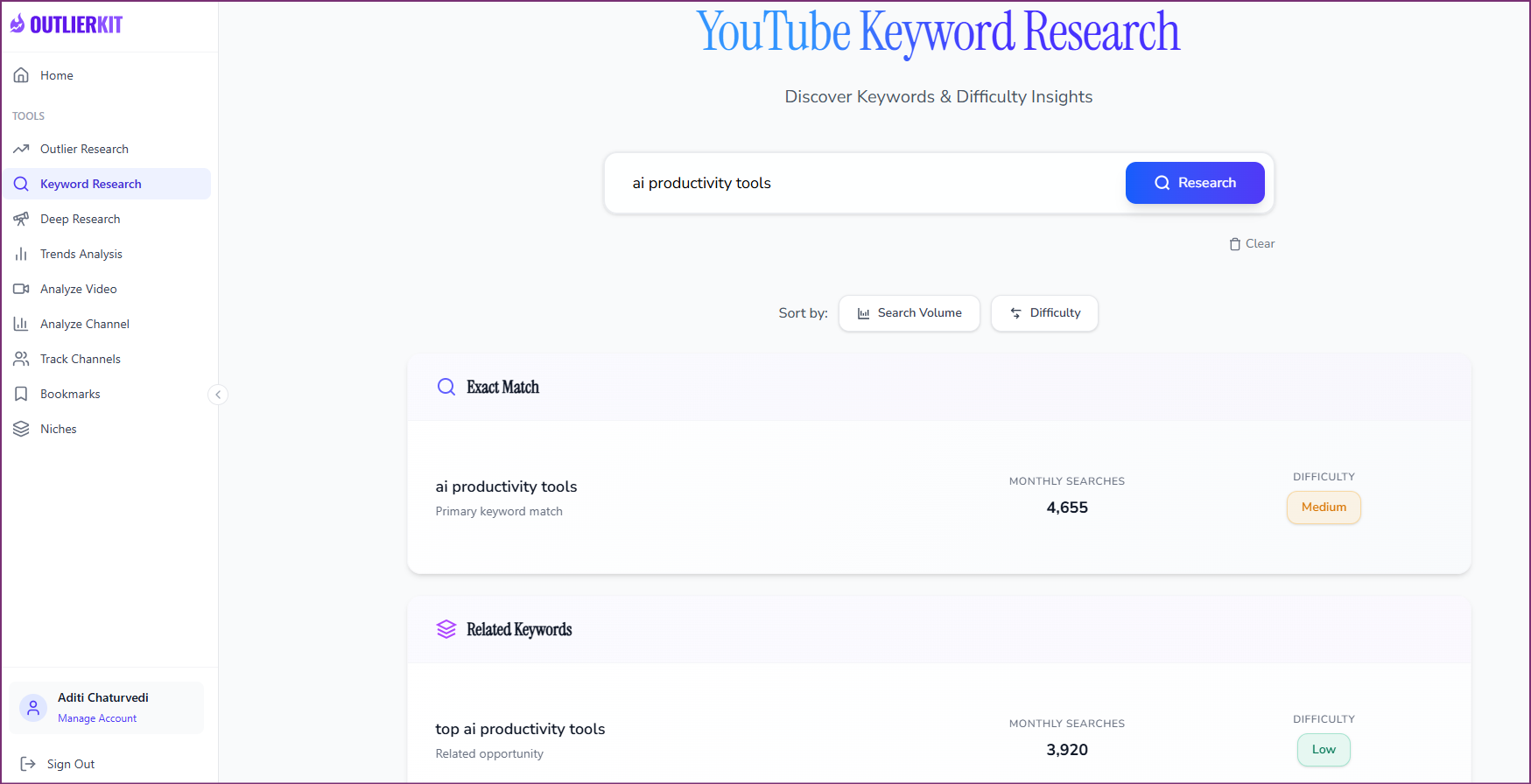
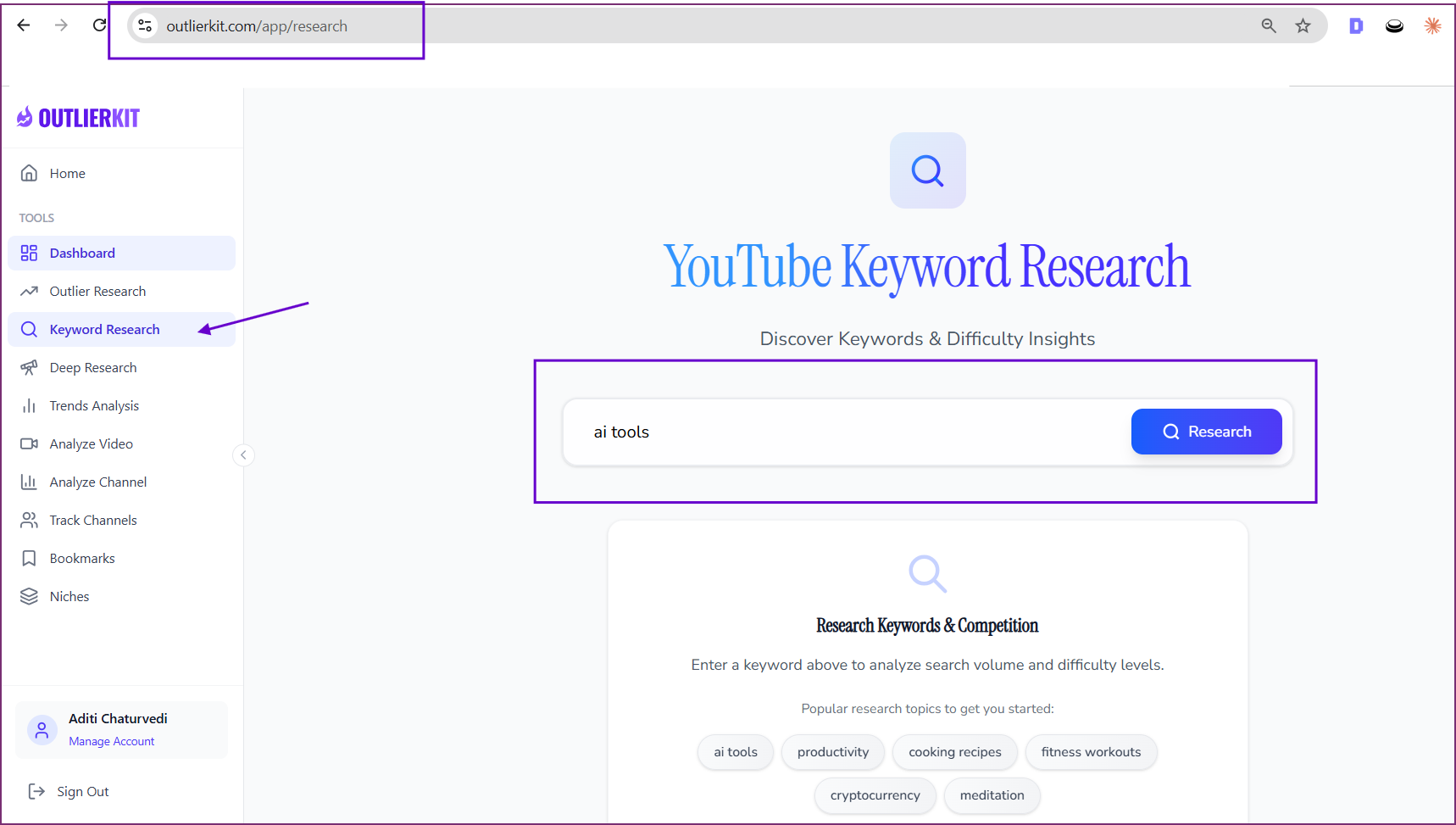
Click "Keyword Research" in the left sidebar
- 2
Enter a keyword in the search bar (e.g., "ai tools")
- 3
Click the "Research" button to analyze the keyword
- 4
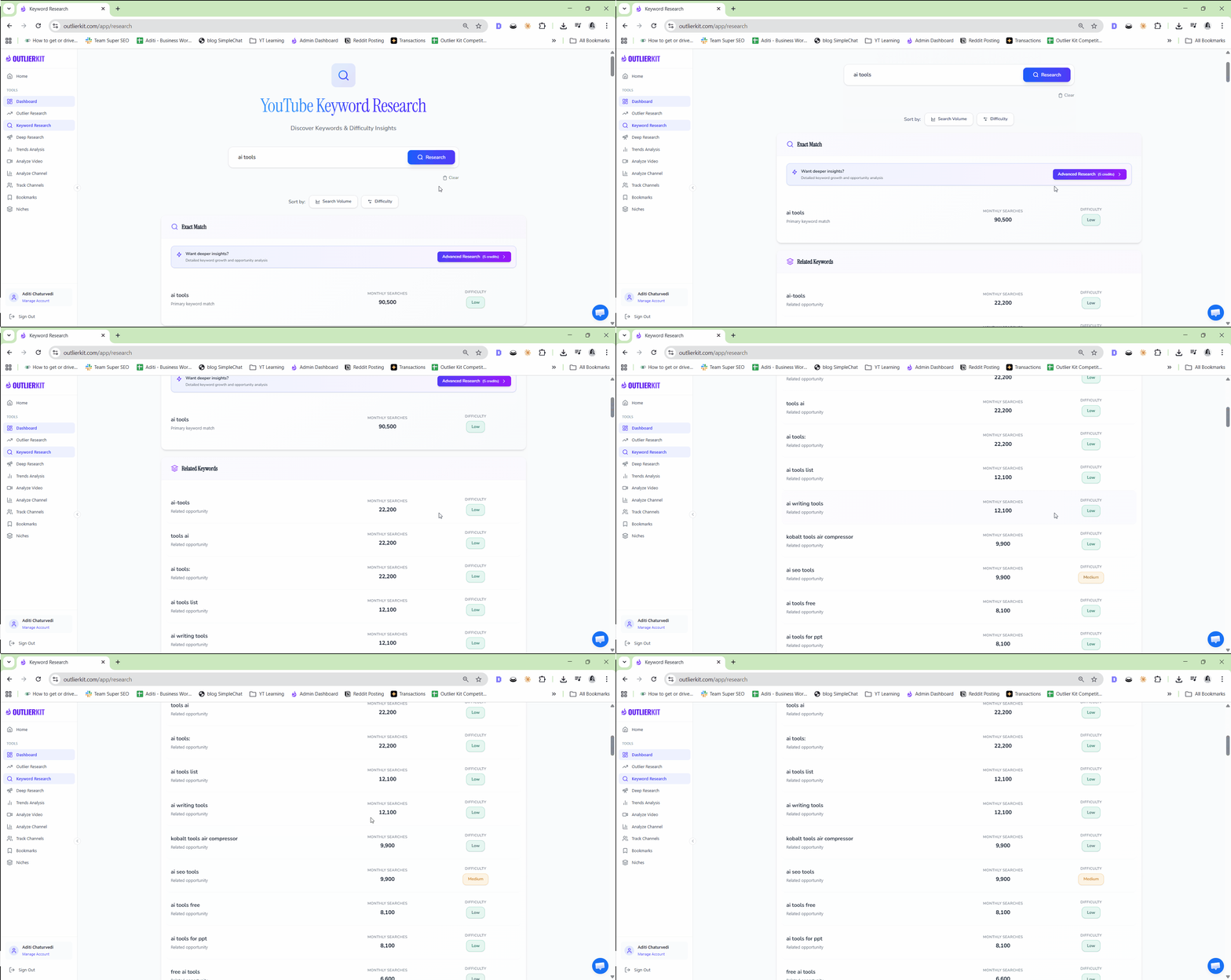
View the Exact Match result showing Monthly Searches and Difficulty level (Low/Medium/High)
- 5
Scroll down to see Related Keywords with their search volumes and difficulty scores
- 6
Use Sort options to organize by "Search Volume" or "Difficulty"
- 7
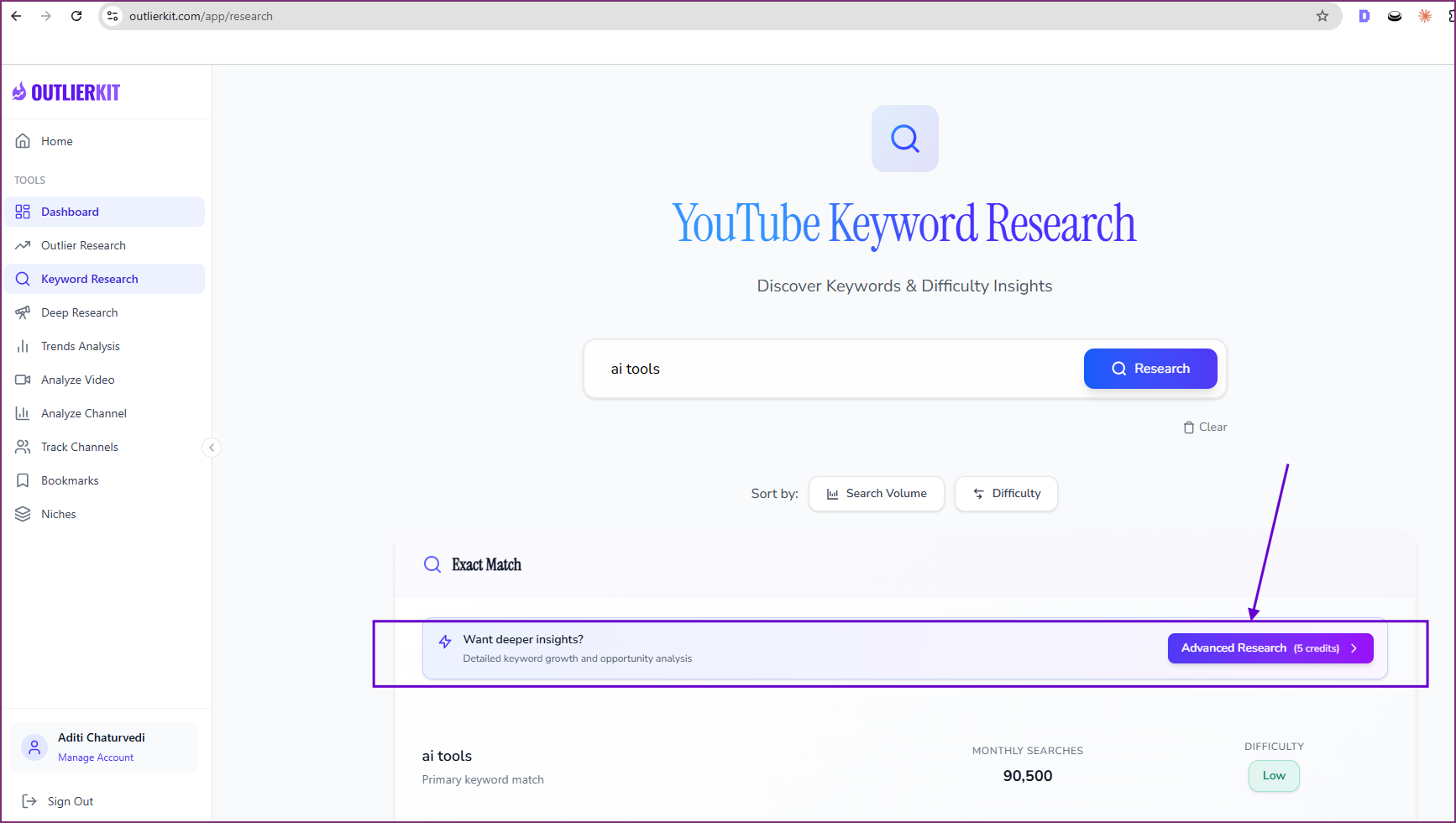
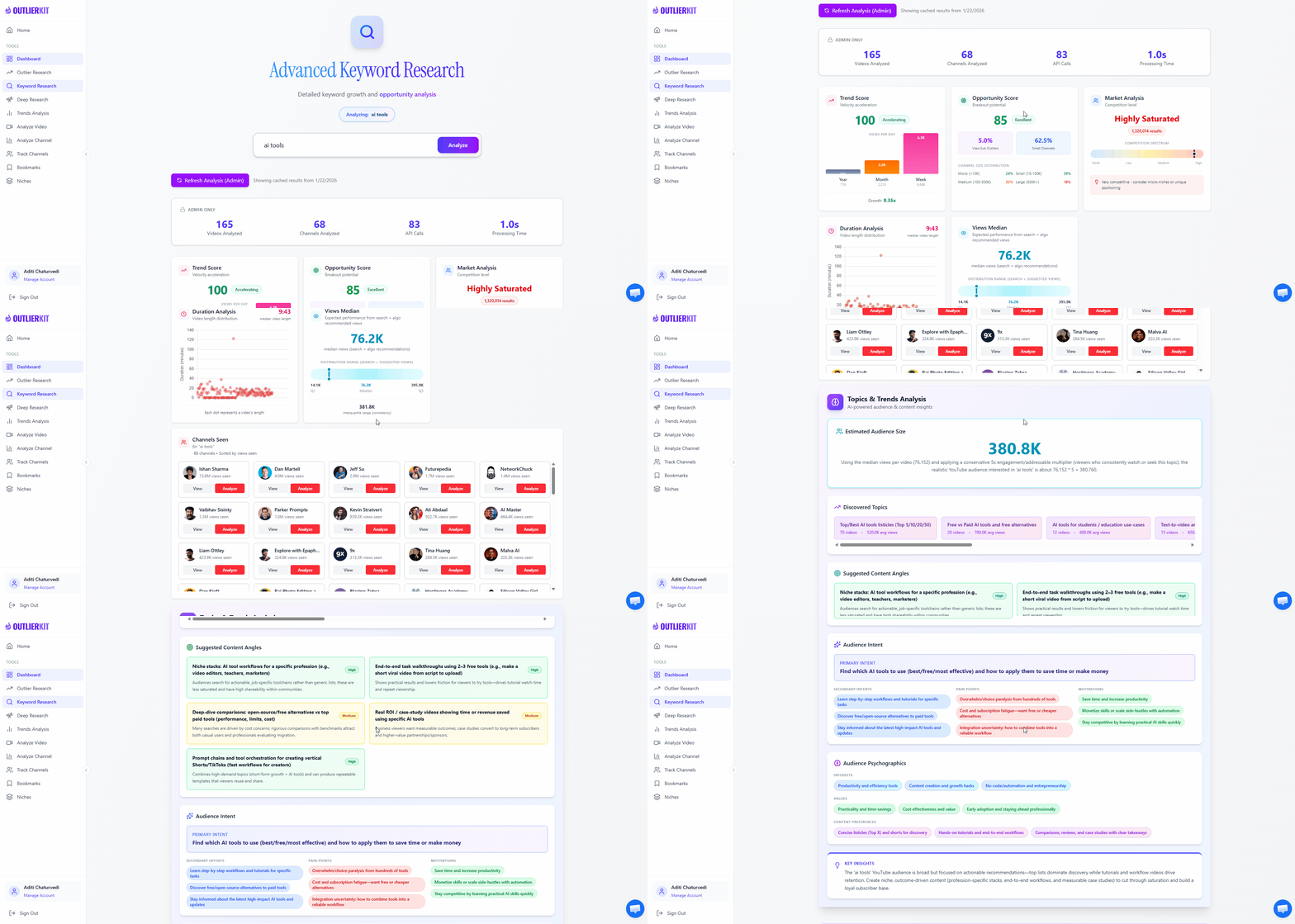
Click "Advanced Research" (5 credits) for deeper keyword growth and opportunity analysis
- 8
View advanced keyword insights including trends and competition data
- 9
Click "Clear" to start a new search
Pro Tips
- Target keywords with high search volume but low-medium difficulty for best results
- Use long-tail keywords (3+ words) for less competition and more targeted traffic
- Include your primary keyword in the video title, description, and tags
- Research competitor videos to see which keywords they're ranking for
- Check keyword trends to identify seasonal opportunities
What is YouTube Keyword Research?
YouTube keyword research is the process of discovering what terms and phrases people are actively searching for on YouTube.
- 1YouTube has its own unique search patterns—people search differently for videos versus web pages
- 2Reveals actual demand for content in your niche, so you create videos people are already looking for
- 3YouTube search remains one of the most reliable sources of sustainable channel growth
- 4The key is balancing search volume (enough to drive views) with competition (low enough to rank)
The Hard Way vs The Easy Way
Without OutlierKit (The Hard Way)
- Guess Keywords BlindlyType random keywords into YouTube search and try to gauge popularity from autocomplete suggestions alone—with no actual search volume data.
- Use Google Data InsteadRely on Google Keyword Planner which shows web search volume, not YouTube search volume—a completely different search ecosystem.
- No Difficulty InsightHave no way of knowing if a keyword is realistic to rank for or if it's dominated by massive channels you can't compete with.
- Trial and Error OptimizationPublish videos, wait weeks to see if they rank, then try different keywords—wasting time and content on keywords that never had potential.
With OutlierKit (The Easy Way)
- Real YouTube Search VolumeSee actual monthly search volumes specific to YouTube, not generic web data—know exactly how many people search for each term.
- Difficulty ScoresInstantly see if a keyword is Low, Medium, or High difficulty, helping you target realistic opportunities for your channel size.
- Related Keyword DiscoveryAutomatically discover related keywords you might never have thought of, complete with their search volumes and difficulty scores.
- Advanced AI AnalysisUse Advanced Research to get AI-powered insights on keyword trends, competition analysis, and strategic recommendations.
How Pro YouTubers Do It
Target the Sweet Spot
Pros look for keywords with 1K-10K monthly searches and low-medium difficulty. High enough volume to matter, low enough competition to rank.
Use Long-Tail Keywords in Titles
Instead of 'weight loss tips', target 'weight loss tips for beginners over 40'. More specific = less competition + higher intent viewers.
Research Before Every Video
Successful creators never skip keyword research. Even for topics they 'know' will work, they validate with data first.
Build Keyword Clusters
Group related keywords together. One video can rank for multiple related terms if you weave them naturally into your content.
Real-World Examples
Personal finance channel starting out
Discovered 'how to budget for beginners' had 8K monthly searches with low difficulty, while 'budgeting' alone was highly competitive
Video ranked #3 for the long-tail keyword within 3 weeks, bringing 5K organic views monthly
DIY crafts creator planning a series
Used related keywords to find 'easy crafts for kids' variations: 'with paper', 'at home', 'no supplies needed'
Created a 5-video series, each targeting a different variation, collectively generating 50K monthly views
Common Mistakes to Avoid
Why it hurts: High volume usually means high competition. New or small channels get buried.
Do this instead: Mix in low-competition keywords where you can actually rank and build authority.
Why it hurts: YouTube's algorithm and viewers both penalize awkward, keyword-stuffed content.
Do this instead: Use your primary keyword naturally in the title and description; let related terms flow organically.
Why it hurts: Search trends change seasonally and as new content enters the market.
Do this instead: Re-research your top-performing topics quarterly to find new keyword opportunities.
Frequently Asked Questions
What does keyword difficulty mean?
Keyword difficulty indicates how hard it will be to rank for that keyword on YouTube. Low difficulty keywords are easier to rank for, while high difficulty keywords have more competition and typically require a larger channel to compete.
How accurate is the search volume data?
Our search volume data is based on YouTube's actual search patterns and is updated regularly. While no tool can provide exact numbers, our estimates give you reliable directional guidance for keyword selection.
Should I only target high-volume keywords?
Not necessarily. High-volume keywords often have more competition. A balanced strategy includes some high-volume keywords and several low-competition, long-tail keywords that are easier to rank for.

Ready to grow your YouTube channel?
OutlierKit helps you find winning content strategies with competitor analysis and keyword research.
Try OutlierKit Free