
Zenn YouTube channel analysis
Zenn is a YouTube channel with 179.0K subscribers and 17.6M total views, and an estimated $2K – $5K/mo revenue. This analysis breaks down its outlier videos, content strategy, similar channels, revenue & valuation estimate.
Analysis generated with AI from public YouTube data. Revenue and valuation figures are estimates derived from public data, not financial advice.
Zenn Channel Overview
lifetime totalsZenn Outlier Videos
breakouts ≥1.5× recent median




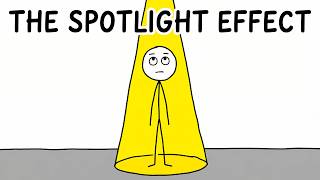


Zenn Top Videos
biggest everREPLICATE. The channel's faceless, highly structured, query-driven format is highly systematic and easy to copy, but do not acquire it due to its declining recent momentum (0.5x) and heavy reliance on a few historic viral hits that distort the median performance.
Zenn Niche & Positioning
Answering deep, primal, and psychological questions about human history, biology, and behavioral phenomena using a highly minimalist, faceless storytelling format.
Zenn Content Strategy
Almost entirely evergreen, focusing on timeless psychological effects, ancient human lifestyles, and existential biological mysteries that sustain long-tail search traffic.
Zenn Outlier Playbook
the repeatable breakout formulaZenn breaks out when it turns a huge, timeless human mystery into a simple naive question: ancient human daily life, birth/memory, death, civilization collapse, or humanity's place in the universe. The strongest repeatable lane is evolutionary-anthropology + existential curiosity: "What Did Ancient Humans Do at Night?" 7.8M, "What Did Ancient Humans Actually Eat?" 792K, "What Did Ancient Humans Do All Day?" 383K, plus adjacent universal-body/life questions like "Why You Can't Remember Being a Baby" 1.8M and "What Happens After We Die?" 520K. Secondary breakout format is an ominous named concept with catastrophic human implications, especially "The Calhoun Effect" 4.2M. No guest is needed; th
Use a childlike, universal question with a massive implied answer: "What Did Ancient Humans [Actually] Do/Eat [at Night/All Day]?", "Why You Can't [remember/know/escape] [basic human thing]", "What Happens After [death/basic life event]?", or one ominous named phenomenon: "The [Last Name] Effect" on
- 1Make the next video part of the proven ancient-human trilogy rather than a random curiosity: topics like "What Did Ancient Humans Dream About?", "What Did Ancient Humans Do When Someone Died?", "How D
- 2Open with a concrete modern-vs-ancient contrast like the winning "night/eat/all day" videos: no electricity, no supermarkets, no clocks, no hospitals, no written language — then ask what a normal huma
- 3Keep the title extremely plain and broad; avoid cleverness. Use "What Did Ancient Humans..." or "Why You Can't..." instead of niche science wording. Add "Actually" only when correcting a common assump
- 4Build the video around one existential payoff: the answer should change how viewers see themselves today, like baby memory, death, aliens, the Titanic, or the Calhoun Effect did — not just explain an
- 5If using an "Effect" title, choose only dark, mysterious, society-scale material similar to "The Calhoun Effect"; avoid softer effects like "The Marshmallow Effect," "The Pratfall Effect," or "The Spo
Zenn Performance Drivers
Zenn Topic Clusters
Zenn Growth Opportunities
untapped whitespace- Introduce a recurring 'Ancient Technology' sub-series to capture the same audience that loved the Titanic and wheel evolution videos.
- Double down on psychological 'Effects' by creating a dedicated playlist focusing on lesser-known cognitive biases (e.g., the Dunning-Kruger or Zeigarnik effect).
- Optimize back-catalog CTR by updating the thumbnails of underperforming recent uploads (like 'What Do Blind People Actually See?') to match the high-contrast, minimalist style of the 1M+ view hits.
- Create deep-dive historical comparison videos (e.g., comparing daily life in ancient Rome vs. ancient Egypt) to expand the successful 'Ancient Humans' cluster.
How Replicable Is Zenn
The channel relies entirely on a faceless, script-and-stock-footage/animation model with highly formulaic 'Why/What' titles, making it exceptionally easy to outsource and replicate with a competent writer and editor.
Zenn Content Risks
- Extreme reliance on a few hyper-viral outliers to sustain channel authority, leaving the channel vulnerable when the algorithm shifts away from those specific topics.
- High risk of audience fatigue and declining momentum (currently at 0.5x) if the 'What/Why' title formulas and minimalist visual style begin to feel repetitive.
- Low viewer loyalty due to the faceless, host-less format, making it difficult to build a community or monetize outside of AdSense.
Who Watches Zenn
estimated audienceEstimated from public channel data — titles, descriptions, metadata and co-watched channels. Not YouTube Analytics. high confidence
This channel attracts a highly curious, intellectually driven audience of young adults and lifelong learners. They are deeply fascinated by existential, psychological, and anthropological mysteries, seeking out minimalist, high-quality storytelling that explains the quirks of human nature, biology, and history.
Leans male, driven by interest in evolutionary biology, history, and existential
Primarily Anglosphere, with strong representation from global English-speaking audiences interested in science and history
What Zenn's Audience Cares About
- Existential dread and anxiety about the future
- Disconnection from ancestral, natural human roots in the modern digital age
- Information overload from low-quality, sensationalized media
- Seeking answers to fundamental, unspoken questions about human existence
- Desire to understand the biological and psychological drivers behind everyday behaviors
- Finding comfort in evolutionary and historical context for modern struggles
The late-night rabbit-hole explorer who enjoys deep-diving into philosophical and scientific concepts, often consuming educational video essays, podcasts, and documentaries in their leisure time.
- The Evolutionary Reason Behind Existential Dread
- How Ancient Humans Survived the Ice Age Winters
- The Psychology of Why We Fear the Dark
- Why Did Humans Lose Their Fur?
- What Happens to the Brain During Sensory Deprivation?
Prefers Medium-form (8 to 15 minutes), optimized for focused, single videos, thought-provoking, existential, calm, slightly mysterious, and intellectually stimulating.
Inferred from: Co-watch channels like Aperture, Apex Psychology, and ExtinctZoo pointing to a strong interest in cognitive science and evolutionary anomalies · Massive breakout hits focusing on primal human history ('What Did Ancient Humans Do at Night?') and psychological phenomena ('The Calhoun Effect') · English-language titles addressing universal, deep-seated existential and biological questions
The audience is highly focused on existential, biological, and psychological 'why' questions, with almost no bleed into generic gaming, pop culture, or lifestyle content.


Track your whole niche in Competitor Studio
These are just the closest channels. Competitor Studio maps 1,000+ direct & adjacent channels in your niche — with outlier detection and ongoing tracking.
- Track 1,000+ direct & adjacent competitors
- Outlier video detection
- AI-powered video insights

Zenn Revenue & Valuation
from public dataBased on your current performance, your business is valued between $29,316 and $222,873, with an absolute floor of $22,551, assessed at a medium confidence level. While this valuation reflects your current operational setup, executing key growth levers could potentially unlock significantly higher enterprise value in a future sale.
Estimates derived from public data (earnings history + comparable channels). Not an offer, appraisal, or financial advice.
Frequently asked questions about Zenn
- How many subscribers does Zenn have?
- Zenn has 179.0K subscribers on YouTube, built up over roughly 12.5 years on the platform. Its videos average about 549.8K views each.
- How many views does Zenn have?
- Zenn has accumulated 17.6M total views across 32 uploads, averaging roughly 3.8K views per day since launch.
- How many videos has Zenn posted?
- Zenn has published 32 videos on YouTube, with recent uploads averaging about 8:44 in length.
- How engaged is Zenn's audience?
- Over its lifetime, Zenn has averaged about 98 views for every subscriber, a sign of how far its videos travel beyond the core subscriber base. On a per-video basis it draws roughly 549.8K views.
- How much money does Zenn make?
- Zenn's estimated YouTube revenue is $2K – $5K per month, including advertising and sponsorships (ad revenue alone is an estimated $1K – $2K per month). These are estimates derived from public data, not exact earnings.
- What is Zenn's channel worth?
- Zenn's YouTube channel is estimated to be worth $29K – $223K, benchmarked against comparable channels. This reflects the value of the channel as a media asset, not the creator's total net worth.
- What is Zenn's most popular video?
- Zenn's most-viewed video is "What Did Ancient Humans Do at Night?", with 7.8M views — roughly 260× the channel's typical video.
- What is Zenn's biggest recent breakout video?
- Zenn's biggest recent breakout is "What Did Ancient Humans Do at Night?", which pulled 7.8M views — about 260× the channel's recent median.
- What kind of content does Zenn make?
- Zenn is best described as Existential & Anthropological Curiosity. Answering deep, primal, and psychological questions about human history, biology, and behavioral phenomena using a highly minimalist, faceless storytelling format.
- Does Zenn post Shorts or long-form videos?
- Zenn publishes primarily long-form videos (about 100% of recent uploads), averaging around 8:44 in length.
- What topics does Zenn cover?
- Zenn's catalogue spans Ancient Human History & Anthropology, Psychological & Sociological Effects, Existential & Biological Mysteries, Animal Behavior & Evolution and Historical Curiosities & Mysteries. These recurring themes make up the bulk of the channel's uploads.
- Who watches Zenn?
- Zenn's audience skews 18-24, leans male, driven by interest in evolutionary biology, history, and existential and based primarily anglosphere, with strong representation from global english-speaking audiences interested in science and history. This channel attracts a highly curious, intellectually driven audience of young adults and lifelong learners. They are deeply fascinated by existential, psychological, and anthropological mysteries, seeking out minimalist, high-quality storytelling that explains the quirks of human nature, biology, and history. These are estimates inferred from public channel data, not YouTube Analytics.
- What is Zenn's audience interested in?
- Viewers of Zenn tend to be interested in Evolutionary biology and anthropology, Cognitive psychology and behavioral anomalies, Existential philosophy and cosmology, Untold historical mysteries and Human survival and primal instincts. Estimated from the channel's content and the channels its viewers co-watch.
- What channels are similar to Zenn?
- Channels with audiences similar to Zenn include EverythingProfessor, Apex Psychology, Mack, BeyondTheBlue and Cole Explains. The audience is highly focused on existential, biological, and psychological 'why' questions, with almost no bleed into generic gaming, pop culture, or lifestyle content.
- How often does Zenn post?
- Zenn uploads about 1.9 videos per week (roughly 8 per month).
- Is Zenn still active on YouTube?
- Yes — Zenn is actively posting. Its most recent upload was 3 days ago.
- How long has Zenn been on YouTube?
- Zenn has been active on YouTube for about 12.5 years, growing to 179.0K subscribers over that time.
How this analysis was made
- Source: public YouTube channel & video data (32 recent videos sampled).
- Outlier videos: uploads with ≥1.5× the channel's recent median views.
- Revenue & valuation: estimated from public earnings signals and comparable channels — ranges, not exact figures.
- Last updated: 8/21/2026.