
Animistry YouTube channel analysis
Animistry is a YouTube channel with 21.1K subscribers and 1.1M total views, and an estimated $1K – $4K/mo revenue. This analysis breaks down its outlier videos, content strategy, similar channels, revenue & valuation estimate.
Analysis generated with AI from public YouTube data. Revenue and valuation figures are estimates derived from public data, not financial advice.
Animistry Channel Overview
lifetime totalsAnimistry Outlier Videos
breakouts ≥1.5× recent median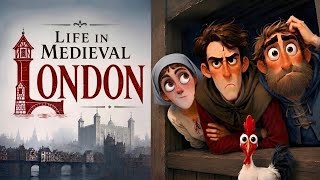

Animistry Top Videos
biggest ever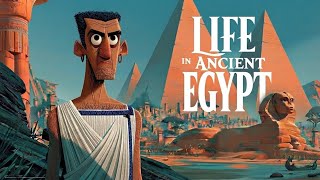


This channel is a prime candidate for replication or acquisition due to its massive view-to-subscriber leverage (528k views in 30 days on just 21.1k subscribers) and highly evergreen animated history format, provided the animation production pipeline can be systematized and scaled.
Animistry Niche & Positioning
Immersive, narrative-driven animated deep dives into daily life, historical mysteries, and cross-cultural encounters across ancient and medieval eras.
Animistry Content Strategy
100% evergreen, highly searchable historical narratives that leverage timeless curiosity about daily life, ancient myths, and economic anomalies.
Animistry Outlier Playbook
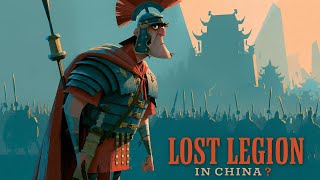
the repeatable breakout formulaAnimistry's breakout formula is an animated history explainer about a highly familiar European ancient/medieval world, framed as a curiosity question that promises either immersion into ordinary life or a myth-to-history revelation. The strongest version is 'walk the viewer through a recognizable past society' as in 'What Was Life Like In Medieval London?' rather than niche geopolitical speculation like 'Did a Roman Army Really Reach Ancient China?' The second-best version is 'use famous Greek mythology as the doorway into a real lost civilization' as in 'What Greek Legends Tell of Europe's Oldest Civilization?' The winning ingredients are: Medieval London / Ancient Greece / Minoan-Cretan ci
Question-led historical curiosity: 'What Was Life Like In [famous place/era]?' or 'What [famous myths/legends/sources] Tell Us About [lost civilization/hidden history]?' The title should name a recognizable anchor first, then promise a vivid answer: Medieval London, Greek legends, Ancient Egyptian f
- 1Pick a broad, instantly recognizable setting with built-in visual appeal: Medieval London, Ancient Athens, Minoan Crete, Pompeii, Viking York, or an Ancient Egyptian household. Prioritize daily life o
- 2Frame the video around a single viewer question in the title: 'What Was Life Like In Medieval London?', 'What Did Greek Legends Reveal About the Minoans?', or 'A Day In The Life of a Family in Pompeii
- 3Structure the script as an animated guided tour: open with a vivid street/home/market scene, then move through food, work, family, religion, danger/disease, entertainment, and what would surprise a mo
- 4Use a famous cultural doorway in the first 30 seconds: plague-era London streets, the Minotaur and Crete, Egyptian family rituals, tulip mania in the Dutch Golden Age. Make the hook feel like entering
- 5Package future uploads around the two proven outlier lanes: immersive daily-life reconstructions like 'What Was Life Like In Medieval London?' and myth/history investigations like 'What Greek Legends
Animistry Performance Drivers
Animistry Topic Clusters
Animistry Growth Opportunities
untapped whitespace- Expand into 'Day in the Life' series for other major empires (e.g., Roman, Aztec, or Mongol) to replicate the success of the Egyptian and London videos.
- Increase upload frequency from 0.7 videos/week to a consistent weekly schedule to capitalize on the high view momentum (+528k views in 30 days).
- Create multi-part series on historical economic bubbles or crises, building on 'The Flower Worth a House' concept.
- Leverage YouTube Shorts to repurpose animated segments, driving discovery to the high-performing long-form catalog.
How Replicable Is Animistry
While the scriptwriting and historical topics are highly systematic, the high-quality custom animation style requires a specialized production pipeline that is difficult to scale cheaply.
Animistry Content Risks
- High production bottleneck due to the time-intensive nature of custom animation, resulting in a low upload frequency (~0.7 videos/week).
- Extreme reliance on a small catalog (only 7 total videos), making the channel's overall traffic highly vulnerable to algorithm shifts on its top two videos.
- High cost of content creation, which could limit profitability if CPMs fluctuate or if view counts on future videos regress to the lower end of their spectrum (e.g., 31k views).
Who Watches Animistry
estimated audienceEstimated from public channel data — titles, descriptions, metadata and co-watched channels. Not YouTube Analytics. high confidence
Animistry appeals to an intellectually curious, globally-minded audience of history buffs, students, and armchair historians. Rather than focusing solely on military tactics, this audience is deeply interested in social history—how ordinary people lived, worked, and interacted across different eras and civilizations. They prefer polished, visually engaging animated narratives over dry academic lectures, seeking high-quality storytelling that brings the past to life.
Skews male, with a notable female minority interested in social and daily-life h
Primarily Anglosphere countries, driven by English-language narration and global history themes.
What Animistry's Audience Cares About
- Dry, academic historical presentations lacking visual engagement
- Overly simplified historical narratives that miss human elements
- Difficulty finding high-quality, short-form historical storytelling
- To understand the lived experiences of ordinary people in the past
- To discover obscure historical connections and anomalies
- To be entertained while learning something intellectually stimulating
Avid consumer of educational media, documentaries, and non-fiction books; likely enjoys strategy games like Civilization or Crusader Kings.
- Daily life in ancient and medieval metropolises
- Unusual economic bubbles and trade anomalies in history
- Cross-cultural encounters and forgotten diplomatic missions
- The historical reality behind famous myths and legends
- The rise and daily routines of obscure civilizations
Prefers 10-15 minutes videos, immersive, educational, narrative-driven, and visually polished.
Inferred from: Co-watch cluster features social history channels like Medieval Sisters and Everyday Life & Social History Buffs · Top-performing videos focus on daily life experiences, such as Medieval London and Ancient Egyptian families · Visual style and keywords align closely with premium animated educational channels like Vox and Knowledgia
The audience is highly consolidated around narrative-driven, visual, and 'day-in-the-life' historical storytelling, focusing heavily on the lived experiences of ordinary people in ancient and medieval eras.


Track your whole niche in Competitor Studio
These are just the closest channels. Competitor Studio maps 1,000+ direct & adjacent channels in your niche — with outlier detection and ongoing tracking.
- Track 1,000+ direct & adjacent competitors
- Outlier video detection
- AI-powered video insights

Animistry Revenue & Valuation
from public dataBased on your current performance, your channel's valuation is estimated between $13,423 and $68,524, with a defined floor of $10,325, backed by high confidence in our analysis. Please note that achieving the upper end of this valuation is not a guarantee, but rather illustrative potential that depends entirely on your execution of strategic growth levers.
Estimates derived from public data (earnings history + comparable channels). Not an offer, appraisal, or financial advice.
Frequently asked questions about Animistry
- How many subscribers does Animistry have?
- Animistry has 21.1K subscribers on YouTube, built up over roughly 1.6 years on the platform. Its videos average about 151.2K views each.
- How many views does Animistry have?
- Animistry has accumulated 1.1M total views across 7 uploads, averaging roughly 1.9K views per day since launch.
- How many videos has Animistry posted?
- Animistry has published 7 videos on YouTube, with recent uploads averaging about 12:18 in length.
- How engaged is Animistry's audience?
- Over its lifetime, Animistry has averaged about 50 views for every subscriber, a sign of how far its videos travel beyond the core subscriber base. On a per-video basis it draws roughly 151.2K views.
- How much money does Animistry make?
- Animistry's estimated YouTube revenue is $1K – $4K per month, including advertising and sponsorships (ad revenue alone is an estimated $946 – $1K per month). These are estimates derived from public data, not exact earnings.
- What is Animistry's channel worth?
- Animistry's YouTube channel is estimated to be worth $13K – $69K, benchmarked against comparable channels. This reflects the value of the channel as a media asset, not the creator's total net worth.
- What is Animistry's most popular video?
- Animistry's most-viewed video is "What Was Life Like In Medieval London?", with 521.0K views — roughly 3.8× the channel's typical video.
- What is Animistry's biggest recent breakout video?
- Animistry's biggest recent breakout is "What Was Life Like In Medieval London?", which pulled 521.0K views — about 3.8× the channel's recent median.
- What kind of content does Animistry make?
- Animistry is best described as Animated History & Ancient Civilizations. Immersive, narrative-driven animated deep dives into daily life, historical mysteries, and cross-cultural encounters across ancient and medieval eras.
- Does Animistry post Shorts or long-form videos?
- Animistry publishes primarily long-form videos (about 100% of recent uploads), averaging around 12:18 in length.
- What topics does Animistry cover?
- Animistry's catalogue spans Daily Life in Historical Eras, Ancient Civilizations & Mythologies, Cross-Cultural Historical Encounters and Economic History & Anomalies. These recurring themes make up the bulk of the channel's uploads.
- Who watches Animistry?
- Animistry's audience skews 25-34, skews male, with a notable female minority interested in social and daily-life h and based primarily anglosphere countries, driven by english-language narration and global history themes.. Animistry appeals to an intellectually curious, globally-minded audience of history buffs, students, and armchair historians. Rather than focusing solely on military tactics, this audience is deeply interested in social history—how ordinary people lived, worked, and interacted across different eras and civilizations. They prefer polished, visually engaging animated narratives over dry academic lectures, seeking high-quality storytelling that brings the past to life. These are estimates inferred from public channel data, not YouTube Analytics.
- What is Animistry's audience interested in?
- Viewers of Animistry tend to be interested in Ancient and medieval history, Social history and daily life of historical figures, Mythology and folklore, Geopolitics and historical cartography and Historical strategy gaming. Estimated from the channel's content and the channels its viewers co-watch.
- What channels are similar to Animistry?
- Channels with audiences similar to Animistry include Knowledgia, HistoryInPaint , HF Rewind, xstory media and Ancient Life. The audience is highly consolidated around narrative-driven, visual, and 'day-in-the-life' historical storytelling, focusing heavily on the lived experiences of ordinary people in ancient and medieval eras.
- How often does Animistry post?
- Animistry uploads about 0.7 videos per week (roughly 2.9 per month).
- Is Animistry still active on YouTube?
- Yes — Animistry is actively posting. Its most recent upload was 31 days ago.
- How long has Animistry been on YouTube?
- Animistry has been active on YouTube for about 1.6 years, growing to 21.1K subscribers over that time.
How this analysis was made
- Source: public YouTube channel & video data (6 recent videos sampled).
- Outlier videos: uploads with ≥1.5× the channel's recent median views.
- Revenue & valuation: estimated from public earnings signals and comparable channels — ranges, not exact figures.
- Last updated: 10/10/2026.