
What If YouTube channel analysis
What If is a YouTube channel with 9.0M subscribers and 1.8B total views, and an estimated $17K – $57K/mo revenue. This analysis breaks down its outlier videos, content strategy, similar channels, revenue & valuation estimate.
Analysis generated with AI from public YouTube data. Revenue and valuation figures are estimates derived from public data, not financial advice.
What If Channel Overview
lifetime totalsWhat If Outlier Videos
breakouts ≥1.5× recent median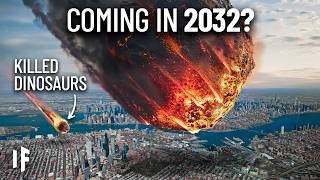


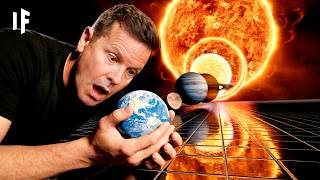
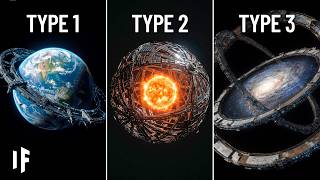


What If Top Videos
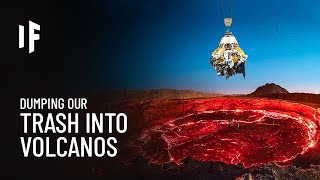
biggest ever



Acquire or replicate with caution: while the channel boasts a massive, highly-monetizable evergreen library of cosmic hypotheticals, its recent momentum is slowing (0.66x) and it relies on capital-intensive 3D CGI animations that require significant production overhead.
What If Niche & Positioning
High-concept, CGI-driven speculative scenarios exploring space exploration, physics anomalies, prehistoric evolution, and existential threats through immersive visual simulations.
What If Content Strategy
A highly evergreen library built on timeless cosmic physics, speculative evolution, and planetary survival hypotheticals, occasionally anchored by near-future dates or space agency milestones to drive urgency.
What If Outlier Playbook
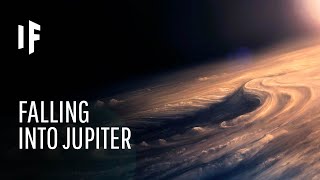
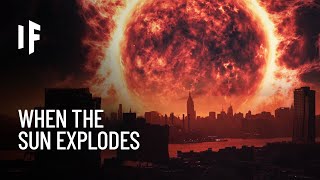
the repeatable breakout formulaAnimated, second-person science-disaster simulations where a familiar object becomes impossibly extreme: Earth gets hit/emptied/erased, the Moon/Sun is swapped, a person survives an alien planet, or a cosmic object falls/collides. The winning combo is: huge space/Earth premise + immediate human POV + visible scale progression + timeline of consequences. The biggest repeatable lanes are: total Earth catastrophe like "What If Every Asteroid Hit Earth at Once? (SIMULATION)" and "If All Humans Vanished, How Long Until Earth Erased Every Trace Of Us?"; body-survival on hostile worlds like "What If You DIED on Every Planet in Our Solar System?" and "What If You Fell Into Jupiter?"; cosmic substitu
"What If" + extreme totalizing premise + familiar object + consequence/timeline. Best patterns: "What If Every/All [asteroids/humans/oceans/moons] [hit/vanished/disappeared/swapped]...?"; "What If You [died/fell/lived/landed/spent 5 seconds] on/in [planet/moon/black hole/extreme place]?"; "If All [h
- 1Pick a premise from one of the proven breakout buckets: total Earth wipeout/erasure, hostile planet survival, Moon/Sun/planet swap, cosmic scale ranking, or near-future space event. Prioritize topics
- 2Frame the viewer inside the event, not outside it. Use "you" titles when possible: "You are alive to watch...", "What if you lived...", "What if you fell...", "What if you grew 1cm every second?" The
- 3Make the hook total and measurable: "every asteroid," "all humans," "all oceans," "1cm every second," "1 billion years ago," "Type III civilization," "largest objects." Avoid small or abstract questio
- 4Structure the video as an escalating simulation: first seconds/minutes of impact, then days/years/civilization-scale consequences, then the final planetary or cosmic end state. Use comparisons to Eart
- 5Package with a title that promises either a spectacle or a countdown: "What If Every Asteroid Hit Earth at Once? (SIMULATION)", "If All Humans Vanished, How Long Until Earth Erased Every Trace Of Us?"
What If Performance Drivers
What If Topic Clusters
What If Growth Opportunities
untapped whitespace- Interactive/Viewer-Driven Simulations: Create community-voted scenarios where viewers choose variables for custom physics engine simulations.
- Deep-Dive Sci-Fi Lore Debunking: Analyze and simulate the scientific plausibility of famous sci-fi movie or book scenarios.
- Short-form Spinoff Channel: Repurpose the highly visual, high-retention CGI segments into optimized YouTube Shorts to capture a younger audience.
- Physical/Biological 'What Ifs' in Everyday Life: Expand beyond cosmic/prehistoric topics into extreme human biology or chemistry hypotheticals.
How Replicable Is What If
While the 'What If' scripting formula and voiceover style are highly systematic, replicating the channel requires significant capital for high-quality 3D CGI animation, physics simulations, and skilled video editors.
What If Content Risks
- High Production Overhead: Heavy reliance on custom 3D animations and visual effects makes content creation expensive and slow, risking low ROI if views decline.
- Formula Fatigue: The 'What If...' and 'What happens if you die on...' title/thumbnail templates risk exhausting the audience's interest if overused without fresh structural variations.
- High Competition in Speculative Science: The niche is crowded with heavyweights, making it difficult to maintain market share without constant visual innovation.
Who Watches What If
estimated audienceEstimated from public channel data — titles, descriptions, metadata and co-watched channels. Not YouTube Analytics. high confidence
The audience consists of highly curious, sci-fi-loving science enthusiasts, students, and futurists who are drawn to high-concept, visually spectacular 'what-if' scenarios. They enjoy blending rigorous physics and astronomy with imaginative, sometimes apocalyptic, survival simulations.
skewed male
predominantly English-speaking countries with a strong global base of science enthusiasts
What What If's Audience Cares About
- Existential dread regarding cosmic or environmental threats
- Academic burnout seeking engaging but low-friction learning
- Boredom with traditional, dry educational content
- To satisfy 'what-if' curiosity about the universe
- To visualize complex scientific concepts through high-quality CGI
- To escape into mind-bending cosmic and historical scenarios
Curious thinkers, gamers, sci-fi fans, and students who spend leisure time watching educational documentaries and conceptual simulations.
- What if a rogue planet entered our solar system?
- The survival guide to falling into a supermassive black hole
- How humanity would rebuild if the electrical grid failed forever
- What if prehistoric predators survived into the modern era?
- Visualizing the scale of the universe's largest structures
Prefers Long-form videos (typically 15 to 30 minutes) that allow for videos, imaginative, dramatic, educational, and slightly suspenseful..
Inferred from: Co-watch clusters focusing on space exploration (Astrum, SEA) and speculative science (Insane Curiosity) · High-performing video titles centered on cosmic survival, planetary collisions, and prehistoric evolution · CGI-heavy, long-form visual simulations of physics anomalies and existential threats
The audience is highly focused on space exploration, planetary science, prehistoric Earth history, and existential threats, showing very little interest in unrelated mainstream entertainment.


Track your whole niche in Competitor Studio
These are just the closest channels. Competitor Studio maps 1,000+ direct & adjacent channels in your niche — with outlier detection and ongoing tracking.
- Track 1,000+ direct & adjacent competitors
- Outlier video detection
- AI-powered video insights

What If Revenue & Valuation
from public dataBased on your current performance, your business holds an estimated valuation range of $313,935 to $2,387,711, with a baseline floor of $241,488 evaluated at medium confidence. Achieving the higher end of this range is not guaranteed and would require successfully executing key operational levers to diversify and de-risk your revenue.
Estimates derived from public data (earnings history + comparable channels). Not an offer, appraisal, or financial advice.
Frequently asked questions about What If
- How many subscribers does What If have?
- What If has 9.0M subscribers on YouTube, built up over roughly 8.2 years on the platform. Its videos average about 1.0M views each.
- How many views does What If have?
- What If has accumulated 1.8B total views across 1.7K uploads, averaging roughly 589.2K views per day since launch.
- How many videos has What If posted?
- What If has published 1.7K videos on YouTube, with recent uploads averaging about 20:23 in length.
- How engaged is What If's audience?
- Over its lifetime, What If has averaged about 197 views for every subscriber, a sign of how far its videos travel beyond the core subscriber base. On a per-video basis it draws roughly 1.0M views.
- How much money does What If make?
- What If's estimated YouTube revenue is $17K – $57K per month, including advertising and sponsorships (ad revenue alone is an estimated $13K – $19K per month). These are estimates derived from public data, not exact earnings.
- What is What If's channel worth?
- What If's YouTube channel is estimated to be worth $314K – $2.39M, benchmarked against comparable channels. This reflects the value of the channel as a media asset, not the creator's total net worth.
- What is What If's most popular video?
- What If's most-viewed video is "What Happens If You Get Covid-19 and Your Lungs Fill With Fluid?", with 25.0M views — roughly 44.7× the channel's typical video.
- What is What If's biggest recent breakout video?
- What If's biggest recent breakout is "What If Every Asteroid Hit Earth at Once? (SIMULATION)", which pulled 2.8M views — about 5× the channel's recent median.
- What kind of content does What If make?
- What If is best described as Speculative Science & Cosmic Hypotheticals. High-concept, CGI-driven speculative scenarios exploring space exploration, physics anomalies, prehistoric evolution, and existential threats through immersive visual simulations.
- Does What If post Shorts or long-form videos?
- What If publishes primarily long-form videos (about 100% of recent uploads), averaging around 20:23 in length.
- What topics does What If cover?
- What If's catalogue spans Space Survival & Planetary Deaths, Cosmic Scale & Physics Hypotheticals, Celestial Swaps & Cosmic Collisions, Prehistoric & Speculative Evolution, Future Timelines & Civilization Scales and Earth Disasters & Environmental Shifts. These recurring themes make up the bulk of the channel's uploads.
- Who watches What If?
- What If's audience skews 18-24, skewed male and based predominantly english-speaking countries with a strong global base of science enthusiasts. The audience consists of highly curious, sci-fi-loving science enthusiasts, students, and futurists who are drawn to high-concept, visually spectacular 'what-if' scenarios. They enjoy blending rigorous physics and astronomy with imaginative, sometimes apocalyptic, survival simulations. These are estimates inferred from public channel data, not YouTube Analytics.
- What is What If's audience interested in?
- Viewers of What If tend to be interested in Cosmology and astrophysics, Sci-fi and speculative fiction, Survival simulations and doomsday scenarios, Prehistoric life and paleontology and Futurism and the Kardashev scale. Estimated from the channel's content and the channels its viewers co-watch.
- What channels are similar to What If?
- Channels with audiences similar to What If include Insane Curiosity, The Space Race, Astrum Earth, Astrum and Mr. Science. The audience is highly focused on space exploration, planetary science, prehistoric Earth history, and existential threats, showing very little interest in unrelated mainstream entertainment.
- How often does What If post?
- What If uploads about 1.2 videos per week (roughly 5 per month).
- Is What If still active on YouTube?
- Yes — What If is actively posting. Its most recent upload was 6 days ago.
- How long has What If been on YouTube?
- What If has been active on YouTube for about 8.2 years, growing to 9.0M subscribers over that time.
How this analysis was made
- Source: public YouTube channel & video data (120 recent videos sampled).
- Outlier videos: uploads with ≥1.5× the channel's recent median views.
- Revenue & valuation: estimated from public earnings signals and comparable channels — ranges, not exact figures.
- Last updated: 10/1/2026.