
The Rep Theory YouTube channel analysis
The Rep Theory is a YouTube channel with 50.2K subscribers and 7.3M total views, and an estimated $2K – $10K/mo revenue. This analysis breaks down its outlier videos, content strategy, similar channels, revenue & valuation estimate.
Analysis generated with AI from public YouTube data. Revenue and valuation figures are estimates derived from public data, not financial advice.
The Rep Theory Channel Overview
lifetime totalsThe Rep Theory Outlier Videos
breakouts ≥1.5× recent median




The Rep Theory Top Videos
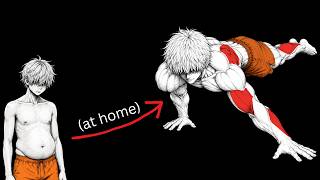
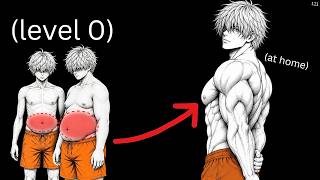
biggest ever An exceptionally high-leverage replication target that has cracked the algorithm for skinny-to-strong calisthenics, achieving massive breakout hits (4M and 1.2M views) on a tiny 27-video catalog by leveraging high-curiosity physiological hooks and 'no-gym' positioning.
The Rep Theory Niche & Positioning
Targeting skinny men who want to bypass traditional gym culture, using high-curiosity scientific hooks like tendon strength and isometrics to promise disproportionate strength without equipment.
The Rep Theory Content Strategy
Highly searchable, evergreen home-workout guides and physiological hacks packaged with aggressive, high-curiosity hooks targeting skinny hardgainers.
The Rep Theory Outlier Playbook
the repeatable breakout formulaBreakouts come from a very specific promise: explain a hidden, non-gym strength mechanism that lets skinny/normal-looking guys become stronger than bigger gym guys, then turn it into a practical calisthenics guide. The biggest winners are not generic muscle-building videos; they are underdog strength videos built around tendons, isometrics, calisthenics, and old-school/no-gym training: "How Training Tendons Makes You Stronger Than Big Guys," "How Isometric Holds Give You Supernatural Strength," "How Some Skinny Guys Are Stronger Than Big Guys," and "Quit the Gym, Do Calisthenics (especially if you're skinny)." No guest is needed; the recurring 'character' is the skinny guy who can outperform
How [hidden strength method/body system] Makes/Gives [You/Skinny Guys] [Stronger Than Big Guys/Supernatural or Freakish Strength] + optional proof/utility tag: "Full Guide," "No Gym," "especially if you're skinny," "from ZERO," or "any body type." Examples to repeat: "How Training [Tendons/Grip/Isom
- 1Choose a hidden strength lever, not a normal body-part goal: tendons, isometric holds, grip/wrists, connective tissue, old-school calisthenics, static holds, or fighter-style bodyweight strength. Avoi
- 2Frame the video around the underdog contradiction: skinny guys, normal-looking guys, or calisthenics athletes becoming stronger than big gym guys. The title and intro should directly compare 'skinny/n
- 3Make it a hybrid explainer + full guide: first explain why the method works, then give a simple progression viewers can do at home with no gym. The strongest examples are "How Training Tendons Makes Y
- 4Use no-gym/calisthenics positioning as the solution: "Quit the Gym," "No Gym," "from ZERO," "any body type," and "especially if you're skinny" should be baked into the angle when relevant.
- 5Package the next breakout around one big myth-breaking promise, not a listicle: for example, "How Grip Training Makes Skinny Guys Stronger Than Big Guys," "How Static Holds Build Freakish Strength Wit
The Rep Theory Performance Drivers
The Rep Theory Topic Clusters
The Rep Theory Growth Opportunities
untapped whitespace- Introduce structured digital products or calisthenics programs (e.g., 'The Tendon Strength Protocol' or '90-Day Winter Arc Guide') to monetize the massive influx of views from breakout hits.
- Develop a series comparing specific calisthenics legends or historical figures (e.g., Shaolin monks, ancient warriors) to double down on the 'oldest strength training' and 'supernatural' angles.
- Create a dedicated 'Skinny-Fat' transformation sub-series, as 'How to Fix Skinny Fat' is a highly searched, high-intent keyword that fits their demographic perfectly.
- Incorporate community-driven 'form review' or 'transformation reaction' videos to build audience loyalty and increase the currently low engagement on non-viral uploads.
How Replicable Is The Rep Theory
The channel relies entirely on faceless/voiceover-driven educational curation, stock/curated footage, and highly formulaic, text-heavy thumbnail and title structures that can be easily systematized and scaled by an editor.
The Rep Theory Content Risks
- Extreme reliance on a few viral outliers (two videos account for over 5 million of the channel's views, while median views sit at 20,000).
- High risk of copyright strikes or reuse content flags if the channel relies heavily on unoriginal/curated footage of athletes and fighters without significant transformative value.
- Audience fatigue from repetitive title formulas ('How to Force Your [X] to Grow', 'especially if you're skinny') which may lead to declining click-through rates over time.
Who Watches The Rep Theory
estimated audienceEstimated from public channel data — titles, descriptions, metadata and co-watched channels. Not YouTube Analytics. high confidence
The audience consists primarily of young males (teens to mid-20s) who identify as skinny, hardgainers, or beginners. They are highly motivated to build strength and an aesthetic physique but actively avoid traditional gym culture due to cost, intimidation, or convenience. They are drawn to unconventional, science-framed fitness concepts like tendon conditioning and isometric holds that promise disproportionate, functional strength without the need for heavy weights.
Highly male-dominated
Global English-speaking audience with a strong presence in North America, Western Europe, and South Asia.
What The Rep Theory 's Audience Cares About
- Feeling physically weak, small, or intimidated by traditional gym culture
- Struggling with 'skinny-fat' genetics or hardgainer plateaus
- Lack of access to expensive gym equipment or memberships
- Joint pain or weak wrists/forearms during exercises
- Developing 'hidden' or deceptive strength that surprises others
- Building an aesthetic physique (V-taper, visible abs) from home
- Improving physical confidence and self-defense capability
- Mastering advanced bodyweight movements
Active but home-centric; prefers training in private spaces over public gym environments; highly engaged with digital self-improvement culture.
- The Science of Tendon Strength vs. Muscle Size
- How to Build a V-Taper at Home with Zero Equipment
- Isometric Exercises for Explosive Punching Power
- A Beginner's Guide to Mastering the Perfect Pull-Up
- How to Fix Skinny-Fat Genetics Without a Gym Membership
Prefers Short to medium-form (5 to 8 minutes), fast-paced and highly videos, educational, motivational, slightly provocative, and highly encouraging for beginners.
Inferred from: Video titles explicitly targeting 'skinny guys', 'skinny fat', and 'no gym' alternatives. · Co-watch channels focusing heavily on calisthenics (Bro Pump, Tyler Tong) and tendon/isometric strength (FitZip, Grey Guy). · High-performing viral hooks centered around unconventional strength physiology ('How Training Tendons Makes You Stronger Than Big Guys').
The audience is tightly clustered around bodyweight mastery, tendon conditioning, and ancient/unconventional strength methods, with minimal bleed into mainstream bodybuilding.


Track your whole niche in Competitor Studio
These are just the closest channels. Competitor Studio maps 1,000+ direct & adjacent channels in your niche — with outlier detection and ongoing tracking.
- Track 1,000+ direct & adjacent competitors
- Outlier video detection
- AI-powered video insights

The Rep Theory Revenue & Valuation
from public dataWe assess your current business valuation between $24,008 and $207,619, backed by a high confidence rating and a baseline floor value of $18,468. Capturing the higher end of this valuation spectrum is not guaranteed and would require actively executing key operational improvements to de-risk the business for potential buyers.
Estimates derived from public data (earnings history + comparable channels). Not an offer, appraisal, or financial advice.
Frequently asked questions about The Rep Theory
- How many subscribers does The Rep Theory have?
- The Rep Theory has 50.2K subscribers on YouTube, built up over roughly 0.1 years on the platform. Its videos average about 272.0K views each.
- How many views does The Rep Theory have?
- The Rep Theory has accumulated 7.3M total views across 27 uploads, averaging roughly 236.4K views per day since launch.
- How many videos has The Rep Theory posted?
- The Rep Theory has published 27 videos on YouTube, with recent uploads averaging about 6:55 in length.
- How engaged is The Rep Theory 's audience?
- Over its lifetime, The Rep Theory has averaged about 146 views for every subscriber, a sign of how far its videos travel beyond the core subscriber base. On a per-video basis it draws roughly 272.0K views.
- How much money does The Rep Theory make?
- The Rep Theory 's estimated YouTube revenue is $2K – $10K per month, including advertising and sponsorships (ad revenue alone is an estimated $1K – $3K per month). These are estimates derived from public data, not exact earnings.
- What is The Rep Theory 's channel worth?
- The Rep Theory 's YouTube channel is estimated to be worth $24K – $208K, benchmarked against comparable channels. This reflects the value of the channel as a media asset, not the creator's total net worth.
- What is The Rep Theory 's most popular video?
- The Rep Theory 's most-viewed video is "How Training Tendons Makes You Stronger Than Big Guys", with 4.0M views — roughly 200× the channel's typical video.
- What is The Rep Theory 's biggest recent breakout video?
- The Rep Theory 's biggest recent breakout is "How Training Tendons Makes You Stronger Than Big Guys", which pulled 4.0M views — about 200× the channel's recent median.
- What kind of content does The Rep Theory make?
- The Rep Theory is best described as Calisthenics & Home Strength Training for Skinny Hardgainers. Targeting skinny men who want to bypass traditional gym culture, using high-curiosity scientific hooks like tendon strength and isometrics to promise disproportionate strength without equipment.
- Does The Rep Theory post Shorts or long-form videos?
- The Rep Theory publishes primarily long-form videos (about 100% of recent uploads), averaging around 6:55 in length.
- What topics does The Rep Theory cover?
- The Rep Theory 's catalogue spans Targeted Muscle Growth & 'How to Force' Guides, Skinny-to-Strong Calisthenics & Gym Alternatives, Unconventional Strength Physiology (Tendons & Isometrics), Combat & Real-World Strength Application and Short-term Challenges & Form Corrections. These recurring themes make up the bulk of the channel's uploads.
- Who watches The Rep Theory ?
- The Rep Theory 's audience skews 18-24, highly male-dominated and based global english-speaking audience with a strong presence in north america, western europe, and south asia.. The audience consists primarily of young males (teens to mid-20s) who identify as skinny, hardgainers, or beginners. They are highly motivated to build strength and an aesthetic physique but actively avoid traditional gym culture due to cost, intimidation, or convenience. They are drawn to unconventional, science-framed fitness concepts like tendon conditioning and isometric holds that promise disproportionate, functional strength without the need for heavy weights. These are estimates inferred from public channel data, not YouTube Analytics.
- What is The Rep Theory 's audience interested in?
- Viewers of The Rep Theory tend to be interested in Calisthenics and bodyweight training, Tendon and joint conditioning, Self-improvement and 'looksmaxing' trends, Martial arts and functional combat strength and Home workout optimization. Estimated from the channel's content and the channels its viewers co-watch.
- What channels are similar to The Rep Theory ?
- Channels with audiences similar to The Rep Theory include FitZip, Evolve & Build, Jother, Ascend Maxing and Bro Pump. The audience is tightly clustered around bodyweight mastery, tendon conditioning, and ancient/unconventional strength methods, with minimal bleed into mainstream bodybuilding.
- How often does The Rep Theory post?
- The Rep Theory uploads about 6.3 videos per week (roughly 27 per month).
- Is The Rep Theory still active on YouTube?
- Yes — The Rep Theory is actively posting. Its most recent upload was 1 day ago.
- How long has The Rep Theory been on YouTube?
- The Rep Theory has been active on YouTube for about 0.1 years, growing to 50.2K subscribers over that time.
How this analysis was made
- Source: public YouTube channel & video data (27 recent videos sampled).
- Outlier videos: uploads with ≥1.5× the channel's recent median views.
- Revenue & valuation: estimated from public earnings signals and comparable channels — ranges, not exact figures.
- Last updated: 10/30/2026.