
Sebastian Raschka YouTube channel analysis
Sebastian Raschka is a YouTube channel with 99.0K subscribers and 3.6M total views, and an estimated $97 – $317/mo revenue. This analysis breaks down its outlier videos, content strategy, similar channels, revenue & valuation estimate.
Analysis generated with AI from public YouTube data. Revenue and valuation figures are estimates derived from public data, not financial advice.
Sebastian Raschka Channel Overview
lifetime totalsSebastian Raschka Outlier Videos
breakouts ≥1.5× recent median


Sebastian Raschka Top Videos
biggest ever


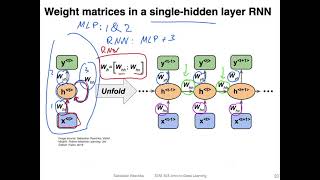
Acquire or partner rather than attempt to replicate. The channel's massive value lies in its high-authority, textbook-grade educational content on LLMs and Deep Learning, which commands immense search equity but is deeply tied to the creator's personal academic credentials and specialized technical expertise.
Sebastian Raschka Niche & Positioning
Academic-grade, code-first tutorials and conceptual breakdowns of Large Language Models and neural network architectures for machine learning engineers.
Sebastian Raschka Content Strategy
A dominant library of evergreen, university-level deep learning lectures and coding series, punctuated by timely technical deep dives into newly released AI architectures and reasoning models.
Sebastian Raschka Outlier Playbook
the repeatable breakout formulaBreakouts happen when Sebastian turns a current frontier-LLM topic into an engineer-focused explainer or code series: OpenAI Astra framed through recurrent depth/looped transformers; Claude text watermarking explained mechanistically; or reasoning models built from scratch with verifiers, inference scaling, GRPO/RLVR, KL terms, and distillation. The repeatable winning combo is: a timely AI-lab hook or hot capability, plus a precise architecture/training concept, taught as either a visual deep dive or from-scratch implementation. No guest is needed; the draw is Sebastian's credibility as the 'LLMs from scratch' educator.
Use either: "[AI lab/model/news] + [specific mechanism]" like "OpenAI Astra and Recurrent Depth / Looped Transformers" or "How [frontier-model feature] Works" like "How Claude's Text Watermarking Works"; OR serialize a build: "Build A [hot capability] Model From Scratch [part number]: [specific subs
- 1Pick one hot LLM capability with current demand: reasoning models, recurrent-depth/looped transformers, text watermarking, transformer alternatives, GRPO/RLVR, inference scaling, verifier-based evalua
- 2Anchor the video in a recognizable timely hook when possible: OpenAI Astra for recurrent depth/looped transformers, Claude for watermarking, or modern reasoning models for verifier/RLVR/GRPO content.
- 3Package it as either a visual architecture explainer/comparison or a numbered from-scratch coding chapter. The strongest recurring format is "Build A Reasoning Model From Scratch" with concrete milest
- 4Put the exact technical payoff in the title, not a vague benefit: say "Recurrent Depth / Looped Transformers," "Text Watermarking," "Implementing GRPO for RLVR," "The Verifier for Evaluation," or "Log
- 5Start broad enough to catch LLM-interested viewers, then quickly go implementation-level: explain the motivation, show diagrams or architecture comparisons, then move into code or pseudo-code so it fe
Sebastian Raschka Performance Drivers
Sebastian Raschka Topic Clusters
Sebastian Raschka Growth Opportunities
untapped whitespace- Collaborative live-coding sessions or guest lectures with other prominent AI researchers and open-source library maintainers to cross-pollinate audiences.
- Short-form conceptual summaries (under 60 seconds) explaining complex ML terms (like 'KV Caching' or 'GRPO') to capture top-of-funnel traffic.
- Dedicated 'Paper Review' format where newly published, highly-hyped AI papers are dissected on a weekly basis.
- Industry-focused case studies showing how enterprises deploy these 'from scratch' models into production environments.
How Replicable Is Sebastian Raschka
The channel's success is deeply tied to Sebastian's personal credibility as a leading machine learning educator, author, and academic, making it exceptionally difficult for a non-expert operator to replicate without hiring a high-caliber technical host.
Sebastian Raschka Content Risks
- High key-person dependence on Sebastian's unique academic authority and clear teaching style, making host replacement highly disruptive.
- Extreme reliance on the rapid evolution of the LLM/AI niche, where older tutorials (e.g., RNNs or GANs) quickly lose relevance to newer architectures.
- High production bottleneck due to the intense technical preparation, coding, and debugging required for each multi-hour tutorial.
Who Watches Sebastian Raschka
estimated audienceEstimated from public channel data — titles, descriptions, metadata and co-watched channels. Not YouTube Analytics. high confidence
This channel attracts a highly specialized audience of machine learning engineers, AI researchers, and advanced software developers. Viewers are looking for rigorous, academic-grade, code-first tutorials that bridge the gap between theoretical AI research papers and practical PyTorch implementation, particularly focusing on building and fine-tuning Large Language Models from the ground up.
Highly male-skewed, typical of advanced computer science and machine learning en
Global developer hubs with strong representation in the US, India, and European tech centers.
What Sebastian Raschka's Audience Cares About
- Keeping up with the overwhelming pace of LLM and AI research papers
- Translating complex theoretical equations into working PyTorch code
- High computational costs and inefficiencies when training or fine-tuning models
- Lack of structured, step-by-step guides for building modern architectures from scratch
- To transition from traditional software engineering to AI/ML engineering roles
- To build proprietary AI models for research or commercial applications
- To deeply understand the inner workings of state-of-the-art models rather than just using APIs
Intellectually curious, tech-centric, active in developer communities (GitHub, Hugging Face, Hacker News), and deeply embedded in the AI research ecosystem.
- Implementing GRPO and Reinforcement Learning from scratch in PyTorch
- Fine-tuning open-source LLMs using LoRA and QLoRA
- Step-by-step coding of multi-head attention mechanisms
- Comparing modern LLM architectures (e.g., Llama, Claude, Mistral)
- Optimizing PyTorch training pipelines for multi-GPU setups
Prefers Long-form (typically 20 to 60+ minutes, allowing for thoroug videos, academic, authoritative, educational, structured, and highly technical.
Inferred from: Highly technical, code-first video titles focusing on PyTorch, LLM architectures, and reinforcement learning · Co-watch audience clusters heavily featuring academic channels like Stanford Online and engineering channels like Deep Learning with Yacine · Extremely high proportion of long-form videos (average ~29 minutes) matching a lecture-style educational format
Despite some algorithmic noise from religious and general news channels, the core audience is tightly clustered around advanced machine learning theory, LLM implementation, and systems engineering.


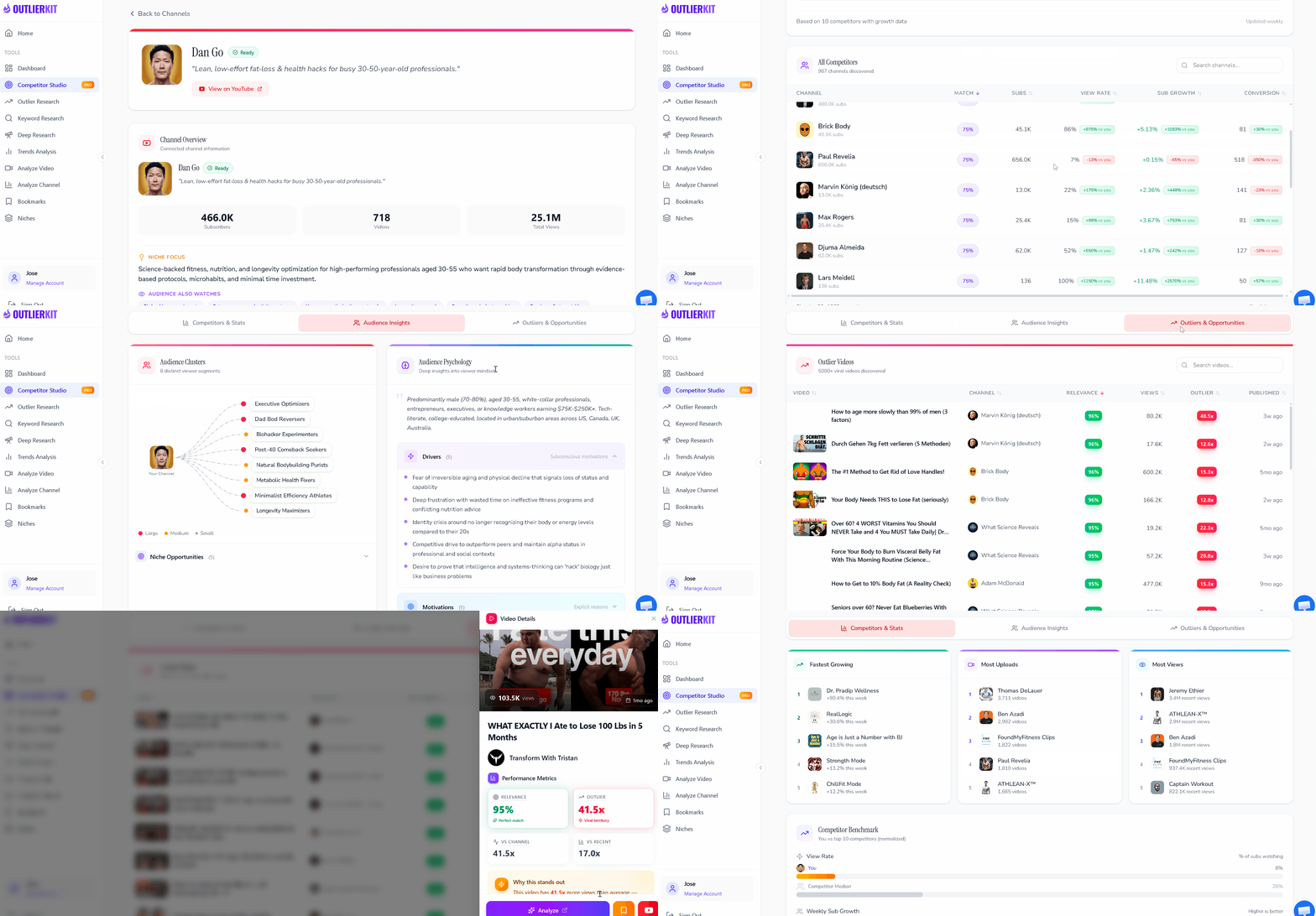
Track your whole niche in Competitor Studio
These are just the closest channels. Competitor Studio maps 1,000+ direct & adjacent channels in your niche — with outlier detection and ongoing tracking.
- Track 1,000+ direct & adjacent competitors
- Outlier video detection
- AI-powered video insights
Sebastian Raschka Revenue & Valuation
from public dataBased on your current performance, your channel's valuation is estimated between $1,333 and $6,776, supported by a solid floor of $1,025 and a high confidence rating. This valuation is driven by your existing revenue streams, though executing key growth levers offers the illustrative potential to significantly lift this baseline.
Estimates derived from public data (earnings history + comparable channels). Not an offer, appraisal, or financial advice.
Frequently asked questions about Sebastian Raschka
- How many subscribers does Sebastian Raschka have?
- Sebastian Raschka has 99.0K subscribers on YouTube, built up over roughly 14.7 years on the platform. Its videos average about 10.9K views each.
- How many views does Sebastian Raschka have?
- Sebastian Raschka has accumulated 3.6M total views across 326 uploads, averaging roughly 664 views per day since launch.
- How many videos has Sebastian Raschka posted?
- Sebastian Raschka has published 326 videos on YouTube, with recent uploads averaging about 28:56 in length.
- How engaged is Sebastian Raschka's audience?
- Over its lifetime, Sebastian Raschka has averaged about 36 views for every subscriber, a sign of how far its videos travel beyond the core subscriber base. On a per-video basis it draws roughly 10.9K views.
- How much money does Sebastian Raschka make?
- Sebastian Raschka's estimated YouTube revenue is $97 – $317 per month, including advertising and sponsorships (ad revenue alone is an estimated $75 – $106 per month). These are estimates derived from public data, not exact earnings.
- What is Sebastian Raschka's channel worth?
- Sebastian Raschka's YouTube channel is estimated to be worth $1K – $7K, benchmarked against comparable channels. This reflects the value of the channel as a media asset, not the creator's total net worth.
- What is Sebastian Raschka's most popular video?
- Sebastian Raschka's most-viewed video is "Build an LLM from Scratch 1: Set up your code environment", with 222.0K views — roughly 24.9× the channel's typical video.
- What is Sebastian Raschka's biggest recent breakout video?
- Sebastian Raschka's biggest recent breakout is "OpenAI Astra and Recurrent Depth / Looped Transformers", which pulled 122.0K views — about 13.7× the channel's recent median.
- What kind of content does Sebastian Raschka make?
- Sebastian Raschka is best described as Deep Learning & LLM Engineering. Academic-grade, code-first tutorials and conceptual breakdowns of Large Language Models and neural network architectures for machine learning engineers.
- Does Sebastian Raschka post Shorts or long-form videos?
- Sebastian Raschka publishes primarily long-form videos (about 99% of recent uploads), averaging around 28:56 in length.
- What topics does Sebastian Raschka cover?
- Sebastian Raschka's catalogue spans LLM & Reasoning Model Implementation From Scratch, Transformer Architectures & Attention Mechanisms, Generative Adversarial Networks (GANs) & Autoencoders, Convolutional Neural Networks (CNNs) & Image Classification, Feature Selection & Classical Deep Learning Techniques and Recurrent Neural Networks (RNNs) & Sequence Modeling. These recurring themes make up the bulk of the channel's uploads.
- Who watches Sebastian Raschka?
- Sebastian Raschka's audience skews 25-34, highly male-skewed, typical of advanced computer science and machine learning en and based global developer hubs with strong representation in the us, india, and european tech centers.. This channel attracts a highly specialized audience of machine learning engineers, AI researchers, and advanced software developers. Viewers are looking for rigorous, academic-grade, code-first tutorials that bridge the gap between theoretical AI research papers and practical PyTorch implementation, particularly focusing on building and fine-tuning Large Language Models from the ground up. These are estimates inferred from public channel data, not YouTube Analytics.
- What is Sebastian Raschka's audience interested in?
- Viewers of Sebastian Raschka tend to be interested in Deep learning architecture design, PyTorch framework optimization, Large Language Model (LLM) pretraining and fine-tuning, Reinforcement learning from human/verifiable feedback and Open-source AI model deployment. Estimated from the channel's content and the channels its viewers co-watch.
- What channels are similar to Sebastian Raschka?
- Channels with audiences similar to Sebastian Raschka include Stanford Online, bycloud, Welch Labs, Deep Learning with Yacine and IBM Technology. Despite some algorithmic noise from religious and general news channels, the core audience is tightly clustered around advanced machine learning theory, LLM implementation, and systems engineering.
- How often does Sebastian Raschka post?
- Sebastian Raschka uploads about 0.5 videos per week (roughly 2 per month).
- Is Sebastian Raschka still active on YouTube?
- Yes — Sebastian Raschka is actively posting. Its most recent upload was 2 days ago.
- How long has Sebastian Raschka been on YouTube?
- Sebastian Raschka has been active on YouTube for about 14.7 years, growing to 99.0K subscribers over that time.
How this analysis was made
- Source: public YouTube channel & video data (120 recent videos sampled).
- Outlier videos: uploads with ≥1.5× the channel's recent median views.
- Revenue & valuation: estimated from public earnings signals and comparable channels — ranges, not exact figures.
- Last updated: 10/11/2026.