
Sam Witteveen YouTube channel analysis
Sam Witteveen is a YouTube channel with 135.0K subscribers and 13.5M total views, and an estimated $702 – $2K/mo revenue. This analysis breaks down its outlier videos, content strategy, similar channels, revenue & valuation estimate.
Analysis generated with AI from public YouTube data. Revenue and valuation figures are estimates derived from public data, not financial advice.
Sam Witteveen Channel Overview
lifetime totalsSam Witteveen Outlier Videos
breakouts ≥1.5× recent median





Sam Witteveen Top Videos
biggest ever


Acquire or replicate if you have deep technical AI expertise; the channel successfully dominates the developer-centric 'local AI' and 'open-source LLM' niche with high-intent search traffic, but requires constant technical upskilling to maintain.
Sam Witteveen Niche & Positioning
Practical, code-first tutorials and model evaluations for developers building with local LLMs, agents, and open-source AI tools.
Sam Witteveen Content Strategy
Rides the wave of rapid open-source model releases (Qwen, Gemini, Jev) with immediate hands-on reviews, balanced by practical setup tutorials on local hosting and agent architectures.
Sam Witteveen Outlier Playbook
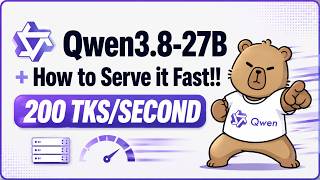
the repeatable breakout formulaA launch-window, solo builder deep-dive on a newly released AI model/protocol that is either open/local/small/fast or unlocks a concrete agent workflow. The biggest hits are not broad AI news or interviews; they are hands-on explainers around Jev classification/OpenJev, Qwen3.8-27B serving, DeepSeek OCR/document understanding, MiniCPM5 1B sub-agent capability, NVIDIA PAIR/local AI, Google Universal Commerce Protocol, and Gemini 4 Argon. The repeatable hook is: “this new thing is more capable than its category suggests, and here is how builders can actually use or serve it.” No guest needed — the winning format is Sam quickly interpreting a fresh release, testing it, and translating it into p
[Specific new model/protocol name] - [surprising superlative or underestimated capability] OR [Specific model] & How to [use/serve/deploy it fast]. Examples from the winners: “Jev - The Ultimate Classification Model?”, “DeepSeek OCR - More than OCR”, “MiniCPM5 - Just How Good Can a 1B Model Be?”, “Q
- 1Prioritize fresh releases from the channel’s proven breakout clusters: Jev/OpenJev, Qwen, DeepSeek, MiniCPM, NVIDIA local AI, Google/Gemini protocols and APIs. Choose releases with a builder payoff: c
- 2Make the video a hands-on technical teardown, not a news recap or interview. Show what the model/protocol actually does, where it fits in an agent stack, how to run or serve it, and why it is cheaper/
- 3Use a title that names the exact model first, then adds a sharp capability claim or question: “The Ultimate Classification Model?”, “More than OCR”, “How to Serve it Fast”, “Just How Good Can a 1B Mod
- 4Anchor the hook around a counterintuitive capability: a 1B model acting like a useful sub-agent, OCR becoming document intelligence, classification becoming an agent primitive, Qwen serving fast enoug
- 5If the first video breaks out, publish a fast follow-up within days that narrows the use case: for Jev, follow “Jev - The Ultimate Classification Model?” with “Open Jev Models Are Here!!”, “How to Bui
Sam Witteveen Performance Drivers
Sam Witteveen Topic Clusters
Sam Witteveen Growth Opportunities
untapped whitespace- Create dedicated hardware benchmarking series comparing Apple Silicon, AMD, and NVIDIA specifically for running small local models.
- Develop end-to-end production deployment guides showing how to transition local agents from Docker sandboxes to cloud hosting.
- Launch a structured series on fine-tuning small models (like MiniCPM or Qwen) on custom domain datasets for specialized agent tasks.
How Replicable Is Sam Witteveen
The format is highly structured and repeatable, but execution requires deep, up-to-date technical expertise in AI engineering, local deployment, and coding to maintain credibility.
Sam Witteveen Content Risks
- Heavy reliance on the highly volatile and unpredictable release schedules of third-party AI labs (Google, NVIDIA, Alibaba).
- Rapid content obsolescence, as tutorials on specific model versions quickly lose relevance when newer versions launch.
- High cognitive load and burnout risk from needing to constantly learn, test, and write code for unstable, newly released developer tools.
Who Watches Sam Witteveen
estimated audienceEstimated from public channel data — titles, descriptions, metadata and co-watched channels. Not YouTube Analytics. high confidence
The audience consists of software engineers, AI developers, and technical builders who want to deploy and orchestrate AI models locally. They bypass high-level AI hype in favor of practical, code-first tutorials that show them how to build private, cost-effective, and highly customized AI agents and RAG pipelines using open-source tools.
Heavily male-skewed, typical of deep software engineering and machine learning n
Global developer hubs with strong representation in North America, Europe, and Asia-Pacific.
What Sam Witteveen's Audience Cares About
- High costs and rate limits of commercial APIs like OpenAI and Anthropic
- Data privacy concerns when sending proprietary data to cloud LLMs
- The complexity of orchestrating reliable, production-grade multi-agent systems
- Keeping up with the overwhelming daily pace of open-source model releases
- Building production-ready, local AI applications
- Maximizing the performance of consumer-grade hardware for AI tasks
- Mastering cutting-edge developer frameworks like LangChain, LangGraph, and Ollama
- Staying highly competitive in the rapidly evolving AI engineering job market
Tech-centric, DIY builder, active on GitHub and Hugging Face, early adopter of developer tools and local hardware setups.
- How to build local multi-agent systems using LangGraph and Ollama
- Benchmarking Qwen vs Llama on local consumer GPUs
- Setting up secure Docker sandboxes for autonomous AI agents
- Optimizing RAG pipelines with local multimodal embeddings and rerankers
- Deploying real-time local TTS and voice cloning on NVIDIA hardware
Prefers Long-form (typically 12 to 20 minutes to allow for detailed videos, pragmatic, technical, objective, and developer-focused.
Inferred from: Highly technical, code-first video titles focusing on specific model architectures (e.g., Qwen, Nemotron, MiniCPM) and developer frameworks (e.g., LangChain, MC · Co-watch clusters heavily focused on local AI hardware (Ollama, AMD/NVIDIA) and hands-on AI engineering channels. · Channel metadata and keywords targeting deep learning, machine learning, and autonomous AI agents.
The audience is highly concentrated around local AI hardware configurations, open-source model evaluations, and developer-centric agent frameworks, with very little spillover into mainstream tech.


Track your whole niche in Competitor Studio
These are just the closest channels. Competitor Studio maps 1,000+ direct & adjacent channels in your niche — with outlier detection and ongoing tracking.
- Track 1,000+ direct & adjacent competitors
- Outlier video detection
- AI-powered video insights
Sam Witteveen Revenue & Valuation
from public dataBased on your current performance, your business is valued between $9,597 and $48,850, with a baseline floor of $7,381, backed by a high confidence level. This valuation is driven by your existing revenue mix, and executing key operational levers offers the potential to significantly increase this enterprise value.
Estimates derived from public data (earnings history + comparable channels). Not an offer, appraisal, or financial advice.
Frequently asked questions about Sam Witteveen
- How many subscribers does Sam Witteveen have?
- Sam Witteveen has 135.0K subscribers on YouTube, built up over roughly 4.4 years on the platform. Its videos average about 35.7K views each.
- How many views does Sam Witteveen have?
- Sam Witteveen has accumulated 13.5M total views across 377 uploads, averaging roughly 8.5K views per day since launch.
- How many videos has Sam Witteveen posted?
- Sam Witteveen has published 377 videos on YouTube, with recent uploads averaging about 15:13 in length.
- How engaged is Sam Witteveen's audience?
- Over its lifetime, Sam Witteveen has averaged about 100 views for every subscriber, a sign of how far its videos travel beyond the core subscriber base. On a per-video basis it draws roughly 35.7K views.
- How much money does Sam Witteveen make?
- Sam Witteveen's estimated YouTube revenue is $702 – $2K per month, including advertising and sponsorships (ad revenue alone is an estimated $540 – $762 per month). These are estimates derived from public data, not exact earnings.
- What is Sam Witteveen's channel worth?
- Sam Witteveen's YouTube channel is estimated to be worth $10K – $49K, benchmarked against comparable channels. This reflects the value of the channel as a media asset, not the creator's total net worth.
- What is Sam Witteveen's most popular video?
- Sam Witteveen's most-viewed video is "Jev - The Ultimate Classification Model?", with 450.0K views — roughly 18× the channel's typical video.
- What is Sam Witteveen's biggest recent breakout video?
- Sam Witteveen's biggest recent breakout is "Jev - The Ultimate Classification Model?", which pulled 450.0K views — about 18× the channel's recent median.
- What kind of content does Sam Witteveen make?
- Sam Witteveen is best described as Open-Source & Local AI Development. Practical, code-first tutorials and model evaluations for developers building with local LLMs, agents, and open-source AI tools.
- Does Sam Witteveen post Shorts or long-form videos?
- Sam Witteveen publishes primarily long-form videos (about 100% of recent uploads), averaging around 15:13 in length.
- What topics does Sam Witteveen cover?
- Sam Witteveen's catalogue spans Google Gemini & Developer Tools, Qwen & Open-Source Chinese LLMs, Local AI Hardware & Small Models, AI Agents, Frameworks & Sandboxes, OCR, Document Parsing & RAG Systems and NVIDIA Ecosystem & Nemotron Models. These recurring themes make up the bulk of the channel's uploads.
- Who watches Sam Witteveen?
- Sam Witteveen's audience skews 25-34, heavily male-skewed, typical of deep software engineering and machine learning n and based global developer hubs with strong representation in north america, europe, and asia-pacific.. The audience consists of software engineers, AI developers, and technical builders who want to deploy and orchestrate AI models locally. They bypass high-level AI hype in favor of practical, code-first tutorials that show them how to build private, cost-effective, and highly customized AI agents and RAG pipelines using open-source tools. These are estimates inferred from public channel data, not YouTube Analytics.
- What is Sam Witteveen's audience interested in?
- Viewers of Sam Witteveen tend to be interested in Local LLM deployment and optimization, Autonomous AI agent architectures, Open-source machine learning models, Retrieval-Augmented Generation (RAG) pipelines and Hardware acceleration (NVIDIA CUDA, AMD Ryzen AI). Estimated from the channel's content and the channels its viewers co-watch.
- What channels are similar to Sam Witteveen?
- Channels with audiences similar to Sam Witteveen include Kai, Code Unpacked, Caleb Writes Code, Manolo Remiddi and Wes Roth. The audience is highly concentrated around local AI hardware configurations, open-source model evaluations, and developer-centric agent frameworks, with very little spillover into mainstream tech.
- How often does Sam Witteveen post?
- Sam Witteveen uploads about 2.3 videos per week (roughly 9.9 per month).
- Is Sam Witteveen still active on YouTube?
- Yes — Sam Witteveen is actively posting. Its most recent upload was 3 days ago.
- How long has Sam Witteveen been on YouTube?
- Sam Witteveen has been active on YouTube for about 4.4 years, growing to 135.0K subscribers over that time.
How this analysis was made
- Source: public YouTube channel & video data (120 recent videos sampled).
- Outlier videos: uploads with ≥1.5× the channel's recent median views.
- Revenue & valuation: estimated from public earnings signals and comparable channels — ranges, not exact figures.
- Last updated: 10/10/2026.