
PsychToons is a YouTube channel with 131.0K subscribers and 13.2M total views, and an estimated $135 – $440/mo revenue. This analysis breaks down its outlier videos, content strategy, similar channels, revenue & valuation estimate.
Analysis generated with AI from public YouTube data. Revenue and valuation figures are estimates derived from public data, not financial advice.
PsychToons Channel Overview
lifetime totalsPsychToons Outlier Videos
breakouts ≥1.5× recent median


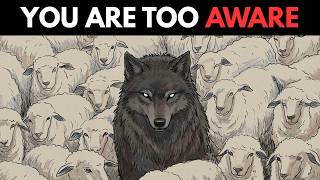


PsychToons Top Videos
biggest everReplicate rather than acquire: the channel's faceless, animated pop-psychology model is highly systematic and capable of generating massive multi-million view hits, but it currently suffers from low audience loyalty, a weak median view baseline of 3,000, and declining recent momentum.
PsychToons Niche & Positioning
Faceless, whiteboard-style animated essays that validate introverts, overthinkers, and neurodivergent traits by framing common social struggles as hidden cognitive superpowers.
PsychToons Content Strategy
An almost entirely evergreen catalog focusing on timeless human behaviors, personality typologies, and self-improvement frameworks that maintain search relevance indefinitely.
PsychToons Outlier Playbook
the repeatable breakout formulaSolo PsychToons animated psychology explainer, no guests: take a trait the audience already identifies with — the quiet/hurt loner, the highly intelligent learner, the disciplined/resilient/composed person, the polymath, the charismatic outsider — and reframe it as a hidden psychological advantage. The biggest breakouts combine emotional self-recognition with power language: “go quiet when hurt” becomes strength, “multiple interests” becomes an unfair advantage, “discipline” becomes something you can trick your brain into craving, “resilience/composure/rest” become intimidating superpowers. Avoid tiny lifestyle curiosities like sports, TikTok, birthdays, nostalgia, or generation labels; the
“Psychology of [high-status inner trait / painful outsider identity]: [specific transformation or superiority payoff]” OR “Why [quiet/smart/lone people behavior] (Psychology Explains).” Use words like “Unfair,” “So Fast,” “So Calm,” “So Strong,” “Craving It,” “Scares People,” “Makes People Nervous,”
- 1Pick one of the proven audience avatars: quiet when hurt, walks alone, highly intelligent, polymath/multiple interests, disciplined, resilient, composed, charismatic, or recovering from addiction/self
- 2Frame the topic as either hidden validation or elite self-mastery: “this thing you thought was a weakness is actually a rare advantage” or “here is how to build a mind/skill that gives you an unfair e
- 3Write the title with the channel’s winning two-part structure: “Psychology of [trait]: [power outcome]” or “Why [specific outsider behavior] (Psychology Explains).” Add a loaded payoff phrase such as
- 4Open the video by naming the viewer’s private experience in the first 10 seconds — e.g. going silent when hurt, having too many interests, failing discipline, staying calm while others react — then im
- 5Build the script around 5-7 psychological mechanisms plus actionable reframes: explain the hidden reason, show why most people misunderstand it, then give concrete ways to use it for learning, discipl
PsychToons Performance Drivers
PsychToons Topic Clusters
PsychToons Growth Opportunities
untapped whitespace- A/B test voiceover styles and introduce a recognizable, recurring animated character to build stronger brand affinity and lift the low median view baseline.
- Develop a structured digital product line, such as a '30-Day Mindset' animated course or downloadable cognitive worksheets, to monetize the massive interest in discipline and brain-hacking.
- Repurpose high-performing long-form concepts (like the 'Dark Empath' or 'Polymath' videos) into YouTube Shorts to capture top-of-funnel traffic and drive subscribers.
- Introduce community-driven content, such as interactive self-assessment quizzes, to capture email leads from high-performing videos.
How Replicable Is PsychToons
The channel relies entirely on faceless, templated 2D animations and voiceovers paired with highly formulaic, title-driven pop-psychology concepts that can be easily outsourced to a standard production pipeline.
PsychToons Content Risks
- Extreme hit-or-miss volatility, where a few viral outliers carry the channel while the vast majority of uploads struggle to clear a 3,000-view median.
- Low audience retention and brand loyalty due to the faceless, transactional nature of the content, making it difficult to monetize outside of AdSense.
- High risk of content saturation and copycat channels using identical stock animation styles and voiceover templates to target the exact same keywords.
Who Watches PsychToons
estimated audienceEstimated from public channel data — titles, descriptions, metadata and co-watched channels. Not YouTube Analytics. high confidence
The PsychToons audience consists primarily of introspective young adults, college students, and young professionals who identify as introverts, overthinkers, or 'former gifted kids.' They seek validation for their solitary lifestyles and quiet natures while looking for practical, animated guides to improve their social skills, mental discipline, and emotional resilience without compromising their authentic selves.
Majority Male
Global English-speaking audience, heavily concentrated in North America, Western Europe, and South Asia.
What PsychToons's Audience Cares About
- Social anxiety and feeling misunderstood by peers
- Gifted kid burnout and a sense of wasted potential
- Chronic procrastination and difficulty maintaining focus
- Overthinking and emotional sensitivity
- To find validation for unconventional traits like loving solitude
- To understand their own mind and heal from past emotional neglect
- To learn practical social and productivity hacks to navigate an extroverted world
Introspective, solitary, highly online, prone to overthinking, and preferring deep one-on-one connections over large social gatherings.
- Why Introverts and Highly Sensitive People Excel in Solitude
- How to Overcome Gifted Kid Burnout and Reclaim Your Focus
- The Psychology of Quiet People: Hidden Strengths of the Silent Observer
- Cognitive Hacks to Stop Procrastinating and Build Unshakable Discipline
- How to Read Micro-Behaviors and Detect Dark Psychology Tactics
Prefers Medium-form (8 to 15 minutes) videos, analytical, validating, reassuring, and slightly mysterious.
Inferred from: High-performing videos focusing on introversion, solitude, and high intelligence (e.g., 'Why Some People Are Meant to Walk Alone'). · Co-watch clusters centered on introspective self-improvement and social strategy (e.g., Apex Psychology, Savage Social Skills). · Titles addressing 'gifted kid' struggles, procrastination, and neurodivergent-adjacent traits (e.g., 'You Were The Smart Kid... So What Happened?').
The co-watched space is incredibly tight, focusing almost exclusively on actionable psychology, cognitive enhancement, social dynamics, and personality analysis.


Track your whole niche in Competitor Studio
These are just the closest channels. Competitor Studio maps 1,000+ direct & adjacent channels in your niche — with outlier detection and ongoing tracking.
- Track 1,000+ direct & adjacent competitors
- Outlier video detection
- AI-powered video insights

PsychToons Revenue & Valuation
from public dataWe estimate PsychToons' current valuation at between $2,426 and $18,470, supported by an asset floor value of $1,866, assessed with medium confidence. While this valuation reflects your current baseline, executing key growth levers offers the illustrative potential to significantly enhance your business's market value.
Estimates derived from public data (earnings history + comparable channels). Not an offer, appraisal, or financial advice.
Frequently asked questions about PsychToons
- How many subscribers does PsychToons have?
- PsychToons has 131.0K subscribers on YouTube, built up over roughly 11.5 years on the platform. Its videos average about 109.3K views each.
- How many views does PsychToons have?
- PsychToons has accumulated 13.2M total views across 121 uploads, averaging roughly 3.2K views per day since launch.
- How many videos has PsychToons posted?
- PsychToons has published 121 videos on YouTube, with recent uploads averaging about 11:23 in length.
- How engaged is PsychToons's audience?
- Over its lifetime, PsychToons has averaged about 101 views for every subscriber, a sign of how far its videos travel beyond the core subscriber base. On a per-video basis it draws roughly 109.3K views.
- How much money does PsychToons make?
- PsychToons's estimated YouTube revenue is $135 – $440 per month, including advertising and sponsorships (ad revenue alone is an estimated $104 – $147 per month). These are estimates derived from public data, not exact earnings.
- What is PsychToons's channel worth?
- PsychToons's YouTube channel is estimated to be worth $2K – $18K, benchmarked against comparable channels. This reflects the value of the channel as a media asset, not the creator's total net worth.
- What is PsychToons's most popular video?
- PsychToons's most-viewed video is "Psychology of People Who Go Quiet When They’re Hurt", with 2.3M views — roughly 766.7× the channel's typical video.
- What is PsychToons's biggest recent breakout video?
- PsychToons's biggest recent breakout is "Psychology of People Who Go Quiet When They’re Hurt", which pulled 2.3M views — about 766.7× the channel's recent median.
- What kind of content does PsychToons make?
- PsychToons is best described as Animated Pop-Psychology & Self-Validation. Faceless, whiteboard-style animated essays that validate introverts, overthinkers, and neurodivergent traits by framing common social struggles as hidden cognitive superpowers.
- Does PsychToons post Shorts or long-form videos?
- PsychToons publishes primarily long-form videos (about 100% of recent uploads), averaging around 11:23 in length.
- What topics does PsychToons cover?
- PsychToons's catalogue spans Solitude, Introversion & Social Withdrawal, High Intelligence, Polymathy & Cognitive Outliers, Childhood Trauma, Neglect & Family Dynamics, Mental Performance, Discipline & Brain Hacking, Social Dynamics, Charisma & Relationship Psychology and Micro-Behaviors & Quirky Habits Explained. These recurring themes make up the bulk of the channel's uploads.
- Who watches PsychToons?
- PsychToons's audience skews 18-24, majority male and based global english-speaking audience, heavily concentrated in north america, western europe, and south asia.. The PsychToons audience consists primarily of introspective young adults, college students, and young professionals who identify as introverts, overthinkers, or 'former gifted kids.' They seek validation for their solitary lifestyles and quiet natures while looking for practical, animated guides to improve their social skills, mental discipline, and emotional resilience without compromising their authentic selves. These are estimates inferred from public channel data, not YouTube Analytics.
- What is PsychToons's audience interested in?
- Viewers of PsychToons tend to be interested in Introversion and solitude validation, Cognitive optimization and brain hacking, Personality typology (Empaths, Dark Triad, Polymaths), Social dynamics and micro-behavior analysis and Mental health and childhood trauma recovery. Estimated from the channel's content and the channels its viewers co-watch.
- What channels are similar to PsychToons?
- Channels with audiences similar to PsychToons include Simple Ways of Life, Apex Psychology, Psychology Decoded, MindToAct and Turn Wiser. The co-watched space is incredibly tight, focusing almost exclusively on actionable psychology, cognitive enhancement, social dynamics, and personality analysis.
- How often does PsychToons post?
- PsychToons uploads about 3.5 videos per week (roughly 14.9 per month).
- Is PsychToons still active on YouTube?
- Yes — PsychToons is actively posting. Its most recent upload was 1 day ago.
- How long has PsychToons been on YouTube?
- PsychToons has been active on YouTube for about 11.5 years, growing to 131.0K subscribers over that time.
How this analysis was made
- Source: public YouTube channel & video data (120 recent videos sampled).
- Outlier videos: uploads with ≥1.5× the channel's recent median views.
- Revenue & valuation: estimated from public earnings signals and comparable channels — ranges, not exact figures.
- Last updated: 9/22/2026.