
Neon Rush YouTube channel analysis
Neon Rush is a YouTube channel with 24.9K subscribers and 7.3M total views, and an estimated $697 – $2K/mo revenue. This analysis breaks down its outlier videos, content strategy, similar channels, revenue & valuation estimate.
Analysis generated with AI from public YouTube data. Revenue and valuation figures are estimates derived from public data, not financial advice.
Neon Rush Channel Overview
lifetime totalsNeon Rush Outlier Videos
breakouts ≥1.5× recent median
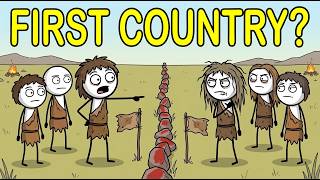

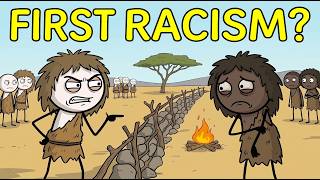


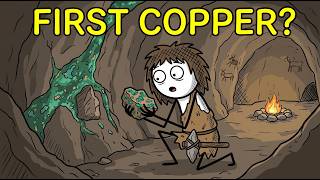

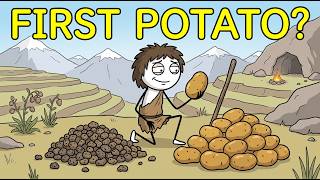


Neon Rush Top Videos
biggest everReplicate. The channel's highly systematic, templated formula ('How Did Humans [Action] [Noun]') produces highly searchable, evergreen content with a strong 32% hit-rate above average. Because it does not rely on a face or unique host personality, the model is highly copyable, though the current upload volume of ~5.8 long-form videos per week is extremely demanding.
Neon Rush Niche & Positioning
Formulaic, deep-dive educational essays explaining the evolutionary and historical origins of everyday materials, technologies, and social constructs.
Neon Rush Content Strategy
A highly standardized, search-friendly catalog focused on the historical origins of foundational human inventions, materials, and behaviors.
Neon Rush Outlier Playbook
the repeatable breakout formulaNeon Rush breaks out when it turns a huge, familiar piece of civilization into a primitive-origin mystery: 'How did humans first create/discover/domesticate this thing that now shapes society?' The strongest winners cluster in 4 proven buckets: taboo/charged social inventions like cannabis, racism, countries, swords/war; civilization staples like bread, rice farming, potato, cabbage, corn; foundational materials/metallurgy like copper, tin, bronze, iron, glass, gold, coal/charcoal; and migration/origin-scale human history like humans ending up in the Americas/Australia. The repeatable winner is not a niche tool history; it is a big everyday or morally loaded object/institution with a deep pr
How Did Humans [Invent/Discover/Domesticate] [one huge, familiar noun]? Best-performing versions use simple words with massive stakes: 'How Did Humans Domesticate Cannabis?', 'How Did Humans Invent Countries?', 'How Did Humans Invent Bread?', 'How Did Humans Invent Racism?', 'How Did Humans Invent S
- 1Pick the next topic from the proven breakout buckets, not from small-object history. Prioritize subjects like 'How Did Humans Invent Religion?', 'How Did Humans Invent Alcohol?', 'How Did Humans Inven
- 2Use the exact channel-native title pattern: 'How Did Humans Invent/Discover/Domesticate X?' Keep X short, universally understood, and high-stakes. Choose 'Discover' for raw materials/elements like cop
- 3Build the hook around a startling before/after contrast: before countries there were no borders; before bread, wheat was just wild grass; before cannabis, it was a wild plant humans selectively transf
- 4Structure the video as a civilization chain reaction: primitive discovery -> first practical use -> spread across cultures -> unexpected consequence -> why it still matters today. This is what makes c
- 5Package the next run as a connected mini-streak so each video feeds the others: materials arc 'Silver -> Salt -> Steel -> Cement', food/domestication arc 'Cheese -> Grapes/Wine -> Alcohol -> Bananas',
Neon Rush Performance Drivers
Neon Rush Topic Clusters
Neon Rush Growth Opportunities
untapped whitespace- Incorporate high-quality 3D cross-sections and visual reconstructions of ancient processes (like smelting copper or baking bread) to leverage the '3D' channel branding and boost retention.
- Group these highly formulaic videos into thematic, chronological playlists (e.g., 'The Age of Metals', 'The History of What We Eat') to drive automated binge-watching sessions.
- Repurpose the long-form content into rapid-fire, 60-second YouTube Shorts/TikToks highlighting the most shocking facts of each invention to act as a funnel.
- Utilize community tab polls to let the audience vote on the next 'Noun' to cover, increasing viewer investment and day-one click-through rates.
How Replicable Is Neon Rush
The channel relies on a highly systematic, templated title structure and evergreen historical topics that can be researched via public domain sources and produced using standard voiceovers and stock/3D assets without relying on a face or unique host personality.
Neon Rush Content Risks
- Extreme formula fatigue where the hyper-repetitive title and thumbnail style ('How Did Humans...') risks burning out the audience if viewers feel the content structure is too predictable.
- High production and research overhead required to sustain an upload schedule of ~5.8 long-form videos per week (averaging 25 minutes each) at a high quality level.
- Demonetization risks on sensitive historical topics like 'Slavery', 'Racism', 'Cannabis', or 'Violence' which may run afoul of YouTube's advertiser-friendly guidelines.
Who Watches Neon Rush
estimated audienceEstimated from public channel data — titles, descriptions, metadata and co-watched channels. Not YouTube Analytics. high confidence
The audience consists of intellectually curious individuals, students, and history enthusiasts who are fascinated by the origins of human civilization. They enjoy structured, long-form animated essays that explain the evolutionary, technological, and social milestones of early humans, bridging the gap between anthropology, material science, and everyday history.
Predominantly Male
Global English-speaking audience with a strong base in India and Western nations
What Neon Rush's Audience Cares About
- Superficial or overly academic history content
- Lack of context on how everyday modern items came to exist
- Boredom during long study or work breaks
- Understanding the foundational 'how' and 'why' of human civilization
- Learning obscure historical trivia to share with others
- Seeking engaging, visually structured educational narratives
Lifelong learners who consume educational video essays, documentaries, and historical trivia during leisure or meal times
- The evolutionary history of human tool-making and metallurgy
- How ancient agricultural revolutions shaped modern food crops
- The origins of early human social institutions and currency
- Prehistoric migration patterns and the populating of continents
- The discovery and processing of ancient materials like glass and bronze
Prefers Long-form (20 to 30 minutes) videos, informative, curious, structured, and analytical yet highly accessible.
Inferred from: Formulaic 'How Did Humans...' titles focusing on metallurgy, agriculture, and social constructs · Co-watch channels centered on primitive survival, ancient material science, and daily life in antiquity · High volume of long-form animated educational essays averaging over 25 minutes
The audience is highly focused on early human survival, ancient technology, food history, and the origins of everyday materials.


Track your whole niche in Competitor Studio
These are just the closest channels. Competitor Studio maps 1,000+ direct & adjacent channels in your niche — with outlier detection and ongoing tracking.
- Track 1,000+ direct & adjacent competitors
- Outlier video detection
- AI-powered video insights

Neon Rush Revenue & Valuation
from public dataBased on your current performance, Neon Rush is valued between $12,543 and $95,855, with an absolute floor of $9,648, reflecting a medium confidence level in the valuation. Fully executing on your untapped operational and monetization levers could potentially drive this valuation significantly higher, though this represents illustrative potential rather than a guaranteed outcome.
Estimates derived from public data (earnings history + comparable channels). Not an offer, appraisal, or financial advice.
Frequently asked questions about Neon Rush
- How many subscribers does Neon Rush have?
- Neon Rush has 24.9K subscribers on YouTube, built up over roughly 1.4 years on the platform. Its videos average about 54.1K views each.
- How many views does Neon Rush have?
- Neon Rush has accumulated 7.3M total views across 135 uploads, averaging roughly 13.9K views per day since launch.
- How many videos has Neon Rush posted?
- Neon Rush has published 135 videos on YouTube, with recent uploads averaging about 25:45 in length.
- How engaged is Neon Rush's audience?
- Over its lifetime, Neon Rush has averaged about 293 views for every subscriber, a sign of how far its videos travel beyond the core subscriber base. On a per-video basis it draws roughly 54.1K views.
- How much money does Neon Rush make?
- Neon Rush's estimated YouTube revenue is $697 – $2K per month, including advertising and sponsorships (ad revenue alone is an estimated $536 – $761 per month). These are estimates derived from public data, not exact earnings.
- What is Neon Rush's channel worth?
- Neon Rush's YouTube channel is estimated to be worth $13K – $96K, benchmarked against comparable channels. This reflects the value of the channel as a media asset, not the creator's total net worth.
- What is Neon Rush's most popular video?
- Neon Rush's most-viewed video is "How Did Humans Domesticate Cannabis?", with 702.0K views — roughly 20.1× the channel's typical video.
- What is Neon Rush's biggest recent breakout video?
- Neon Rush's biggest recent breakout is "How Did Humans Domesticate Cannabis?", which pulled 702.0K views — about 20.1× the channel's recent median.
- What kind of content does Neon Rush make?
- Neon Rush is best described as Anthropology & Historical Origins. Formulaic, deep-dive educational essays explaining the evolutionary and historical origins of everyday materials, technologies, and social constructs.
- Does Neon Rush post Shorts or long-form videos?
- Neon Rush publishes primarily long-form videos (about 100% of recent uploads), averaging around 25:45 in length.
- What topics does Neon Rush cover?
- Neon Rush's catalogue spans Metallurgy & Materials Discovery, Agriculture & Food Domestication, Social Constructs & Institutions, Primitive Tools & Weapons, Early Human Migration & Anthropology and General Biological & Animal Curiosity. These recurring themes make up the bulk of the channel's uploads.
- Who watches Neon Rush?
- Neon Rush's audience skews 18-24, predominantly male and based global english-speaking audience with a strong base in india and western nations. The audience consists of intellectually curious individuals, students, and history enthusiasts who are fascinated by the origins of human civilization. They enjoy structured, long-form animated essays that explain the evolutionary, technological, and social milestones of early humans, bridging the gap between anthropology, material science, and everyday history. These are estimates inferred from public channel data, not YouTube Analytics.
- What is Neon Rush's audience interested in?
- Viewers of Neon Rush tend to be interested in Prehistoric technology and metallurgy, Evolutionary anthropology and human migration, The history of agriculture and food domestication, Primitive survival skills and ancient engineering and The origins of social institutions and currency. Estimated from the channel's content and the channels its viewers co-watch.
- What channels are similar to Neon Rush?
- Channels with audiences similar to Neon Rush include inkly, Echoes of Flavor, Basically Primitive, Murph and Ellis Bernhard. The audience is highly focused on early human survival, ancient technology, food history, and the origins of everyday materials.
- How often does Neon Rush post?
- Neon Rush uploads about 5.8 videos per week (roughly 24.7 per month).
- Is Neon Rush still active on YouTube?
- Yes — Neon Rush is actively posting. Its most recent upload was 2 days ago.
- How long has Neon Rush been on YouTube?
- Neon Rush has been active on YouTube for about 1.4 years, growing to 24.9K subscribers over that time.
How this analysis was made
- Source: public YouTube channel & video data (75 recent videos sampled).
- Outlier videos: uploads with ≥1.5× the channel's recent median views.
- Revenue & valuation: estimated from public earnings signals and comparable channels — ranges, not exact figures.
- Last updated: 9/14/2026.