
Mr. Economics YouTube channel analysis
Mr. Economics is a YouTube channel with 108 subscribers and 4.2K total views, and an estimated $20 – $108/mo revenue. This analysis breaks down its outlier videos, content strategy, similar channels, revenue & valuation estimate.
Analysis generated with AI from public YouTube data. Revenue and valuation figures are estimates derived from public data, not financial advice.
Mr. Economics Channel Overview
lifetime totalsMr. Economics Outlier Videos
breakouts ≥1.5× recent median




Mr. Economics Top Videos
biggest ever
A highly systematic, faceless educational channel with a low subscriber count (108) but solid organic search traction, proving that structured, title-templated business breakdowns ('The Economics of Owning a...') can reliably capture search traffic even with zero initial authority.
Mr. Economics Niche & Positioning
Templated, long-form educational breakdowns of the unit economics, costs, and operational realities of everyday brick-and-mortar businesses and macro industries.
Mr. Economics Content Strategy
A 100% evergreen catalog relying entirely on search-friendly, templated titles ('The Economics of Owning a...' and 'Every Type of... Explained') to capture high-intent business and finance viewers.
Mr. Economics Outlier Playbook
the repeatable breakout formulaThe breakout formula is a practical, numbers-led explainer about owning a specific everyday business people can realistically imagine starting or buying: cleaning company, auto repair workshop, bakeshop, laundromat, plant nursery, bus transport company. The winning format is not broad business theory; it is “what are the economics of owning this cash-flowing local business?” The hook is curiosity about hidden profits in boring businesses: startup cost, pricing, labor, margins, recurring demand, break-even, and the operational trap most outsiders miss. There are no guests driving the outliers; the repeatable asset is the niche business case study. The strongest topics are humble, familiar, se
“The Economics of Owning a [specific everyday business]” — best when the noun is concrete and locally recognizable, e.g. “The Economics of Owning a Cleaning Company,” “The Economics of Owning an Auto Repairing Workshop,” “The Economics of Owning a Bakeshop,” “The Economics of Owning a Laundromat.” S
- 1Prioritize specific owner-operator businesses over abstract sectors: make videos on businesses adjacent to the winners, such as car wash, daycare center, coffee shop, convenience store, small gym, mov
- 2Use the exact proven title frame: “The Economics of Owning a [Business].” Avoid adding vague wording, time lengths, or broad labels unless doing the secondary format. The topic should be as tangible a
- 3Open each video with the owner’s money question: “How much does it cost to start, how much can it make per month, and what actually determines profit?” Then move quickly into startup costs, revenue pe
- 4Choose businesses with recurring or repeat demand, because the channel’s winners cluster around repeat-service economics: cleaning contracts, car repairs, laundry cycles, bakery foot traffic, plant nu
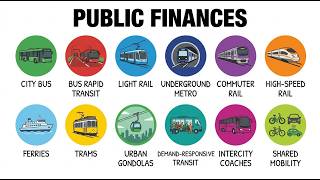
- 5For occasional broad explainers, copy only the proven broad pattern: “Every Type of Software Economics Explained” or “Every Type of Public Transport Economics Explained.” Break the industry into monet
Mr. Economics Performance Drivers
Mr. Economics Topic Clusters
Mr. Economics Growth Opportunities
untapped whitespace- Introduce visual case studies of real-world franchise brands (e.g., Subway, Great Clips) rather than just generic business types to capture high-volume brand search traffic.
- Create comparative battle videos (e.g., 'Laundromat vs. Car Wash: Which is Actually More Profitable?') to leverage existing high-performing topics against each other.
- Develop downloadable unit economics templates or basic financial model spreadsheets in the description to build an email list and monetize the high-intent audience.
- Expand into the economics of digital-native businesses (e.g., newsletters, YouTube channels, faceless brands) to capture the younger creator-economy demographic.
How Replicable Is Mr. Economics
The channel relies entirely on a faceless, highly templated script-and-stock-footage format with standardized titles, requiring no personal brand, unique access, or complex on-camera talent.
Mr. Economics Content Risks
- High reliance on stock footage and generic voiceovers, which makes the channel highly vulnerable to YouTube's 'Reused Content' demonetization policies if not sufficiently transformative.
- Low viewer loyalty and community building due to the faceless, transactional nature of search-driven educational content.
- Intense competition from larger, established finance channels who can easily replicate the same public-data-driven business breakdowns with higher production value.
Who Watches Mr. Economics
estimated audienceEstimated from public channel data — titles, descriptions, metadata and co-watched channels. Not YouTube Analytics. medium confidence
This audience consists of business-minded individuals, aspiring entrepreneurs, and logistics enthusiasts who want to understand the practical, financial, and operational realities of running brick-and-mortar businesses and global industries. They value structured, jargon-free breakdowns of unit economics and supply chains over abstract economic theory.
Highly male-skewed, driven by the strong overlap with industrial logistics, engi
Primarily English-speaking countries with a strong interest in Western business models and global supply chains, led by the United States.
What Mr. Economics's Audience Cares About
- Lack of transparent financial data for starting a brick-and-mortar business
- Difficulty understanding complex industry supply chains without jargon
- Evaluating the realistic profitability of common franchise models
- To discover viable, low-barrier-to-entry business ideas
- To understand the hidden cost structures of everyday industries
- To gain practical financial literacy that applies to real-world commerce
Side-hustlers, business students, and curious professionals who enjoy dissecting how the physical world and local economies operate behind the scenes.
- The Unit Economics of Owning a Car Wash Franchise
- How Commercial Real Estate Developers Actually Make Money
- The Hidden Costs of Running a Micro-Brewery
- Every Stage of the Global Semiconductor Supply Chain Explained
- Why Most Independent Coffee Shops Fail: A Financial Breakdown
Prefers Long-form (15 to 30 minutes) to allow for comprehensive fina videos, analytical, educational, objective, and highly structured..
Inferred from: Video titles focusing consistently on 'The Economics of Owning' specific local service businesses · Co-watch channels like Real Engineering, Atlas Invests, and True Costs pointing to an audience interested in logistics and infrastructure · Highly structured 'Every Level of...' video formats that appeal to systematic, analytical thinkers
The audience is highly clustered around microeconomics, business models, logistics, and structured 'explained' formats, with almost no bleed into general entertainment.


Track your whole niche in Competitor Studio
These are just the closest channels. Competitor Studio maps 1,000+ direct & adjacent channels in your niche — with outlier detection and ongoing tracking.
- Track 1,000+ direct & adjacent competitors
- Outlier video detection
- AI-powered video insights

Mr. Economics Revenue & Valuation
from public dataWe assess your business's current valuation at $267–$2,307, established with high confidence and supported by a floor of $205. This baseline is driven by your current cash flows, though there is significant illustrative potential to increase this valuation by executing key operational and monetization levers.
Estimates derived from public data (earnings history + comparable channels). Not an offer, appraisal, or financial advice.
Frequently asked questions about Mr. Economics
- How many subscribers does Mr. Economics have?
- Mr. Economics has 108 subscribers on YouTube, built up over roughly 0.1 years on the platform. Its videos average about 177 views each.
- How many views does Mr. Economics have?
- Mr. Economics has accumulated 4.2K total views across 24 uploads, averaging roughly 93 views per day since launch.
- How many videos has Mr. Economics posted?
- Mr. Economics has published 24 videos on YouTube, with recent uploads averaging about 26:30 in length.
- How engaged is Mr. Economics's audience?
- Over its lifetime, Mr. Economics has averaged about 39 views for every subscriber, a sign of how far its videos travel beyond the core subscriber base. On a per-video basis it draws roughly 177 views.
- How much money does Mr. Economics make?
- Mr. Economics's estimated YouTube revenue is $20 – $108 per month, including advertising and sponsorships (ad revenue alone is an estimated $15 – $36 per month). These are estimates derived from public data, not exact earnings.
- What is Mr. Economics's channel worth?
- Mr. Economics's YouTube channel is estimated to be worth $267 – $2K, benchmarked against comparable channels. This reflects the value of the channel as a media asset, not the creator's total net worth.
- What is Mr. Economics's most popular video?
- Mr. Economics's most-viewed video is "The Economics of Owning a Cleaning Company", with 914 views — roughly 6.6× the channel's typical video.
- What is Mr. Economics's biggest recent breakout video?
- Mr. Economics's biggest recent breakout is "The Economics of Owning a Cleaning Company", which pulled 860 views — about 6.2× the channel's recent median.
- What kind of content does Mr. Economics make?
- Mr. Economics is best described as Micro-Business & Industry Economics. Templated, long-form educational breakdowns of the unit economics, costs, and operational realities of everyday brick-and-mortar businesses and macro industries.
- Does Mr. Economics post Shorts or long-form videos?
- Mr. Economics publishes primarily long-form videos (about 100% of recent uploads), averaging around 26:30 in length.
- What topics does Mr. Economics cover?
- Mr. Economics's catalogue spans Local Service & Retail Businesses, Macro Industry & Sector Overviews, Industrial & Infrastructure Assets and Geopolitical & Historical Economics. These recurring themes make up the bulk of the channel's uploads.
- Who watches Mr. Economics?
- Mr. Economics's audience skews 25-34, highly male-skewed, driven by the strong overlap with industrial logistics, engi and based primarily english-speaking countries with a strong interest in western business models and global supply chains, led by the united states.. This audience consists of business-minded individuals, aspiring entrepreneurs, and logistics enthusiasts who want to understand the practical, financial, and operational realities of running brick-and-mortar businesses and global industries. They value structured, jargon-free breakdowns of unit economics and supply chains over abstract economic theory. These are estimates inferred from public channel data, not YouTube Analytics.
- What is Mr. Economics's audience interested in?
- Viewers of Mr. Economics tend to be interested in Unit economics, Small business ownership, Franchise operations, Industrial logistics and Supply chain management. Estimated from the channel's content and the channels its viewers co-watch.
- What channels are similar to Mr. Economics?
- Channels with audiences similar to Mr. Economics include Mr. Finance, Profit Mechanics, Just Explained, MONEY IQ and True Costs. The audience is highly clustered around microeconomics, business models, logistics, and structured 'explained' formats, with almost no bleed into general entertainment.
- How often does Mr. Economics post?
- Mr. Economics uploads about 5.6 videos per week (roughly 24 per month).
- Is Mr. Economics still active on YouTube?
- Yes — Mr. Economics is actively posting. Its most recent upload was 2 days ago.
- How long has Mr. Economics been on YouTube?
- Mr. Economics has been active on YouTube for about 0.1 years, growing to 108 subscribers over that time.
How this analysis was made
- Source: public YouTube channel & video data (24 recent videos sampled).
- Outlier videos: uploads with ≥1.5× the channel's recent median views.
- Revenue & valuation: estimated from public earnings signals and comparable channels — ranges, not exact figures.
- Last updated: 8/31/2026.