
Mr. Science YouTube channel analysis
Mr. Science is a YouTube channel with 224.0K subscribers and 35.4M total views, and an estimated $11K – $36K/mo revenue. This analysis breaks down its outlier videos, content strategy, similar channels, revenue & valuation estimate.
Analysis generated with AI from public YouTube data. Revenue and valuation figures are estimates derived from public data, not financial advice.
Mr. Science Channel Overview
lifetime totalsMr. Science Outlier Videos
breakouts ≥1.5× recent median


Mr. Science Top Videos
biggest ever

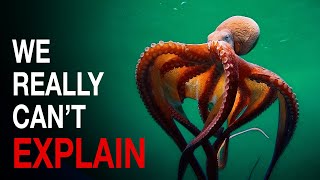
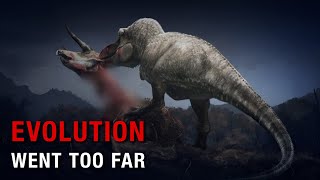

Replicate. This channel achieves massive view-to-subscriber leverage (median 940k views with only 224k subscribers) using a highly formulaic, easily outsourced documentary style focused on biological anomalies and prehistoric monsters.
Mr. Science Niche & Positioning
Sensationalized but educational deep-dives into the most extreme, terrifying, and bizarre anomalies of the natural and prehistoric world.
Mr. Science Content Strategy
Timeless, highly searchable deep-dives into animal biology and paleontology, occasionally capturing trends like rare oarfish sightings.
Mr. Science Outlier Playbook
the repeatable breakout formulaPick one animal or environment that already feels monstrous (deep sea creatures, Titanoboa, sperm whales, spiders, oarfish, T. rex, Megalodon), then make a narrated science-horror explainer that proves its body/life history is 'not normal' through escalating weird facts: size, anatomy, hunting method, survival pressure, and why evolution made it that way. The strongest version is not a broad prehistoric-world topic; it is a specific creature or vertical world with a built-in fear hook. The biggest outlier combines deep ocean + escalating descent structure + creepiness: 'Why Deep Sea Creatures Get Creepier the Deeper You Go.' The repeatable secondary winner is the 'Nothing About [creature] Wa
Use either 'Nothing About [specific scary/strange creature] Is/Was Normal… Here’s Why' or 'Why [deep-sea/prehistoric creature group] Get/Grow [creepy/huge/terrifying] [because of an extreme environment].' The title should accuse the animal of breaking expectations: 'doesn't make sense,' 'completely
- 1Choose a high-fear, high-curiosity subject from the channel’s proven lanes: deep sea animals, prehistoric giants, or biologically bizarre predators. Best candidates should feel alien before the video
- 2Frame the video around one strong abnormality claim, not a general overview. For example: 'Nothing About Giant Squid Is Normal… Here’s Why,' 'Why Deep Sea Predators Get Weirder the Deeper You Go,' or
- 3Structure the script as escalating reveals: start with the most shocking visual/claim, then move through size, anatomy, hunting, reproduction/survival, and the evolutionary reason. For deep sea topics
- 4Package the thumbnail/title around biological impossibility or horror: oversized jaws, impossible scale, alien eyes, crushing depth, ancient monster, or 'we were wrong' reversal. Avoid vague titles li
- 5Prioritize scripts that let the audience repeatedly think 'that should not exist.' The outliers all sell the same payoff: Titanoboa was too huge, sperm whales dive too deep and fight squid, spiders ar
Mr. Science Performance Drivers
Mr. Science Topic Clusters
Mr. Science Growth Opportunities
untapped whitespace- Expand the 'Nothing Is Normal' format to extinct megafauna like the Woolly Mammoth or Megatherium (Giant Ground Sloth).
- Introduce a sub-series focusing on extreme microscopic life (tardigrades, deep-vent bacteria) to capture a new biological scale.
- Capitalize on interactive community polls to let subscribers vote on the next 'abnormal' creature to feature, boosting engagement.
- Create multi-part mini-documentaries on specific geological extinction events (e.g., the Permian-Triassic extinction) to build longer-form narrative arcs.
How Replicable Is Mr. Science
The channel relies on a highly structured, formulaic title hook, stock/documentary footage, and voiceover narration, which can be easily systemized and outsourced to scriptwriters and editors.
Mr. Science Content Risks
- Extreme reliance on a single title formula ('Nothing About X Is Normal') which risks audience fatigue and CTR decay over time.
- High dependence on third-party documentary footage and stock assets, exposing the channel to potential copyright claims or fair-use disputes.
- Low upload frequency (~0.4 videos/week) makes the channel highly vulnerable to algorithm changes if a single video underperforms.
Who Watches Mr. Science
estimated audienceEstimated from public channel data — titles, descriptions, metadata and co-watched channels. Not YouTube Analytics. high confidence
The audience consists of highly curious science enthusiasts, nature documentary fans, and prehistoric life buffs. They are drawn to the bizarre, extreme, and mysterious aspects of evolutionary biology, paleontology, and deep-sea marine life, preferring long-form, narrative-driven video essays that balance scientific accuracy with a sense of wonder.
Skews heavily male, driven by a strong interest in prehistoric predators, paleon
Primarily English-speaking nations, led by the United States, with significant reach in other major Anglophone markets.
What Mr. Science's Audience Cares About
- Dry, overly academic presentations of science
- Sensationalized clickbait that lacks actual scientific substance
- Repetitive nature documentaries that cover the same basic topics
- To be awed by the bizarre and extreme realities of the natural world
- To understand the evolutionary 'why' behind strange animal adaptations
- To escape into high-quality, narrative-driven scientific storytelling
Armchair scientists and nature documentary enthusiasts who spend their leisure time deep-diving into niche scientific mysteries and evolutionary history.
- Deep-sea gigantism and abyssal zone adaptations
- Prehistoric apex predators and evolutionary dead-ends
- Bizarre biological anomalies in modern marine life
- The transition of life during major extinction events
- Speculative evolution and anatomical mysteries of extinct megafauna
Prefers Long-form (typically fifteen to thirty minutes) videos, fascinated, narrative-driven, mysterious, and scientifically grounded.
Inferred from: Co-watch cluster includes PBS Eons, ExtinctZoo, and Stephanie Sammann · High-performing titles focusing on deep-sea gigantism and prehistoric anomalies · Long-form documentary format with highly structured scientific explanations
The audience is highly concentrated around prehistoric life, evolutionary anomalies, paleontology, and deep-sea biology, showing very little interest in mainstream general science.


Track your whole niche in Competitor Studio
These are just the closest channels. Competitor Studio maps 1,000+ direct & adjacent channels in your niche — with outlier detection and ongoing tracking.
- Track 1,000+ direct & adjacent competitors
- Outlier video detection
- AI-powered video insights

Mr. Science Revenue & Valuation
from public dataBased on these figures, your business commands an estimated valuation range of $151,188 to $769,024, supported by a solid baseline floor of $116,298 with high confidence. Achieving the upper end of this valuation would require executing key growth levers to build more predictable, diversified revenue streams.
Estimates derived from public data (earnings history + comparable channels). Not an offer, appraisal, or financial advice.
Frequently asked questions about Mr. Science
- How many subscribers does Mr. Science have?
- Mr. Science has 224.0K subscribers on YouTube, built up over roughly 4.4 years on the platform. Its videos average about 2.1M views each.
- How many views does Mr. Science have?
- Mr. Science has accumulated 35.4M total views across 17 uploads, averaging roughly 22.0K views per day since launch.
- How many videos has Mr. Science posted?
- Mr. Science has published 17 videos on YouTube, with recent uploads averaging about 21:00 in length.
- How engaged is Mr. Science's audience?
- Over its lifetime, Mr. Science has averaged about 158 views for every subscriber, a sign of how far its videos travel beyond the core subscriber base. On a per-video basis it draws roughly 2.1M views.
- How much money does Mr. Science make?
- Mr. Science's estimated YouTube revenue is $11K – $36K per month, including advertising and sponsorships (ad revenue alone is an estimated $9K – $12K per month). These are estimates derived from public data, not exact earnings.
- What is Mr. Science's channel worth?
- Mr. Science's YouTube channel is estimated to be worth $151K – $769K, benchmarked against comparable channels. This reflects the value of the channel as a media asset, not the creator's total net worth.
- What is Mr. Science's most popular video?
- Mr. Science's most-viewed video is "Why Deep Sea Creatures Get Creepier the Deeper You Go", with 16.0M views — roughly 17× the channel's typical video.
- What is Mr. Science's biggest recent breakout video?
- Mr. Science's biggest recent breakout is "Why Deep Sea Creatures Get Creepier the Deeper You Go", which pulled 16.0M views — about 17× the channel's recent median.
- What kind of content does Mr. Science make?
- Mr. Science is best described as Evolutionary Biology & Paleontology Narratives. Sensationalized but educational deep-dives into the most extreme, terrifying, and bizarre anomalies of the natural and prehistoric world.
- Does Mr. Science post Shorts or long-form videos?
- Mr. Science publishes primarily long-form videos (about 100% of recent uploads), averaging around 21:00 in length.
- What topics does Mr. Science cover?
- Mr. Science's catalogue spans The 'Nothing Is Normal' Biological Anomalies, Prehistoric Beasts & Paleontology, Deep Sea Terrors & Gigantism and Extreme Survival Narratives. These recurring themes make up the bulk of the channel's uploads.
- Who watches Mr. Science?
- Mr. Science's audience skews 25-34, skews heavily male, driven by a strong interest in prehistoric predators, paleon and based primarily english-speaking nations, led by the united states, with significant reach in other major anglophone markets.. The audience consists of highly curious science enthusiasts, nature documentary fans, and prehistoric life buffs. They are drawn to the bizarre, extreme, and mysterious aspects of evolutionary biology, paleontology, and deep-sea marine life, preferring long-form, narrative-driven video essays that balance scientific accuracy with a sense of wonder. These are estimates inferred from public channel data, not YouTube Analytics.
- What is Mr. Science's audience interested in?
- Viewers of Mr. Science tend to be interested in Paleontology and prehistoric life, Marine biology and deep-sea exploration, Evolutionary anomalies and speculative biology, Natural history documentaries and Anatomical mysteries of extinct megafauna. Estimated from the channel's content and the channels its viewers co-watch.
- What channels are similar to Mr. Science?
- Channels with audiences similar to Mr. Science include ExtinctZoo , BeyondTheBlue, Spinosnack, The Thaw and Destiny. The audience is highly concentrated around prehistoric life, evolutionary anomalies, paleontology, and deep-sea biology, showing very little interest in mainstream general science.
- How often does Mr. Science post?
- Mr. Science uploads about 0.4 videos per week (roughly 1.7 per month).
- Is Mr. Science still active on YouTube?
- Yes — Mr. Science is actively posting. Its most recent upload was 15 days ago.
- How long has Mr. Science been on YouTube?
- Mr. Science has been active on YouTube for about 4.4 years, growing to 224.0K subscribers over that time.
How this analysis was made
- Source: public YouTube channel & video data (15 recent videos sampled).
- Outlier videos: uploads with ≥1.5× the channel's recent median views.
- Revenue & valuation: estimated from public earnings signals and comparable channels — ranges, not exact figures.
- Last updated: 8/14/2026.