
Fauna Code YouTube channel analysis
Fauna Code is a YouTube channel with 4.5K subscribers and 1.8M total views, and an estimated $1K – $6K/mo revenue. This analysis breaks down its outlier videos, content strategy, similar channels, revenue & valuation estimate.
Analysis generated with AI from public YouTube data. Revenue and valuation figures are estimates derived from public data, not financial advice.
Fauna Code Channel Overview
lifetime totalsFauna Code Outlier Videos
breakouts ≥1.5× recent median




Fauna Code Top Videos
biggest everReplicate this channel immediately; its highly systematic, faceless educational format uses formulaic, curiosity-driven titles to generate massive viral outliers (up to 1,000,000 views) on a tiny subscriber base, though recent momentum has slowed to 0.24x.
Fauna Code Niche & Positioning
Answering counterintuitive evolutionary, dietary, and behavioral questions about why humans do not consume certain animals or how wild animals interact with humans.
Fauna Code Content Strategy
100% evergreen, timeless educational videos structured around deep-seated human curiosity, survival instincts, and food taboos.
Fauna Code Outlier Playbook
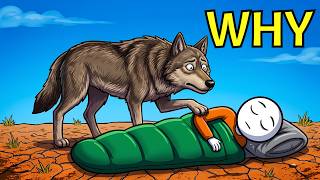
the repeatable breakout formulaThe breakout formula is a human-centered animal paradox explainer: take an animal people already know, attach it to a primal human question — “Can we eat it?”, “Will it attack us?”, or “Can we keep it as a pet?” — then make the premise feel irrational by adding abundance, danger, friendliness, or nutritional value. The strongest version is not a niche animal fact; it is a contradiction involving humans and animals: krill/the ocean’s most abundant creature should be food but isn’t, foxes seem friendly but aren’t pets, predators could kill sleeping humans but don’t, humans can eat almost anything while most animals can’t, cats should fear humans but don’t. No guests are needed; the winning for
“Why Can’t/Don’t We [eat/keep/fear] [recognizable animal or animal category]?” + an added contradiction: “Even though it’s abundant/high in protein/friendly/dangerous/eaten elsewhere.” Best patterns from the winners: “Why Can’t We Eat the Ocean’s Most Abundant Creature?”, “Foxes Are Friendly. So Why
- 1Pick topics at the intersection of animals and human self-interest: food, pets, safety, or human superiority. Prioritize premises like krill as food, foxes as pets, predators near sleeping humans, cat
- 2Use a contradiction in the title, not just an animal fact. Frame it as something that should logically happen but doesn’t: “If it’s everywhere, why don’t we eat it?”, “If it’s friendly, why isn’t it a
- 3Lead with the human stakes in the first minute: hunger, danger, domestication, disgust, survival, or advantage. The viewer should immediately feel, “Wait, why don’t we do that?”
- 4Structure the video as a layered reveal: obvious answer first, then the deeper biological reason, then the ecological/economic reason, then the historical or cultural reason. For example: krill are ab
- 5Make follow-ups that are adjacent to proven outliers but not weaker duplicates: instead of generic “Why don’t we eat X?”, add a strong advantage or threat such as “Why don’t we eat farmed alligator if
Fauna Code Performance Drivers
Fauna Code Topic Clusters
Fauna Code Growth Opportunities
untapped whitespace- Expand into historical and extinct animal diets, exploring angles like 'Why Did Humans Stop Eating Woolly Mammoths?'
- Introduce visual comparison formats or map-based animations to show the geographical distribution of these food taboos.
- Leverage YouTube Shorts to repurpose the most shocking 'Why don't we eat X' facts, driving traffic to the 36-minute long-form compilations.
- Explore toxic or deadly delicacies, analyzing why humans risk their lives to eat highly dangerous animals like fugu.
How Replicable Is Fauna Code
The channel relies entirely on a faceless, script-and-stock-footage format with formulaic, highly templated titles that can be easily researched, written, and edited by a standard production team without relying on a unique host personality.
Fauna Code Content Risks
- Extreme reliance on a single title formula ('Why Don't We Eat X?') which risks audience fatigue and eventual CTR decay.
- High vulnerability to copyright claims or reuse content flags due to heavy reliance on stock footage and third-party animal clips.
- Low viewer loyalty and subscriber conversion (only 4.5k subs despite a 1M-view video) because the content is highly transactional and lacks a personal brand connection.
Who Watches Fauna Code
estimated audienceEstimated from public channel data — titles, descriptions, metadata and co-watched channels. Not YouTube Analytics. high confidence
The Fauna Code audience consists of intellectually curious viewers who are fascinated by the intersection of zoology, anthropology, and food history. They are drawn to highly specific, counterintuitive questions about why humans eat what they eat, why certain animals were never domesticated, and how evolutionary biology shapes modern ecological norms. This audience highly values long-form, narrative-driven explanations that avoid academic jargon while delivering genuine scientific and historical insights.
Skews male, but with broad cross-gender appeal due to the food and animal focus.
Global English-speaking audience with a notable presence in North America, Western Europe, and South Asia.
What Fauna Code's Audience Cares About
- Boredom with repetitive, surface-level nature documentaries
- Frustration with clickbait science channels that do not explain the actual mechanism
- Lack of accessible content linking biology directly to human history and culture
- Satisfying late-night curiosity about counterintuitive topics
- Learning obscure trivia to share in social conversations
- Understanding the evolutionary 'why' behind everyday human behaviors and diets
Inquisitive media consumer who enjoys long-form, educational video essays as background listening or deep-focus entertainment.
- The evolutionary history of animal domestication
- Cultural and biological reasons behind culinary taboos
- Human survival mechanisms compared to apex predators
- The economics and biology of industrial livestock farming
- Deep-sea marine biology and predator-prey dynamics
Prefers Long-form (averaging 30+ minutes per video) videos, analytical, narrative-driven, accessible, and jargon-free.
Inferred from: High-performing videos focusing on culinary taboos and animal domestication (e.g., 'Why Can't We Eat the Ocean's Most Abundant Creature?') · Co-watch clusters centered on evolutionary anthropology and marine mysteries (e.g., Before Civilization, Midnight Zone) · English-language, long-form (avg 36 mins) deep-dives originating from Pakistan but targeting a global, curiosity-driven audience
The audience is exceptionally consolidated around niche evolutionary 'why' questions, specifically focusing on human dietary taboos, domestication anomalies, and ancient survival adaptations.


Track your whole niche in Competitor Studio
These are just the closest channels. Competitor Studio maps 1,000+ direct & adjacent channels in your niche — with outlier detection and ongoing tracking.
- Track 1,000+ direct & adjacent competitors
- Outlier video detection
- AI-powered video insights
Fauna Code Revenue & Valuation
from public dataBased on your current performance, your business commands an estimated valuation of $15,959 to $138,283, supported by a baseline floor of $12,276 with high confidence. Successfully executing key operational levers represents a significant opportunity to potentially increase this valuation over time.
Estimates derived from public data (earnings history + comparable channels). Not an offer, appraisal, or financial advice.
Frequently asked questions about Fauna Code
- How many subscribers does Fauna Code have?
- Fauna Code has 4.5K subscribers on YouTube, built up over roughly 0.1 years on the platform. Its videos average about 55.8K views each.
- How many views does Fauna Code have?
- Fauna Code has accumulated 1.8M total views across 32 uploads, averaging roughly 43.3K views per day since launch.
- How many videos has Fauna Code posted?
- Fauna Code has published 32 videos on YouTube, with recent uploads averaging about 36:00 in length.
- How engaged is Fauna Code's audience?
- Over its lifetime, Fauna Code has averaged about 393 views for every subscriber, a sign of how far its videos travel beyond the core subscriber base. On a per-video basis it draws roughly 55.8K views.
- How much money does Fauna Code make?
- Fauna Code's estimated YouTube revenue is $1K – $6K per month, including advertising and sponsorships (ad revenue alone is an estimated $825 – $2K per month). These are estimates derived from public data, not exact earnings.
- What is Fauna Code's channel worth?
- Fauna Code's YouTube channel is estimated to be worth $16K – $138K, benchmarked against comparable channels. This reflects the value of the channel as a media asset, not the creator's total net worth.
- What is Fauna Code's most popular video?
- Fauna Code's most-viewed video is "Why Can't We Eat the Ocean's Most Abundant Creature?", with 1.0M views — roughly 100× the channel's typical video.
- What is Fauna Code's biggest recent breakout video?
- Fauna Code's biggest recent breakout is "Why Can't We Eat the Ocean's Most Abundant Creature?", which pulled 1.0M views — about 100× the channel's recent median.
- What kind of content does Fauna Code make?
- Fauna Code is best described as Curiosity-Driven Zoology & Food Anthropology. Answering counterintuitive evolutionary, dietary, and behavioral questions about why humans do not consume certain animals or how wild animals interact with humans.
- Does Fauna Code post Shorts or long-form videos?
- Fauna Code publishes primarily long-form videos (about 100% of recent uploads), averaging around 36:00 in length.
- What topics does Fauna Code cover?
- Fauna Code's catalogue spans Why Don't We Eat This Animal?, Comparative Evolutionary Biology & Diet, Human-Wildlife Survival & Interaction, Animal Domestication & Pet Potential and Alternative Poultry & Egg Farming. These recurring themes make up the bulk of the channel's uploads.
- Who watches Fauna Code?
- Fauna Code's audience skews 25-34, skews male, but with broad cross-gender appeal due to the food and animal focus. and based global english-speaking audience with a notable presence in north america, western europe, and south asia.. The Fauna Code audience consists of intellectually curious viewers who are fascinated by the intersection of zoology, anthropology, and food history. They are drawn to highly specific, counterintuitive questions about why humans eat what they eat, why certain animals were never domesticated, and how evolutionary biology shapes modern ecological norms. This audience highly values long-form, narrative-driven explanations that avoid academic jargon while delivering genuine scientific and historical insights. These are estimates inferred from public channel data, not YouTube Analytics.
- What is Fauna Code's audience interested in?
- Viewers of Fauna Code tend to be interested in Evolutionary biology, Food anthropology and culinary history, Animal domestication and agricultural science, Wildlife survival and predator-prey dynamics and Speculative zoology and natural history. Estimated from the channel's content and the channels its viewers co-watch.
- What channels are similar to Fauna Code?
- Channels with audiences similar to Fauna Code include Bright Psycho, Murph, Zev, Tp Dossier and Curiosaur. The audience is exceptionally consolidated around niche evolutionary 'why' questions, specifically focusing on human dietary taboos, domestication anomalies, and ancient survival adaptations.
- How often does Fauna Code post?
- Fauna Code uploads about 7.7 videos per week (roughly 33 per month).
- Is Fauna Code still active on YouTube?
- Yes — Fauna Code is actively posting. Its most recent upload was 1 day ago.
- How long has Fauna Code been on YouTube?
- Fauna Code has been active on YouTube for about 0.1 years, growing to 4.5K subscribers over that time.
How this analysis was made
- Source: public YouTube channel & video data (33 recent videos sampled).
- Outlier videos: uploads with ≥1.5× the channel's recent median views.
- Revenue & valuation: estimated from public earnings signals and comparable channels — ranges, not exact figures.
- Last updated: 10/26/2026.