
Economics Explained YouTube channel analysis
Economics Explained is a YouTube channel with 2.9M subscribers and 379.9M total views, and an estimated $19K – $61K/mo revenue. This analysis breaks down its outlier videos, content strategy, similar channels, revenue & valuation estimate.
Analysis generated with AI from public YouTube data. Revenue and valuation figures are estimates derived from public data, not financial advice.
Economics Explained Channel Overview
lifetime totalsEconomics Explained Outlier Videos
breakouts ≥1.5× recent median


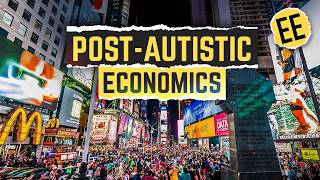





Economics Explained Top Videos
biggest ever


Acquire or replicate with a dedicated production team. The channel has built a highly lucrative, systematic, voiceover-and-motion-graphics-driven model that achieves massive scale (median 568k views) by translating complex macroeconomic concepts into sensationalist, country-specific narratives.
Economics Explained Niche & Positioning
High-production educational storytelling that simplifies global economics using provocative, contrarian hooks and country-specific case studies.
Economics Explained Content Strategy
Combining evergreen country-specific economic profiles with highly-clickable, trend-responsive videos on global crises, AI, and tax policies.
Economics Explained Outlier Playbook
the repeatable breakout formulaA narrator-led, data-heavy contrarian explainer about a rich, familiar economy (especially New Zealand, Australia, Europe/UK-style advanced economies) hitting a problem viewers personally feel: housing, migration/brain drain, youth wealth collapse, billionaire inequality, trade isolation, or fake-looking GDP growth. The breakout angle is not “country profile”; it is “the place/system you thought was safe, rich, or rational is breaking — or has found the one policy everyone else is arguing about.” The strongest examples are New Zealand as both “the only safe haven left” and “everyone is leaving,” Australia “solving” housing, a country finally taxing billionaires, Europe’s GDP growth hurting i
Use a contradiction or moral shock: “Why [admired country/system] Is [unexpectedly failing/succeeding]”, “Finally a Country Is [doing the controversial policy everyone talks about]”, “[Country] May Have Just Solved [painful everyday crisis]”, or “The Economy Gave Up On [large sympathetic group]”. Wi
- 1Pick a high-recognition advanced economy or system with emotional relevance: New Zealand, Australia, Europe, the UK, Canada, the US, or “economics” itself — not a small abstract topic. Tie it to housi
- 2Frame the episode around a hard contradiction: New Zealand is a safe haven but people are leaving; Europe is growing but becoming weaker; Australia has an impossible housing crisis but may have solved
- 3Make the opening a stakes-first mystery, not a lesson: show the surprising outcome, then promise the mechanism behind it. The hook should imply that a respected country/policy/institution is doing the
- 4Use the country as a case study for a global anxiety viewers already have: “Can I ever buy a house?”, “Are young people economically doomed?”, “Will billionaires ever be taxed?”, “Does GDP growth actu
- 5Title it with a bold causal claim and a familiar noun, avoiding neutral encyclopedia phrasing. Prefer “Why Everyone is Leaving New Zealand” over “New Zealand’s Migration Trends,” “Australia May Have J
Economics Explained Performance Drivers
Economics Explained Topic Clusters
Economics Explained Growth Opportunities
untapped whitespace- Hyper-local state and provincial economic deep-dives beyond Florida, California, and Texas to capture highly engaged regional US audiences.
- A dedicated series analyzing the microeconomics of massive global corporations (e.g., ASML, TSMC, Novo Nordisk) rather than just country-level macroeconomics.
- Interactive or data-visualization-driven community features, such as a weekly economic index or audience-voted country simulations, to boost community tab engagement.
- Directly addressing personal finance and micro-investing strategies under macroeconomic shifts, bridging the gap between global policy and individual wallets.
How Replicable Is Economics Explained
While the scriptwriting, voiceover, and motion graphics style can be systematically outsourced to a production team, building the brand authority and maintaining the high-level research quality required to sustain a 2.89M subscriber base is difficult to replicate from scratch.
Economics Explained Content Risks
- High dependence on third-party stock footage and graphics, which carries ongoing copyright claim risks and limits unique visual branding.
- Audience fatigue from repetitive country-profile formulas and sensationalist 'collapse' hooks, which could eventually lead to declining click-through rates.
- Inherent tension between maintaining academic/economic accuracy and the sensationalized clickbait titles required to feed the YouTube algorithm.
Who Watches Economics Explained
estimated audienceEstimated from public channel data — titles, descriptions, metadata and co-watched channels. Not YouTube Analytics. high confidence
The Economics Explained audience consists primarily of college-educated, male-skewing young professionals and global affairs enthusiasts who seek to understand the macroeconomic and geopolitical forces shaping their financial futures. They are highly engaged by analytical, high-production video essays that demystify complex global systems, housing crises, and technological disruptions.
Highly male-skewed, typical of macroeconomic, geopolitical, and finance-focused
Primarily English-speaking developed nations, with a strong secondary audience in globalized European and Asian economies interested in international trade.
What Economics Explained's Audience Cares About
- Housing market unaffordability and generational wealth gaps
- Inflation eroding purchasing power
- Career displacement risks from AI and automation
- Navigating complex, volatile global financial systems
- To understand the underlying structural forces shaping the global economy
- To make informed personal career and investment decisions
- To engage in high-level intellectual discussions about current events
White-collar professional or university student, active consumer of intellectual podcasts, newsletters, and analytical video essays, who actively manages personal investments.
- How the housing crisis in major Anglosphere nations is reshaping generational wealth
- The geopolitical consequences of the global transition away from OPEC oil
- Why modern monetary theory (MMT) could trigger the next hyperinflation cycle
- Analyzing the economic collapse of once-prosperous regional powers
- How AI automation will realistically impact white-collar wages over the next decade
Prefers Long-form (15 to 25 minutes) that allows for deep-dive struc videos, analytical, objective, slightly provocative, and intellectually engaging..
Inferred from: Co-watch cluster includes Patrick Boyle, CaspianReport, and RealLifeLore · Heavy focus on country-specific economic profiles and global housing crisis narratives · High-production, long-form video essays averaging over 17 minutes
The co-watched space is highly concentrated around global finance, macroeconomic crises, geopolitical strategy, and industrial breakdowns, with only minor deviations into general science and tech.


Track your whole niche in Competitor Studio
These are just the closest channels. Competitor Studio maps 1,000+ direct & adjacent channels in your niche — with outlier detection and ongoing tracking.
- Track 1,000+ direct & adjacent competitors
- Outlier video detection
- AI-powered video insights

Economics Explained Revenue & Valuation
from public dataBased on your current performance, your business commands a valuation between $203,479 and $1,041,638, supported by a solid floor of $156,522 with high confidence. Realizing the upper end of this valuation range is an illustrative potential that would require active execution of key operational and monetization levers.
Estimates derived from public data (earnings history + comparable channels). Not an offer, appraisal, or financial advice.
Frequently asked questions about Economics Explained
- How many subscribers does Economics Explained have?
- Economics Explained has 2.9M subscribers on YouTube, built up over roughly 14.1 years on the platform. Its videos average about 842.3K views each.
- How many views does Economics Explained have?
- Economics Explained has accumulated 379.9M total views across 451 uploads, averaging roughly 73.9K views per day since launch.
- How many videos has Economics Explained posted?
- Economics Explained has published 451 videos on YouTube, with recent uploads averaging about 17:13 in length.
- How engaged is Economics Explained's audience?
- Over its lifetime, Economics Explained has averaged about 131 views for every subscriber, a sign of how far its videos travel beyond the core subscriber base. On a per-video basis it draws roughly 842.3K views.
- How much money does Economics Explained make?
- Economics Explained's estimated YouTube revenue is $19K – $61K per month, including advertising and sponsorships (ad revenue alone is an estimated $14K – $20K per month). These are estimates derived from public data, not exact earnings.
- What is Economics Explained's channel worth?
- Economics Explained's YouTube channel is estimated to be worth $203K – $1.04M, benchmarked against comparable channels. This reflects the value of the channel as a media asset, not the creator's total net worth.
- What is Economics Explained's most popular video?
- Economics Explained's most-viewed video is "MIT Has Predicted that Society Will Collapse in 2040 | Economics Explained", with 14.0M views — roughly 24.6× the channel's typical video.
- What is Economics Explained's biggest recent breakout video?
- Economics Explained's biggest recent breakout is "Why Everyone is Leaving New Zealand", which pulled 3.6M views — about 6.3× the channel's recent median.
- What kind of content does Economics Explained make?
- Economics Explained is best described as Macroeconomic & Geopolitical Video Essays. High-production educational storytelling that simplifies global economics using provocative, contrarian hooks and country-specific case studies.
- Does Economics Explained post Shorts or long-form videos?
- Economics Explained publishes primarily long-form videos (about 100% of recent uploads), averaging around 17:13 in length.
- What topics does Economics Explained cover?
- Economics Explained's catalogue spans Country & Regional Economic Profiles, Economic Systems, Policy, & Financial Institutions, Geopolitics, Energy, & Resource Wars, Inequality, Housing, & Wealth Distribution and AI, Automation & The Future of Labor. These recurring themes make up the bulk of the channel's uploads.
- Who watches Economics Explained?
- Economics Explained's audience skews 25-34, highly male-skewed, typical of macroeconomic, geopolitical, and finance-focused and based primarily english-speaking developed nations, with a strong secondary audience in globalized european and asian economies interested in international trade.. The Economics Explained audience consists primarily of college-educated, male-skewing young professionals and global affairs enthusiasts who seek to understand the macroeconomic and geopolitical forces shaping their financial futures. They are highly engaged by analytical, high-production video essays that demystify complex global systems, housing crises, and technological disruptions. These are estimates inferred from public channel data, not YouTube Analytics.
- What is Economics Explained's audience interested in?
- Viewers of Economics Explained tend to be interested in Global macroeconomics, Geopolitical strategy and resource distribution, Real estate market dynamics, Technological disruption and labor automation and Financial history and monetary policy. Estimated from the channel's content and the channels its viewers co-watch.
- What channels are similar to Economics Explained?
- Channels with audiences similar to Economics Explained include RealLifeLore, Max Fisher, The Invisible Hand, Money & Macro and Casual Finance. The co-watched space is highly concentrated around global finance, macroeconomic crises, geopolitical strategy, and industrial breakdowns, with only minor deviations into general science and tech.
- How often does Economics Explained post?
- Economics Explained uploads about 1.2 videos per week (roughly 4.9 per month).
- Is Economics Explained still active on YouTube?
- Yes — Economics Explained is actively posting. Its most recent upload was 1 day ago.
- How long has Economics Explained been on YouTube?
- Economics Explained has been active on YouTube for about 14.1 years, growing to 2.9M subscribers over that time.
How this analysis was made
- Source: public YouTube channel & video data (120 recent videos sampled).
- Outlier videos: uploads with ≥1.5× the channel's recent median views.
- Revenue & valuation: estimated from public earnings signals and comparable channels — ranges, not exact figures.
- Last updated: 10/5/2026.