
DOODOO DOTS YouTube channel analysis
DOODOO DOTS is a YouTube channel with 22 subscribers and 2.5K total views, and an estimated $3 – $18/mo revenue. This analysis breaks down its outlier videos, content strategy, similar channels, revenue & valuation estimate.
Analysis generated with AI from public YouTube data. Revenue and valuation figures are estimates derived from public data, not financial advice.
DOODOO DOTS Channel Overview
lifetime totalsDOODOO DOTS Outlier Videos
breakouts ≥1.5× recent median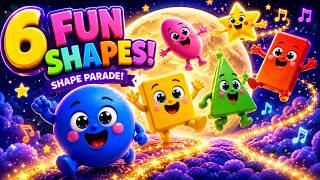

DOODOO DOTS Top Videos
biggest ever 


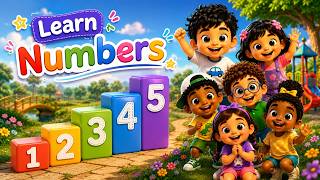

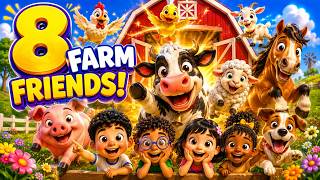

DOODOO DOTS is an early-stage, highly replicable kids' nursery rhyme and basic learning channel with extremely low subscriber friction but high potential for passive evergreen search traffic, driven by a breakout shapes-themed parade video.
DOODOO DOTS Niche & Positioning
Animated educational songs and routines targeting toddlers learning basic concepts like shapes, colors, numbers, and daily habits.
DOODOO DOTS Content Strategy
100% evergreen catalog focused entirely on timeless, searchable early-childhood learning topics and nursery rhymes.
DOODOO DOTS Outlier Playbook
the repeatable breakout formulaThe channel’s breakout formula is a preschool “first concepts” sing-along built around one universal beginner topic, led by a friendly greeting/action hook and packaged as a bright mini-event. The biggest winner is not a broad mashup like “Sunny Parade” or a standard subject title like “Colors” or “Numbers”; it is “Hello Shapes,” which combines a greeting word, one simple learning category, a playful parade format, and specific examples in the title: Circle, Square, Star. The next-best outliers follow the same pattern with daily-life or first-learning concepts: “Good Morning” uses a wake-up routine + “Rise & Shine, Little Sunshine,” and “My First Fruits” uses first fruit names + funny song.
[Greeting/My First/Everyday phrase] + [core preschool topic] | [Learn X with a Fun/Funny Song or Parade] | [Kids search phrase] | [3 specific examples or routine promise]. Example pattern: “Hello Shapes | Learn Shapes with a Fun Parade! 🎵 | Learn Shapes for Kids | Circle, Square, Star! 🎨”
- 1Pick one clean preschool concept, not a mixed-topic video: repeat the “Hello Shapes” model with subjects like “Hello Colors,” “Hello Numbers,” “Hello Animals,” or “My First Vegetables,” instead of com
- 2Frame the video as a bright event or routine: use “Fun Parade” for object categories like shapes, colors, fruits, farm animals; use “Wake Up Song” or “Morning Routine” for daily-life songs like “Good
- 3Put the strongest searchable phrase and examples directly in the title: for shapes it was “Learn Shapes for Kids | Circle, Square, Star”; for a farm follow-up use “Learn Farm Animals for Kids | Cow, D
- 4Open the video with the hook named in the title within the first seconds: characters should say/sing “Hello Shapes!” or “Good Morning, little sunshine!” immediately, then parade or act out each item o
- 5Prioritize sequels to the proven outlier format before more generic uploads: make “Hello Colors | Learn Colors with a Fun Parade,” “Hello Numbers | Learn Numbers 1-10 with a Counting Parade,” and “My
DOODOO DOTS Performance Drivers
DOODOO DOTS Topic Clusters
DOODOO DOTS Growth Opportunities
untapped whitespace- Introduce compilation videos (e.g., 30-minute loops of shapes, colors, and numbers) to maximize watch time from auto-playing kids' devices.
- Create a dedicated 'Bedtime Routine' series to pair with the successful 'Good Morning' routine video, capturing evening wind-down search traffic.
- Incorporate interactive on-screen call-and-response prompts (e.g., 'Can you find the circle?') to increase viewer retention and active participation.
- Leverage YouTube Shorts to showcase quick, high-energy 15-second snippets of the catchy choruses from the main songs to drive channel discovery.
How Replicable Is DOODOO DOTS
The channel relies on standard 2D/3D animations of basic concepts paired with simple nursery rhyme melodies, which can be easily outsourced or systematically produced using stock assets and templates.
DOODOO DOTS Content Risks
- Extreme saturation in the kids' nursery rhyme niche, making organic discovery highly dependent on algorithm luck or hyper-specific search terms.
- High reliance on YouTube's 'Made for Kids' algorithmic categorization, which limits community features, comments, and personalized ad revenue.
- Lack of a unique, proprietary mascot or character IP, making the content highly substitutable with thousands of identical channels.
Who Watches DOODOO DOTS
estimated audienceEstimated from public channel data — titles, descriptions, metadata and co-watched channels. Not YouTube Analytics. medium confidence
The audience for DOODOO DOTS consists of parents, guardians, and caregivers of toddlers and preschoolers (ages 1-4). While the end-viewers are very young children learning basic concepts like shapes, colors, and animals, the actual account holders are young Millennial and Gen Z parents. The co-watch data reveals a highly globalized audience that frequently consumes early learning content across multiple languages, suggesting the channel appeals to international families seeking simple, repetitive English-language vocabulary and routine-building songs.
Female-skewed (mothers and female caregivers managing early childhood screen tim
Primarily United States, with a strong secondary global audience across Europe and South America due to multilingual co-watching patterns.
What DOODOO DOTS's Audience Cares About
- Finding safe, non-stimulating, and age-appropriate video content
- Managing toddler tantrums during daily transitions (waking up, bedtime)
- Screen-time guilt among parents
- Keeping children calmly occupied during chores
- Teaching basic concepts like counting, shapes, and vocabulary through music
- Establishing positive daily routines using catchy songs
Busy parents, babysitters, and early educators of toddlers (ages 1-4) managing daily household routines, meals, and transition times.
- Interactive toddler learning songs
- Nursery rhymes for morning routines
- Visual shape and color recognition for preschoolers
- Simple animal identification videos for babies
- Calming bedtime songs and lullabies
Prefers Short-form individual songs (2 to 4 minutes) or long-form co videos, cheerful, bright, encouraging, repetitive, and gentle.
Inferred from: Co-watch cluster includes major global nursery rhyme channels like ChuChu TV and Ms Rachel · Multilingual co-watches in German, French, Turkish, and Portuguese indicating a highly international parent base · Content focused entirely on early developmental milestones (shapes, colors, ABCs, morning routines)
The audience is almost exclusively parents and caregivers seeking early learning, nursery rhymes, and toddler routine songs, though there is some geographic and linguistic dispersion.


Track your whole niche in Competitor Studio
These are just the closest channels. Competitor Studio maps 1,000+ direct & adjacent channels in your niche — with outlier detection and ongoing tracking.
- Track 1,000+ direct & adjacent competitors
- Outlier video detection
- AI-powered video insights

DOODOO DOTS Revenue & Valuation
from public dataWe estimate the current valuation of your business to be between $44 and $390, supported by a high-confidence floor of $34. While this valuation reflects your current operational state, executing key growth levers offers the illustrative potential to significantly enhance your enterprise value over time.
Estimates derived from public data (earnings history + comparable channels). Not an offer, appraisal, or financial advice.
Frequently asked questions about DOODOO DOTS
- How many subscribers does DOODOO DOTS have?
- DOODOO DOTS has 22 subscribers on YouTube. Its videos average about 230 views each.
- How many views does DOODOO DOTS have?
- DOODOO DOTS has accumulated 2.5K total views across 11 uploads, averaging roughly 193 views per day since launch.
- How many videos has DOODOO DOTS posted?
- DOODOO DOTS has published 11 videos on YouTube, with recent uploads averaging about 3:20 in length.
- How engaged is DOODOO DOTS's audience?
- Over its lifetime, DOODOO DOTS has averaged about 115 views for every subscriber, a sign of how far its videos travel beyond the core subscriber base. On a per-video basis it draws roughly 230 views.
- How much money does DOODOO DOTS make?
- DOODOO DOTS's estimated YouTube revenue is $3 – $18 per month, including advertising and sponsorships (ad revenue alone is an estimated $3 – $6 per month). These are estimates derived from public data, not exact earnings.
- What is DOODOO DOTS's channel worth?
- DOODOO DOTS's YouTube channel is estimated to be worth $44 – $390, benchmarked against comparable channels. This reflects the value of the channel as a media asset, not the creator's total net worth.
- What is DOODOO DOTS's most popular video?
- DOODOO DOTS's most-viewed video is "Hello Shapes | Learn Shapes with a Fun Parade! 🎵 | Learn Shapes for Kids | Circle, Square, Star! 🎨", with 2.6K views — roughly 86.7× the channel's typical video.
- What is DOODOO DOTS's biggest recent breakout video?
- DOODOO DOTS's biggest recent breakout is "Hello Shapes | Learn Shapes with a Fun Parade! 🎵 | Learn Shapes for Kids | Circle, Square, Star! 🎨", which pulled 2.6K views — about 86.7× the channel's recent median.
- What kind of content does DOODOO DOTS make?
- DOODOO DOTS is best described as Kids' Nursery Rhymes & Early Learning. Animated educational songs and routines targeting toddlers learning basic concepts like shapes, colors, numbers, and daily habits.
- Does DOODOO DOTS post Shorts or long-form videos?
- DOODOO DOTS publishes primarily long-form videos (about 100% of recent uploads), averaging around 3:20 in length.
- What topics does DOODOO DOTS cover?
- DOODOO DOTS's catalogue spans Basic Concepts (Shapes, Colors, Numbers), Daily Routines & Moods (Good Morning, Sunny Parade), First Vocabulary (Fruits, Animals) and Anatomy & Alphabets (Body Parts, ABCD). These recurring themes make up the bulk of the channel's uploads.
- Who watches DOODOO DOTS?
- DOODOO DOTS's audience skews 25-34, female-skewed (mothers and female caregivers managing early childhood screen tim and based primarily united states, with a strong secondary global audience across europe and south america due to multilingual co-watching patterns.. The audience for DOODOO DOTS consists of parents, guardians, and caregivers of toddlers and preschoolers (ages 1-4). While the end-viewers are very young children learning basic concepts like shapes, colors, and animals, the actual account holders are young Millennial and Gen Z parents. The co-watch data reveals a highly globalized audience that frequently consumes early learning content across multiple languages, suggesting the channel appeals to international families seeking simple, repetitive English-language vocabulary and routine-building songs. These are estimates inferred from public channel data, not YouTube Analytics.
- What is DOODOO DOTS's audience interested in?
- Viewers of DOODOO DOTS tend to be interested in Early childhood development, Gentle parenting, Preschool prep, Kids' music and nursery rhymes and Screen-time management. Estimated from the channel's content and the channels its viewers co-watch.
- What channels are similar to DOODOO DOTS?
- Channels with audiences similar to DOODOO DOTS include Funny Lala - Kindergarten Collection, Leo the Truck, Laugh & Learn by Fisher-Price - Kids' Songs, Softie Kids and BearyTunes. The audience is almost exclusively parents and caregivers seeking early learning, nursery rhymes, and toddler routine songs, though there is some geographic and linguistic dispersion.
- How often does DOODOO DOTS post?
- DOODOO DOTS uploads about 7.9 videos per week (roughly 33.8 per month).
- Is DOODOO DOTS still active on YouTube?
- Yes — DOODOO DOTS is actively posting. Its most recent upload was 3 days ago.
How this analysis was made
- Source: public YouTube channel & video data (9 recent videos sampled).
- Outlier videos: uploads with ≥1.5× the channel's recent median views.
- Revenue & valuation: estimated from public earnings signals and comparable channels — ranges, not exact figures.
- Last updated: 9/1/2026.