
Cosmic Lens YouTube channel analysis
Cosmic Lens is a YouTube channel with 98.7K subscribers and 12.7M total views, and an estimated $2K – $5K/mo revenue. This analysis breaks down its outlier videos, content strategy, similar channels, revenue & valuation estimate.
Analysis generated with AI from public YouTube data. Revenue and valuation figures are estimates derived from public data, not financial advice.
Cosmic Lens Channel Overview
lifetime totalsCosmic Lens Outlier Videos
breakouts ≥1.5× recent median




Cosmic Lens Top Videos
biggest everReplicate. This is a highly systematic, faceless space documentary channel that achieves massive leverage by reframing basic astronomy into high-retention cosmic horror. It is cheap to produce, highly evergreen, and easily scaled with a competent scriptwriter and editor.
Cosmic Lens Niche & Positioning
Reframing standard educational astronomy into existential dread, focusing on terrifying physical extremes, cosmic monsters, and the hostile isolation of space.
Cosmic Lens Content Strategy
100% long-form catalog focused entirely on timeless space topics packaged with high-tension, horror-style hooks and dark, cinematic thumbnails.
Cosmic Lens Outlier Playbook
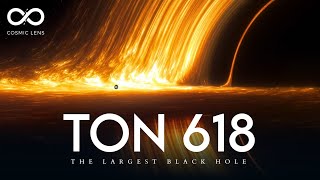
the repeatable breakout formulaCosmic Lens breaks out when it turns a familiar space object into a cosmic horror documentary: Saturn, Pluto, Neptune, Uranus, Mercury, Voyager 1, TON 618, or Phoenix A* are framed not as science explainers but as hostile, lonely, terrifying places/objects with one unforgettable extreme. The strongest version is a solo-narrated, cinematic deep dive on a well-known Solar System target, especially outer planets/dwarf planets, using a fear-based reframe: Saturn is not peaceful, Pluto is terrifying, Neptune is a blue abyss, Uranus is 42 years of darkness, Mercury is 430°C vs -180°C. Black holes also work when the scale is absurdly concrete: TON 618 swallows the universe, Phoenix A* equals 100 bi
[OBJECT NAME or WHY OBJECT IS...] + terrifying/scariest/horror/darkness/nightmare reframe + specific extreme or contradiction in parentheses. Examples from winners: 'Why Saturn is The Scariest Planet (It’s Not Peaceful)', 'Pluto is NOT What We Thought It Was... (Terrifying)', 'NEPTUNE: The Terrifyin
- 1Pick the next subject from the same proven pools: recognizable Solar System bodies first, then extreme black holes/probes. Best candidates based on the data: Jupiter as a full horror profile, Titan fo
- 2Build the episode around one dominant emotional promise, not a broad science question: 'this planet is not peaceful', 'this world is darker than you think', 'this object is the loneliest thing humans
- 3Use a title with a named object, a horror adjective, and a concrete extreme: temperature, years of darkness, speed, size, distance, pressure, or isolation. For example: 'JUPITER: The Planet That Eats
- 4Structure the video like the biggest winners: cold open with the scariest fact, then reveal the object’s false public image, then escalate through 3-5 hostile realities such as darkness, storms, poiso
- 5Package it as cinematic space horror rather than academic astronomy: dramatic object close-ups, dark thumbnails, big readable object names like SATURN/PLUTO/NEPTUNE, and one visual contradiction such
Cosmic Lens Performance Drivers
Cosmic Lens Topic Clusters
Cosmic Lens Growth Opportunities
untapped whitespace- Introduce a 'Deep Ocean vs Deep Space' crossover series to capture thalassophobia and cosmic horror audiences simultaneously.
- Launch speculative 'What If' survival scenarios (e.g., 'How long could you survive if you fell into...') to increase viewer retention through narrative pacing.
- Develop a recurring series on 'The End of the Universe' (Heat Death, Big Rip) to double down on existential dread themes.
- Repurpose high-impact visual scale comparisons into YouTube Shorts to funnel a broader audience to the long-form catalog.
How Replicable Is Cosmic Lens
The channel relies entirely on public domain NASA/ESA footage, stock CGI, and a standard dramatic voiceover. There is no personal brand, face, or exclusive access required, making the production process 100% systemizable.
Cosmic Lens Content Risks
- High formula fatigue where viewers eventually grow numb to the 'terrifying/scariest' packaging style.
- Low viewer loyalty and high churn risk because subscribers are attached to the cosmic topics rather than a distinct host personality.
- Heavy reliance on third-party stock footage and public domain space assets, which limits visual differentiation from competitors.
The audience is highly concentrated around cinematic space documentaries, theoretical physics, and cosmic horror, with very minimal spillover into general entertainment.


Track your whole niche in Competitor Studio
These are just the closest channels. Competitor Studio maps 1,000+ direct & adjacent channels in your niche — with outlier detection and ongoing tracking.
- Track 1,000+ direct & adjacent competitors
- Outlier video detection
- AI-powered video insights

Cosmic Lens Revenue & Valuation
from public dataWe estimate the current valuation of your business to be between $27,086 and $206,010, established with medium confidence and a baseline floor of $20,835. This valuation is driven by your existing revenue streams, though there is illustrative potential to expand this asset value significantly if key operational levers are executed.
Estimates derived from public data (earnings history + comparable channels). Not an offer, appraisal, or financial advice.
Frequently asked questions about Cosmic Lens
- How many subscribers does Cosmic Lens have?
- Cosmic Lens has 98.7K subscribers on YouTube, built up over roughly 0.8 years on the platform. Its videos average about 351.4K views each.
- How many views does Cosmic Lens have?
- Cosmic Lens has accumulated 12.7M total views across 36 uploads, averaging roughly 43.9K views per day since launch.
- How many videos has Cosmic Lens posted?
- Cosmic Lens has published 36 videos on YouTube, with recent uploads averaging about 9:02 in length.
- How engaged is Cosmic Lens's audience?
- Over its lifetime, Cosmic Lens has averaged about 128 views for every subscriber, a sign of how far its videos travel beyond the core subscriber base. On a per-video basis it draws roughly 351.4K views.
- How much money does Cosmic Lens make?
- Cosmic Lens's estimated YouTube revenue is $2K – $5K per month, including advertising and sponsorships (ad revenue alone is an estimated $1K – $2K per month). These are estimates derived from public data, not exact earnings.
- What is Cosmic Lens's channel worth?
- Cosmic Lens's YouTube channel is estimated to be worth $27K – $206K, benchmarked against comparable channels. This reflects the value of the channel as a media asset, not the creator's total net worth.
- What is Cosmic Lens's most popular video?
- Cosmic Lens's most-viewed video is "Why Saturn is The Scariest Planet (It’s Not Peaceful)", with 6.1M views — roughly 115.1× the channel's typical video.
- What is Cosmic Lens's biggest recent breakout video?
- Cosmic Lens's biggest recent breakout is "Why Saturn is The Scariest Planet (It’s Not Peaceful)", which pulled 6.1M views — about 115.1× the channel's recent median.
- What kind of content does Cosmic Lens make?
- Cosmic Lens is best described as Cosmic Horror Space Science. Reframing standard educational astronomy into existential dread, focusing on terrifying physical extremes, cosmic monsters, and the hostile isolation of space.
- Does Cosmic Lens post Shorts or long-form videos?
- Cosmic Lens publishes primarily long-form videos (about 100% of recent uploads), averaging around 9:02 in length.
- What topics does Cosmic Lens cover?
- Cosmic Lens's catalogue spans Planetary Horrors & Hostile Worlds, Cosmic Monsters & Black Holes, Cosmology & Deep Space Mysteries and Space Missions & Human Exploration. These recurring themes make up the bulk of the channel's uploads.
- What channels are similar to Cosmic Lens?
- Channels with audiences similar to Cosmic Lens include The Space Race, The Quiet Observatory, Cosmic Void, NullSpace and Astrum. The audience is highly concentrated around cinematic space documentaries, theoretical physics, and cosmic horror, with very minimal spillover into general entertainment.
- How often does Cosmic Lens post?
- Cosmic Lens uploads about 0.9 videos per week (roughly 3.9 per month).
- Is Cosmic Lens still active on YouTube?
- Yes — Cosmic Lens is actively posting. Its most recent upload was 3 days ago.
- How long has Cosmic Lens been on YouTube?
- Cosmic Lens has been active on YouTube for about 0.8 years, growing to 98.7K subscribers over that time.
How this analysis was made
- Source: public YouTube channel & video data (35 recent videos sampled).
- Outlier videos: uploads with ≥1.5× the channel's recent median views.
- Revenue & valuation: estimated from public earnings signals and comparable channels — ranges, not exact figures.
- Last updated: 7/30/2026.