
HomoSapien YouTube channel analysis
HomoSapien is a YouTube channel with 420 subscribers and 38.7K total views, and an estimated $6 – $36/mo revenue. This analysis breaks down its outlier videos, content strategy, similar channels, revenue & valuation estimate.
Analysis generated with AI from public YouTube data. Revenue and valuation figures are estimates derived from public data, not financial advice.
HomoSapien Channel Overview
lifetime totalsHomoSapien Outlier Videos
breakouts ≥1.5× recent median




HomoSapien Top Videos
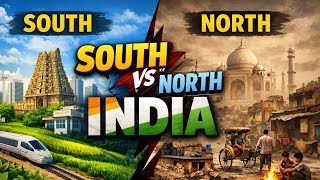
biggest everReplicate, do not acquire. With only 420 subscribers, the channel's asset value is negligible, but its ability to pull 10x-20x its median views on regional Indian political and cultural friction points proves a highly viable, search-and-suggest-driven blueprint for a lean, research-heavy educational channel.
HomoSapien Niche & Positioning
Analytical video essays unpacking Indian federalism, regional divides, and civil services through a critical, data-driven lens.
HomoSapien Content Strategy
High-concept video essays focusing on Indian regional friction, historical identity, and civil service exams, balanced with occasional tech and global policy trends.
HomoSapien Outlier Playbook
the repeatable breakout formulaHost-led 12-18 minute investigative explainer on a high-conflict Indian fault line where identity, power and numbers collide: South vs North, BJP vs Kerala/Tamil Nadu, Dravidian/Aryan origins, Hindi language politics, population/census anxiety, North-East insecurity, or aspirant recruitment crises. The breakout combination is: a provocative 'common narrative is wrong/incomplete' claim + hard evidence lens like election data, DNA studies, census/demography, wealth numbers, or policy updates + a regional identity angle. The channel’s biggest repeatable lane is not general philosophy or world affairs; it is Indian political-society explainers that make viewers feel, 'This explains the hidden st
Use: 'Why/Who/What [specific Indian identity or power question] + [counterintuitive or alarming claim] + [evidence/hidden-truth frame]'. Best patterns from the data: 'Why BJP Still Can’t Win Kerala & Tamil Nadu | Politics Beyond Numbers', 'Who Were India’s First People? Dravidians, Aryans & DNA Evid
- 1Pick a topic from the channel’s proven breakout cluster: BJP’s limits in South India, Kerala/Tamil Nadu politics, Dravidian vs Aryan origins, North vs South wealth/tax/population gap, Hindi imposition
- 2Frame it as a contradiction to a popular belief: 'BJP is unbeatable, but not in Kerala/Tamil Nadu'; 'India is overpopulated, but the real crisis is population decline/aging'; 'Aryan vs Dravidian is no
- 3Build the video around numbers and proof, not opinion: election vote-share maps, census/NFHS fertility data, GDP/tax/wealth comparisons, language-policy history, peer-reviewed DNA findings, recruitmen
- 4Title it with a direct identity/power question plus a hidden-truth phrase: 'Why BJP Still Can’t Win Tamil Nadu', 'Who Were India’s First People?', 'South vs North India: The Truth About Taxes and Popu
- 5Avoid broad low-performing abstractions unless tied to a hot identity conflict: generic videos on world order, marriage, education, PR, civil services motivation, or US geopolitics underperform; conve
HomoSapien Performance Drivers
HomoSapien Topic Clusters
HomoSapien Growth Opportunities
untapped whitespace- Hyper-localize state-specific political deep dives beyond Kerala/Tamil Nadu, targeting states like Andhra Pradesh, Telangana, or Maharashtra where regional political shifts are highly active.
- Create a dedicated playlist series unpacking the economics of Indian state borders and resource distribution (e.g., water disputes, GST share controversies) to capture high-intent search traffic.
- Leverage YouTube Shorts to repurpose key data-driven maps and historical animations from the long-form videos to solve the channel's low subscriber acquisition rate.
How Replicable Is HomoSapien
The channel relies on structured, script-heavy research, map animations, and stock footage rather than a highly unique, irreplaceable on-camera personality or exclusive access.
HomoSapien Content Risks
- High reliance on sensitive political and regional topics (e.g., North-South divide, Naxalism) which can lead to advertiser-unfriendly classification or community guidelines strikes.
- Inconsistent upload schedule (~0.9 videos/week with a 31-day gap since the last upload) kills algorithm momentum and viewer retention.
- Audience fragmentation caused by mixing highly localized exam updates (KAS, Group C) with broad global geopolitics (US Petrodollar, Claude AI).
Who Watches HomoSapien
estimated audienceEstimated from public channel data — titles, descriptions, metadata and co-watched channels. Not YouTube Analytics. high confidence
The audience is primarily composed of young Indian civil service aspirants (UPSC/KAS) and politically conscious university students. They are highly educated, intellectually curious, and seek structured, unbiased, and data-driven video essays explaining complex Indian socio-economic divides, administrative policies, and global geopolitics to aid both their exam preparation and their civic understanding.
Highly male-skewed
Concentrated almost entirely in India, with minor viewership from the global Indian diaspora.
What HomoSapien's Audience Cares About
- High failure rates and intense pressure of UPSC/state PSC exams
- Systemic corruption and exam leaks (e.g., NEET paper leaks)
- Socio-economic and linguistic polarization within India
- Lack of objective, unbiased socio-political analysis in mainstream media
- Cracking highly competitive government exams
- Gaining a nuanced, data-driven understanding of Indian policy and governance
- Staying informed on global geopolitical shifts affecting India
Studious, politically conscious, highly analytical, and deeply invested in competitive exam preparation and current affairs.
- UPSC and state PSC exam strategies, reforms, and systemic challenges
- Socio-economic disparities and cultural divides between North and South India
- Geopolitical relations and global trade agreements involving India
- Analysis of Indian federalism, regional politics, and electoral shifts
- Critiques of Indian educational, judicial, and administrative systems
Prefers Medium-form (8 to 15 minutes) to allow for structured, deep- videos, analytical, objective, educational, and serious..
Inferred from: UPSC and KAS exam-focused video titles combined with the creator's personal civil services background · Co-watch cluster featuring prominent Indian educational and policy channels like StudyIQ IAS, Think School, and ThePrint · High viewer engagement on topics analyzing regional Indian political and economic divides (e.g., North vs South wealth gap, Hindi language debates)
The audience is highly consolidated around analytical, long-form video essays covering Indian socio-economics, global geopolitics, and domestic policy, with very little spillover into mainstream entertainment.


Track your whole niche in Competitor Studio
These are just the closest channels. Competitor Studio maps 1,000+ direct & adjacent channels in your niche — with outlier detection and ongoing tracking.
- Track 1,000+ direct & adjacent competitors
- Outlier video detection
- AI-powered video insights

HomoSapien Revenue & Valuation
from public dataBased on your current performance, we estimate your business's valuation to be between $88 and $758, with a conservative floor of $67 and high confidence in this range. This valuation is driven by your existing revenue streams, but executing key operational levers has the potential to significantly increase this baseline over time.
Estimates derived from public data (earnings history + comparable channels). Not an offer, appraisal, or financial advice.
Frequently asked questions about HomoSapien
- How many subscribers does HomoSapien have?
- HomoSapien has 420 subscribers on YouTube, built up over roughly 1.3 years on the platform. Its videos average about 691 views each.
- How many views does HomoSapien have?
- HomoSapien has accumulated 38.7K total views across 56 uploads, averaging roughly 80 views per day since launch.
- How many videos has HomoSapien posted?
- HomoSapien has published 56 videos on YouTube, with recent uploads averaging about 8:39 in length.
- How engaged is HomoSapien's audience?
- Over its lifetime, HomoSapien has averaged about 92 views for every subscriber, a sign of how far its videos travel beyond the core subscriber base. On a per-video basis it draws roughly 691 views.
- How much money does HomoSapien make?
- HomoSapien's estimated YouTube revenue is $6 – $36 per month, including advertising and sponsorships (ad revenue alone is an estimated $5 – $12 per month). These are estimates derived from public data, not exact earnings.
- What is HomoSapien's channel worth?
- HomoSapien's YouTube channel is estimated to be worth $88 – $758, benchmarked against comparable channels. This reflects the value of the channel as a media asset, not the creator's total net worth.
- What is HomoSapien's most popular video?
- HomoSapien's most-viewed video is "Why BJP Still Can’t Win Kerala & Tamil Nadu | Politics Beyond Numbers", with 8.7K views — roughly 29.3× the channel's typical video.
- What is HomoSapien's biggest recent breakout video?
- HomoSapien's biggest recent breakout is "Why BJP Still Can’t Win Kerala & Tamil Nadu | Politics Beyond Numbers", which pulled 8.7K views — about 29.3× the channel's recent median.
- What kind of content does HomoSapien make?
- HomoSapien is best described as Indian Geopolitics, Regional Politics & Socio-Economic Analysis. Analytical video essays unpacking Indian federalism, regional divides, and civil services through a critical, data-driven lens.
- Does HomoSapien post Shorts or long-form videos?
- HomoSapien publishes primarily long-form videos (about 100% of recent uploads), averaging around 8:39 in length.
- What topics does HomoSapien cover?
- HomoSapien's catalogue spans Regional Politics & Cultural Divides, UPSC & Government Exam Ecosystem, Indian History & Identity Debates and Global Geopolitics & Economics. These recurring themes make up the bulk of the channel's uploads.
- Who watches HomoSapien?
- HomoSapien's audience skews 18-24, highly male-skewed and based concentrated almost entirely in india, with minor viewership from the global indian diaspora.. The audience is primarily composed of young Indian civil service aspirants (UPSC/KAS) and politically conscious university students. They are highly educated, intellectually curious, and seek structured, unbiased, and data-driven video essays explaining complex Indian socio-economic divides, administrative policies, and global geopolitics to aid both their exam preparation and their civic understanding. These are estimates inferred from public channel data, not YouTube Analytics.
- What is HomoSapien's audience interested in?
- Viewers of HomoSapien tend to be interested in Civil services exam preparation (UPSC, KAS), Indian federalism and regional politics, Macroeconomics and development policy, Geopolitics and international relations and Indian history and constitutional law. Estimated from the channel's content and the channels its viewers co-watch.
- What channels are similar to HomoSapien?
- Channels with audiences similar to HomoSapien include Think School, ThePrint, The Deshbhakt, The Indian Insight and StudyIQ IAS. The audience is highly consolidated around analytical, long-form video essays covering Indian socio-economics, global geopolitics, and domestic policy, with very little spillover into mainstream entertainment.
- How often does HomoSapien post?
- HomoSapien uploads about 0.9 videos per week (roughly 3.7 per month).
- Is HomoSapien still active on YouTube?
- Yes — HomoSapien is actively posting. Its most recent upload was 31 days ago.
- How long has HomoSapien been on YouTube?
- HomoSapien has been active on YouTube for about 1.3 years, growing to 420 subscribers over that time.
How this analysis was made
- Source: public YouTube channel & video data (41 recent videos sampled).
- Outlier videos: uploads with ≥1.5× the channel's recent median views.
- Revenue & valuation: estimated from public earnings signals and comparable channels — ranges, not exact figures.
- Last updated: 9/22/2026.